
Interview with Allen Fullwood
Description: Allen Fullwood graduated from Olive Hill High School in 1959 when schools were still segregated. In 1961, Fullwood attended a small college in South Carolina and participated in sit ins in Rock Hill alongside his classmates and teammates. Morganton had an abundance of mimosa trees during this time period and was known as Mimosa City, "but beneath that great fragrance was the stench of segregation."
Date: 2024-11-09 Location: Morganton, North Carolina
Interviewer: Samantha Kinton; Sara Proper
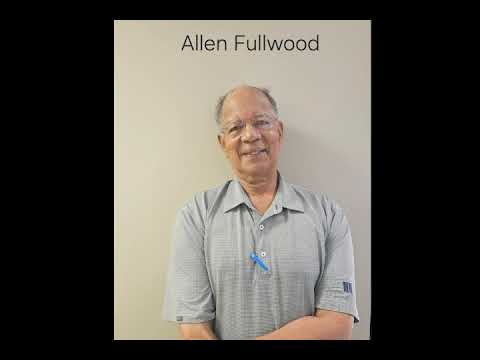
Samantha Kinton: Well, good afternoon. Thank you for coming to share your story with us. We are part of the Children of Struggle Oral History Collection. We are students at Appalachian State University. We are here at New Day Christian Church in Morganton, North Carolina on Saturday, November 9th, 2024. We are talking with Allan Fullwood. My name is Samantha Kinton. I'll be your primary interviewer. We also have in the room Sarah Wiederhold, Ashley Blanchard, and Sarah Proper. We have a standard set of 22 questions. We may or may not get to all of them. {Fullwood} Okay. {Kinton} and depending on what you'd like to share with us, if there's any questions that you would not like to share, we are
Totally
Okay with that. You just let us know.
Allen Fullwood: All right.
Samantha Kinton: So thank you so much for your participation and let's get started.
Allen Fullwood: Okay.
Samantha Kinton: So your name is Allen Fullwood, but when you were in school, did you go by any different names? Any nicknames?
Allen Fullwood: Uh, most people referedr, to me as Fullwood.
Samantha Kinton: Okay.
Allen Fullwood:
Samantha Kinton: Okay. Why did people call you Rocky?
Allen Fullwood: Uh, that was a name that my late uncle gave me, and I think it was more or less after, uh, uh, cowboy
Samantha Kinton: So, before integration, what school did you attend?
Allen Fullwood: Before integration? Before? Okay. I attended Olive Hill High School.
Samantha Kinton: Okay.
Allen Fullwood: Uh, that was a segregated school here in here in Burke County, Morganton.
Samantha Kinton: And then, what school did you move to after integration?
Allen Fullwood: Oh, well, the schools when I finished in 59, schools were still segregated.
Samantha Kinton: Oh, okay.
Allen Fullwood: Yes. Yes, it was still segregated, uh, that I went, went away to school in South Carolina to a segregated school. Um, and then in '61, uh, we began the protest there in South Carolina, um, in Rock Hill. Mm-Hmm.
Samantha Kinton: Yeah. What was it like growing up in Burke County during segregation?
Allen Fullwood: Well, obviously it was, uh, uh, Jim Crow. Uh, there were places you were not allowed to, uh, uh, enter. Um, I tell the story quite often. Uh, uh, there were many parents of the young men and young ladies, uh, in my age group, and even prior to and after, uh, who worked in downtown restaurants, but we could not go in the restaurant, uh, even to go in the front door to go see a mother or aunt or whomever it may be. Uh, if you wanted something to eat, you had to go to the back door, which I rarely did that
And as I have shared, uh, many years, this community was known as the mimosa city because of its abundance of mimosa trees that were everywhere.And in certain times of year, they would bloom with a great fragrance. And I tell everyone, yes, they did. But beneath that great fragrance was the stench of segregation. And Jim Crowism, uh, the, uh, theaters. Uh, you, you had to go to what was referred to as the crow's nest. You had to go upstairs if you went to the movie. Uh, it was an interesting, uh, experience, uh, looking back on it, uh, because growing up in it, uh, yes, there were those differences. Uh, the colored and white fountains that you would find in various public spaces and downtown. Uh, um, but the ... even in my neighborhood, I grew up at, on Bouchelle Street, which was basically an African American, predominantly, an African American community at that time. Uh, but two doors up from me, uh, were white families down the street. There were white families.
Um, and we tended to, I guess say, uh, I won't say just tolerated each other, but many of us were friends. Uh, many of the young men, uh, we grew up playing sandlot baseball or football together. And, uh, going to their table, if we were playing in their yard and their parents asked go for dinner or whatever, we might go in and eat with them, or they might go in the house and eat with us. Uh, but then it was different once you got into the public domain. Uh, many of those individuals that I knew, uh, growing up, uh, uh, we still acknowledge our friendship when I see them even at my age. 'cause many of 'em have gone on past. But, uh, no, it was, uh, interesting, uh, experience more so now when I think about it. And my friends and I, uh, talk about those experiences we had.
Everything was not that great. Uh, you know, you subject to be called names, the N-word, uh, whatever, when you walked down the streets, uh, even downtown. Uh, I can recall I was a, uh, raised by a single mother, uh, my sister and I, and, uh, she was always very, uh, um... Well, she always wanted me to be safe, and she gave those reasons. Uh, I don't know whether you are a very familiar with, uh, the lynching that occurred in this community. And that was, uh, a thing that, particularly African American females, mothers of young sons, they you know, even though it occurred long time ago, and in fact, my family had moved to Buchel on in 1930, and I would, was long before I was born, but, uh, but that story had lingered, and it apparently originated and occurred near that community. And throughout, not just close by, but many African American mothers and fathers, uh, were very, uh, aware of what could happen to you as an African American young man growing up. And, uh, made, they often had conversations with you about things to be cautious of. So anyway, uh, that was part of the, the growing up.
Mm-Hmm.
Um, uh... you might ask me another question, it's things will rain, but
And my family made that migration from Fonta Flora to Morganton with stops along the way. Um, and it was during that era, uh,
Samantha Kinton: Yeah. That's great. Do you remember your family or your parents' feelings towards desegregation? Did they share their opinions with you?
Allen Fullwood: Desegregation?
Samantha Kinton: Yeah.
Allen Fullwood: Uh, yes. My mother did
Um, uh, even prior when, just the conversation, desegregation was in the air.
Samantha Kinton: Mm-Hmm.
Allen Fullwood: Even when I was in high school, uh, because of the, uh, Supreme Court's decisions of the 54 decision and, and other legal, uh, occurrences. And, um, one of the things
Uh, but she did express some, some doubts about desegregation, uh, of, of whether it was going to, I, I recall when I first asked about joining NAACP, and she very adamantly opposed me joining the NAACP because she was fearful that, uh, something might happen to me as many, and this was really, really indicative, I think, of, of the African American mother and their protectiveness, uh, particularly of the African American male. And not to say they were not protective of the, the, the, her daughter and females, but, but it was this particularly, uh, they were protective of the male because things happened. Even though you may not have been an actor in a situation, you could have been accused of it. And things happened.
Samantha Kinton: Was the ... Was how your mother felt about the NAACP, was that widespread across Burke County; That same sentiment?
Allen Fullwood: No. No, no. I don't think so.
Samantha Kinton: Okay.
Allen Fullwood: But I don't think she was the only one.
Samantha Kinton: Did you ever officially join the NAACP?
Allen Fullwood: I'm sorry?
Samantha Kinton: Did you officially join the NAACP?
Allen Fullwood: Oh, yes. Oh, yes. And I remember now. Yeah.
Samantha Kinton: What year did you join?
Allen Fullwood: Oh gosh, my first year, It had to be in the sixties.
Samantha Kinton: Okay.
Allen Fullwood: It was in the sixties. Then, I'm not sure, because my college mate, we, I was a student and one of my college mates became a civil rights attorney. And, uh, uh, but I was a member much prior to that. Oh, about that time. It was probably, I want to, I'm gonna say it was probably my junior year in college.
Samantha Kinton: Do you think joining the NAACP affected the trajectory of your career or your life?
Allen Fullwood: I'm sure it did. I can't say very, as everyone, certainly with the, uh, efforts of the naacp, it certainly opened a, a lot of doors and provided a lot of opportunities, uh, for individuals. Uh, I can't say specifically, well, I can, I can. Um, as a result of the NAACP and many of their legal efforts, uh, certainly in South Carolina, the NAACP was very much involved with the students and the sit-ins and, and, and whatever. Uh, but then later on, uh, after college, and I came back here with the intent of only staying a couple of years, um, I, uh, ran for an elective office and won. Uh, so I can attribute the NAACP as being, uh, a part of that indirectly, indirectly. But I had the support of the local NAACP, obviously, and, uh, remained, uh, an elected official for 12 years, uh, on the Board of Education. And this was shortly after the desegregation of public education here in this community. And then we immediately went into the consolidation of the three systems that existed in this community, and resulting from that to two high schools. And they have more now. But yeah, NAACP had a major role in, in much of what I have accomplished, uh, in my life, my adult life.
Samantha Kinton: That's great. So you were... I just want to make sure I heard you right. You were on the board of Education?
Allen Fullwood: Yes.
Samantha Kinton: During the time of Integration.
Allen Fullwood: Prior... It was shortly thereafter.
Samantha Kinton: Okay.
Allen Fullwood: It officially occurred here in '65
Samantha Kinton: Mm-Hmm.
Allen Fullwood: And, uh, I became a member of the Morganton City Board of Education in '67.
Samantha Kinton: Okay.
Allen Fullwood: Okay. And then we were, although we were still dealing
Samantha Kinton: Moving back to when you were in school, did you feel that the segregation of public schools ... Do you think that affected your education both negatively and positively?
Allen Fullwood: Oh, uh, do, when I was in public...
Samantha Kinton: When, yeah. In ...
Allen Fullwood: High school?
Samantha Kinton: ... When you were in grade school or...
Allen Fullwood: Grade school. Oh, definitely. Uh, it was very obvious that, uh, give you an example. Uh, particularly when I got to high school and you would get textbooks, and there was nowhere to write your name in the, because those textbooks had been passed down from the high school, the Morganton High School. And I tell individuals, I, I knew everybody at Morganton High School by name, didn't know about face, but by name. That was just to say that, to give the example of, uh, uh, you would get a textbook. And obviously it wasn't a new textbook. It was outdated for them, but it wasn't for us, you know? So yeah, there were many disadvantages. All you got the, as an athlete, you knew you were getting sometimes hand me down equipment from the, the white high school. Uh, uh, we knew we had great athletes and we had great teams, and we always wanted to play each other, but the system said, no, you can't do it. But many of us were friends. We attended their games when we were not playing. They attended our games. And when we were together, we talked about our game experiences or whatever. Uh, yes, there was a, yes, there was a disadvantage. Uh, although, uh, I can say I think we had the most caring, uh, instructors, because one of the things I've learned, uh, certainly over the years and, and in my own research, that many of the instructors that we had at our high school, uh, had postgraduate work and spent their summers away at NYU, uh, some of the universities in the Big 10, and, uh, which many of those in the other schools didn't. And, uh, so anyway, we had some very caring, uh, instructors. Many of those that I had, uh, remained friends, I became, once I was out of school, they remained my very close friend, my principal and I became very, very close. He, uh, eventually left. He was, uh, assistant superintendent of schools in Delaware, but then he came back to North Carolina, and we remained very, very close friends. Uh, and a lot of my coaches, we became friends after I finished college, and they were still in the area. Uh, yeah. Yeah. But there were many advantages. We lost a lot with, uh, desegregation, a lot, uh... in terms of that sense of community. Uh, the school was the center. A lot of people say, okay, maybe the church, no, because you had a number of churches and various denominations, but you only had the one African, all black high school, black school, not just at a high school, but in the outlying areas you had the one elementary school, which was the center, and drew people together. Once that was lost, that was a, a lot a, a sense of community that was lost, uh, that hasn't been regained. And I doubt we'll ever, we, we will regain that, that, again.
Samantha Kinton: In your experience, did familiar, familial, or friendship relationships change throughout desegregation or because of desegregation?
Allen Fullwood: In terms of with familial friendship?
Samantha Kinton: Yeah. Just relationships that you had, either with family or friendships.
Allen Fullwood: No, I can't. No, no. They didn't change, um, at all. As I shared with you, uh, growing up in a, a segregated Jim Crow society, although I had friends who were white friends, uh, and even in adulthood after adulthood, we acknowledged the fact we were friends, uh, growing up. And, uh, nothing that didn't change. Okay. Uh, there, there were some things that changed, obviously. But, uh, even now, uh, in fact, the other day, a gentleman, uh, I, I hadn't seen him in a while, and I spoke to him at a drug store and he was talking to someone else, and I went on there, and then someone walked in and came back and touched me on his shoulder. He said, I just had to come back and talk to you, you know? And, uh, and we just chatted about nothing specifically, but just chatted... So, anyway, I don't know whether it answers your question,
Samantha Kinton:
Allen Fullwood: Locally or?
Samantha Kinton: Locally, it could be someone, it could be nationally, it could be...
Allen Fullwood: Mm-Hmm.
Samantha Kinton: ...Statewide. Just anyone that really stood out to you, or an event?
Allen Fullwood: An event? Well, certainly, certainly during the process of desegregation, the event in South Carolina,
Sara Proper: I just have a random question. What sport did you play?
Allen Fullwood: Football.
Sara Proper: Okay.
Allen Fullwood: Football, baseball.
Sara Proper: Okay. I'm just curious.
Allen Fullwood: Yeah, yeah. Yeah. I-
Samantha Kinton: I'm so sorry. I didn't mean to...
Allen Fullwood: No, no. I fine.
Samantha Kinton: What, what do you think is important for people to know or understand about the desegregation movement from your perspective?
Allen Fullwood: That for people to know? I think to fully understand, um, what desegregation was about? Uh, it just wasn't an event. Uh, um, one of the things I've always said, and I, I began this project, the children of the struggle, uh, that one of the most important at this community, as I did my, my research, uh, probably desegregation was just as important, if not so as the Civil War, when you looked at the significance of the two events that occurred and about the whole issue of race, um, and that we can't forget one, as I said, why... and what occurred. And I think it's very, very evident now with the division that exists in this country, that desegregation integration it sometimes I think one, yes, we desegregated, but what about integration? Have we truly integrated the systems? And when you look at, uh, the state of affairs, sometimes nationally, in our country, it raises some questions. And I think we, as I said, I think we lost a lot. We lost, we gained, there were gains. Don't misunderstand, there were gains, but there was a lot lost, particularly within the American community.
Samantha Kinton: Well, is there any other stories or thoughts you wish to share, or is there any questions that you wish we would ask?
Allen Fullwood: Um, guess I probably have a thousand of 'em,
About it. Um, uh, I dunno, you might have a random one you want to ask me. I, I don't know. I can't think of anything. I, I'm sure there will be once I leave, but, uh, oh, one of the things, certainly at - in my research that I filed that, uh, that was so, uh, not interesting that happened particularly here in this community. Uh, and in going back in my research in '55 when it began, the Supreme Court decisions and school boards were beginning to have conversation about, uh, desegregation. And I served on the board with this one board member, not knowing at the time what he had. He had been on the board, all of John. And, uh, he had asked the question in the fifties, uh, well, what are we gonna do with the colored teachers? When they talked about desegregation, um, what we found out here in this community, what happened? They were fired. They lost their jobs. And one of the first suits to occur in the state and may have been in the country, occurred from a faculty member, African American faculty member of the, uh, high school here, who sued because he lost his position. And he, this person had graduate and postgraduate work. And, uh, he lost his job. There were many other individuals. One of my coaches, and I talked to him later on, and, and when I was in college, and I said, well, why did you leave? He said, well, I saw the handwriting on the wall, what was gonna happen, uh, with desegregation. And he left much prior to desegregation and several other individuals, uh, who, who left, uh, with anticipating that with desegregation, uh, their employment was going to be short lived. And that happened, that happened here locally, even though they were well qualified, probably more so than many others who were able to continue their employment. Uh, but, uh, that, that was the interesting thing. The other thing that was very interesting, the local community, what I understand, never allowed a - there were some, well, how do I say, defacto kinds of sit-ins, but the local community never allowed a protest or sit-in or a march or whatever. And I think, I think maybe I've always thought that one, one historian, uh, who, local guy who's a professor, he is one of the universities, I forget now. Uh, but he, he referred to the whole process here as paternalistic. They didn't allow the sit-ins. Uh, they were going one - because they were afraid if they allowed it, and too much notoriety and industry was not going to come in. And that industry, that industry did come. But that was one of the concerns of, uh, if you, if this occurs, then because historically, uh, here in, in Burke County, uh, textiles and furniture, and then this other industry, it's closed now. But it was a major, major contributor to this community for many, many, many years. And in many ways still contributes because of the foundation that the CEO formed. Uh, but, uh, I think things have gone well...with desegregation, there are, there are others who say, well, it went smoothly. Talk to some of the students. It didn't because of the things that happened, uh, in the classrooms. And the students later would come to me, and as a board member, they said, well, did you know this happened? I said, no, I did not know that happened. Uh, and it occurred long after, a lot of things occurred long after the segregation and even carried over into when the systems were consolidated. I had, I had one coach who
Samantha Kinton: Okay. Well, does anyone else have any questions?
Allen Fullwood: Well, I hope I've responded, uh, appropriately and...
Samantha Kinton: Yes, you did.
Allen Fullwood: ...And gave you, uh, some information to work with.
Samantha Kinton: All right. Well, thank you so much for your time.
Allen Fullwood: And it's a pleasure meeting all of you
Samantha Kinton: And sharing your story. We appreciate it very much.
Allen Fullwood: Thank you. Thank you. Thank you.
Samantha Kinton: Thank you so much. Thank you. Thank you. Good. Thank you.
Allen Fullwood: Allen has requested these notes be added to his interview record: A point that I desired to make is a great deal of attention has or was given to the Morganton system of public education during deegregation, not that it was not desired, but three systems of public education existed in Burke County. In addition to the Morganton City System we had the Glen Alpine and Burke County systems of public education. These two systems also underwent the desegregation process. I have always been of the opinion a focus and study of the administrative process is significant to fully understanding the desegregation of public education. How did the superintendents and boards prepare to lesse the impacts of this major change in our educational systems? "Children of the Struggle" I might say should be a picture of the events leading up to desegregation and desegregation itself.