
Interview with Andrea Chambers Lytle
Description: Andrea Chambers Lytle attended Mountain View Elementary School until fifth grade. She was in the first wave of desegregation and in 1963 was moved to Central School downtown, a formerly white school. She was wrongly placed into special ed classes and forced to repeat fifth grade two years later in 1965 when she was transferred to Forest Hill Elementary.
Date: 2024-11-09 Location: Morganton, North Carolina
Interviewer: Sara Proper
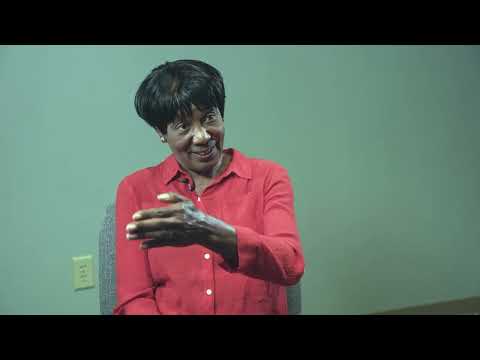
Sara: Hi, and thank you for coming to share your story with us today as part of the Children of the Struggle Oral history Collection. We are at the New Day Christian Church in Morganton, North Carolina on Saturday, November 9th, 2024. And we are talking with Andrea Lytle. My name is Sara Proper and I'll be your primary interviewer. We also have in the room Ashley Blanchard, Samantha Kinton, and Sarah Wiederhold Got it there. My bad. We are all students at Appalachian State University and we are conducting these interviews as a part of a class project. We have a standard set of 22 questions, and we may or may not get through them all depending on what you'd like to share with us. If there's any question you prefer not to answer, we'll be happy to move on to another one. Again, thank you so much for your participation. Let's get started.
Andrea Lytle: Okay.
Sara: So we're gonna start with your name and if you had any nicknames.
Andrea Lytle: Okay. My name is Andrea Chambers. I was a Chambers during the struggle. Okay. Mm-Hmm.
Sara: Oh, any nicknames that you had, like growing up.
Andrea Lytle: Um, in high school they called me Hot Pockets because I played basketball for the first year of my high school year. Um, other than that, I hear the name Andrea. Andrea, um, Andrea. So I told 'em I'm not hung up on the name. If it sounds close to my name, I'm gonna respond
Sara: Um, so what school did you attend? Um, before desegregation?
Andrea Lytle: Before desegregation, I went to Mountain View Elementary School until up to the fifth grade.
Sara: And then after,
Andrea Lytle: After that I went to Central, downtown Morganton. Um, there was, it was a predominantly white school, and that was back in 1963 and there was only four students, black students that entered that school. And out of the four, we entered that school, we walked to school together, we would enter the school, but then that's the only time we saw each other until we got ready to leave the school. And during that process, I ended up in a special ed class. Why? To this day, I don't understand it, but I did ask questions when the psychologist, uh, would come in and do her assessment. And the first thing she told me the first day after the evaluation, she said, Hmm. And I said, what do you mean? Hmm? She said, something is not right. I said, okay, so what are you gonna do? She said, let me talk to the principal and we'll get back with you.
So that was the first quarter of school. Then the second quarter, she came back and did another reassessment. And she said to me, Hmm. Because back then they did the ink block, you know, tests and everything. And I said, you said, Hmm. Again, so what are you saying? And she said, I just have to get back with you. Well, the second year she came back in the fall and she did her assessment again. And she said, Hmm. I said, you keep saying hmm, what are you trying to tell me? You know? And she said, well, I said, you said you was gonna get with the principal and the school, uh, social worker, and y'all was gonna get back with me. Nobody got back with me. So she said, uh, we'll get back with you. So in the spring when she came back, she said, we made a mistake.
I said, you made a mistake, so what are you going to do about it,
Sara: Um, so what was it like being black in Burke County when you were a child and did you ever travel outside or like experience any different treatment in other places or any of that?
Andrea Lytle: In Burke County? Just walking in downtown Morganton reading the signs, uh, at the water fountains, they would say for white only. And then there other areas, it was, you know, you could drink out of these fountain if it said for black. Um, going into the stores, you know, uh, everybody, when Woolworth was in town, everybody you walk in and they would look at you like you weren't supposed to come in this entrance, you were supposed to use the back entrance. Um, that was my experience in the downtown area. But going to school, once I got out of, uh, central, I went to, uh, Forest Hill. That's where my siblings went to school. That's the closest school to my neighborhood. And there was like 13 children that went to Forest Hill where I had to go all the way across town. And there was another young man, uh, named Robert Forney that was in, in the same class.
They put us both in the same special ed class. And during that process, after we got out and went to regular school, and then when we got to, uh, the junior high school, it was like we would walk home to West Corncard Street from, uh, the Morganton Junior High and the kids that was in the ninth grade, they would come across the hill and we'd go on the other way to get home. They would come down the hill singing the N word we hate, you know? And that went on for several, several days and I had a lot of anger in me, and I told the two young ladies that was assisting me, I said, well, I'm gonna say this. Are we going to continue to let them harass us, push us out in the street, or what are we going to do about it?
And they said, we need to, you know, fight for our rights. I said, okay, that sounds good to me. I said, I'm gonna tell you what, I'm gonna take the guy. Y'all can take whomever you want to
So once again, the anger came. I got tired of being beat up and called out of my name because I thought that I was just as equal as they were. And when that didn't happen, you know, she called me an N word in front of the teacher, nothing was done about it. And I said, well, I'll see you after school. So once we got up to the Morganton High School, I walked up behind her and her boyfriend and I kicked her and she turned around. You kicked me. I said, I'm gonna do more than that,
And, uh, boyfriend didn't do anything. And she was a little short girl. And I picked her up and I said, you remember when you called me
And uh, he said, uh, because I wanted to, I said, because you wanted to. I said, you're not gonna even apologize to me. He said, no, why should I? And at that time, the anger came back out of me. So when he made that statement, I just turned and I slapped him so hard that it vibrated through the classroom. And then I went up to the teacher and I said, I apologize for interrupting your class. And I left out and went on to my class. We laugh about it now, but then it wasn't funny. Mm-Hmm.
So through that process of being put in a special ed, then I got, you know, that thrown in my face. And the young man that was in my class that I grew up with, he was a football player. And I just learned here. I thought he wasn't penalized like I was. But in talking with him, after I did my presentation at the memorial thing, um, the, um, he told me, he said, uh, I didn't get to play the football the whole year just like you did. I said, that's interesting, you know, that we got penalized because they put us back and now we are too old and we can't play.
Sara: Mm-Hmm.
Andrea Lytle: Um, I would say as time went by, it got better. But at the beginning it was hard. But as time went by, we got, you know, started showing each other respect. Mm-Hmm.
Sara: Um, so what were your parents or guardians feelings about, uh, desegregation even in the community?
Andrea Lytle: Okay. My mother was one of the seven mothers that, uh, went with, uh, the school board to try to integrate and also get transportation for their children to come, um, to the schools in their neighborhood instead of having to walk all the way across town. And, um, when I was in the first grade, second grade, my mother had to get transportation, a taxi. There was a black taxi driver named Boonie Fleming that would come and pick us up and take me to school and come back in the evenings and pick us up and take us home because my mother was a domestic worker, cleaning houses, um, until she went to school to get her CNA. And then she worked at the hospital. And the older kids, they were the ones that would, when we couldn't get transportation out, really after we got into the integrated schools, they would walk us to school and then go to the high school. And then, um, Beverly Carlton, Beverly Forney at the time, she and her sister and myself and Robert would walk to school together and we would meet after school and walk back home together from downtown Morganton.
Sara: Um, what would you say that some of your earliest memories of like desegregation?
Andrea Lytle: Well, my earliest memories, I remember when the, um, what the protestors were walking through downtown Morganton. Um, it was a peaceful protest and they came to the church that I still attend now, and that was Slave Chapel, Amy Zion Church. And all the blacks got together there and they marched through downtown Morganton and it was a peaceful march. And, uh, we came back and rallied out on the front steps of the church. So that was one of the fondest members.
Sara: When you transitioned, what stood out between like the segregated schools and then the integrated schools?
Andrea Lytle: Well, to be honest, in the segregated schools, um, I guess because I look at my life as living in poverty back during that time, my family, my, I had two parents. There were seven children, I was the middle of seven. And, uh, some of the blacks looked down on the blacks and, and that was a truthful thing, you know. Um, I had teachers that was hard on me, especially in the elementary school. I'm left-handed, I'm a south paw and they used to beat my hand, my knuckles, my left knuckles, and they going to force me to use my right hand. That was one of the things that I had to experience. You know, some of 'em was nice and these are black teachers, some was nice and some wasn't. And those are the things that sticks with me, you know? And then when I went off to college and came back to Morganton, oh, they was just, oh, I'm so proud of you and this, that and the other.
And I'm saying, but what happened during my younger age? Why did I get abused? In a sense, that's what I felt. I was being abused. And so when I graduated from high school, um, well, I'll put it this way. When I got to Morganton High School and Reverend McIntosh, he was the algebra teacher and all that, and he also was the, helped the parents as they was forming their coalition or whatever you want to call it, he worked behind the scene with them, giving them directions and telling them what to do and how to address the issues that was at hand. And, um, he really walked the parents through going through the Board of education and doing their presentation, everything. A lot of people, um, in Burke County was not aware that he did this. And my parents, my parents from my neighborhood would always get a taxi, the same taxi that took me to school.
He would pick them up in the evening and I would walk my mother up to Olive Hill school. That's where they met him, and he would take them to what they used to call Yellow Mountain Road. Now they call it, um, what is 126? And Reverend Mack would meet with these fam, these mothers in the basement of his house. And I do recall that on one night visit, there was a cross burnt up there in front of his house. And uh, that memory is still with me too. And so, uh, they had to be cautious and then they started utilizing the church. Um, and also because he worked for the school system, he had to play a, a low profile during that time. Mm-Hmm.
Sara:
Andrea Lytle: Okay. In the beginning, in the classrooms, we weren't that acceptable at the beginning, but as time went on, it got better. Um, especially with the athletic teams, we would travel on the same bus going to, uh, games and stuff. And so it wasn't that bad. After, I would say after the first year, we, we started hanging out together, singing together, doing, you know, different things, meeting up at in the parks and stuff like that. But, uh, in the beginning, no
Sara: Um, so what were like the difference in resources between the schools?
Andrea Lytle: Okay. Um, in the elementary school we got hand-me-down books and stuff of that nature. And then when we got to the integrated schools, we had more materials and um, more access to materials and stuff like that. And books.
Sara: Mm-Hmm.
Andrea Lytle: Mm-Hmm.
Sara: Um, did you do any other like, extracurricular activities?
Andrea Lytle: What in high school?
Sara: Mm-Hmm.
Andrea Lytle:
Sara: Um, so what support systems did you have?
Andrea Lytle: In the beginning? I thought I had none. Um, as time went by, uh, I think Reverend McIntosh and, um, Putman, I can't think of putts, uh, first name, but we call him Putt 'cause he gave me the name Hot Pockets
Sara: Um, in your experience, did your family or friendship or community relationships change like when desegregation happened?
Andrea Lytle: Somewhat. Uh, because every time I would ask my mother, I said, why am I being treated like this? And it kind of hurt too. Um, she said, well, if you don't stop fighting and doing what you're doing, we're gonna have to send you to a reformatory school. And I said, really? And I said, okay. I said, I'm gonna try my best
Sara: Um, is there like one person or event that like really stands out in your whole like, desegregation experience?
Andrea Lytle: There was a, um, physical education teacher. Her name, I think her name was Ms. Brenda. And she was like my mentor when I was in the ninth grade. And if I needed to talk to anybody, I could go to her and talk with her about issues. 'cause she used to tell me, she said, I'm gonna tell you something. That smile of yours is going to take you a long way. She said, don't let anybody put you down. And so anytime I had a problem, I would go talk with her.
Sara: Um, so describe any tensions you remember around, like, desegregation in your school or community and who was affected by them and kind of what happened?
Andrea Lytle: Um, I think a lot of us during the transition into the different schools, because I had brothers that was going to the high school, uh, sisters that went to the junior high. And this is why I'm still in elementary. And each one of them has a story. And just sitting down with my oldest brother, uh, his experience through the high school wasn't that great from what he shared with me. And I was telling him, I said, you need to go tell your story. And each of us I think has a story to tell, but I can't tell the story, like they could tell the story. Mm-Hmm.
Sara: Um, did you have any experiences with discrimination outside of the school environment that you'd like to share about?
Andrea Lytle: Um, not really. I, I would say that when I did go off to college and Burke County sent a teacher to St. Augustine College, um, to do recruitment, I still had the anger in me, uh, through what Burke County had done to me. And, uh, because I still say they owe me an apology, you know? And to this day I have not received that. And uh, when the recruiter came to my school and was saying when she found out I was from Morganton, I'm going to tell you and be honest with you, I dressed, I had an afro, I put on blue jeans and the blue jean jacket trying to be militant
Mm-Hmm,
Sara: Um, how did your experiences shape you into the person that you are today?
Andrea Lytle: My experience is that my faith in God is what carried me on through the process. Um, I prayed a lot. Um, like I said, I would talk to my mentor. Um, and so, and then I did some self talk. I kept telling myself, you are somebody, you can do whatever you put your mind to. And so I decided, I applied for college after, um, before I got outta high school. And I didn't get a scholarship the first year, but I was a walk-on for the basketball team at, um, St. Augustine College. And then my, after my first year, they gave me a scholarship. And so I played basketball. I took the graduate record exam and got accepted to Illinois State in normal Bloomington and went to graduate school there. Um, I, in my experience in college, it was good. I got accepted. Um, well, I was offered a job in Rochester, New York as a teacher.
And then I got another acceptance at another school. I really wanted to be a physical therapist, but all the schools I applied to was full, and they had a waiting list. And so I said, well, since I got this graduate assistantship, why not go to graduate school? And so I went to Illinois State. Um, I was assistant coach on the basketball team, women's basketball team. I taught classes in the, uh, physical education department. I worked in the resource, resource lab and it was wonderful. And I said, now you can believe in yourself
And I worked with clients there. And then from there, there was a position open, um, at Blue Ridge Community Action. And I went there and I worked 30 years there as a case manager working with families, moving them out of poverty. 'cause I experienced poverty myself. And I still share my story with these clients that I worked with. And I retired five years ago. I'm 72
Sara: Um, what is important for people to know and understand about desegregation from your point of view?
Andrea Lytle: That it was not easy. It had impacted our lives. Um, some people has rose above it. Um, I think I have, because I accept, especially living in the inner city, I come to make relationships with all nationalities of people. And I accept people for whom they are. I don't look at their races or anything. They are human beings and I accept them for themself. Even the, um, what were the mons and the, uh, the Mexicans and all them, since I come back to Burke County, to me, they are just people, you know.
Sara: So on the final question, are there any other stories or thoughts you wanna share? Are there any questions you wish we had asked? Um,
Andrea Lytle: Well, I actually had an opportunity to go overseas and play basketball in the south of France. Um, I did that for a year. I took, I told my employer I was working with development developmentally handicapped adults at a center, and I was a program director writing programs for each of the clientele. And I said, I love this job. I said, but this is a once in a lifetime experience. I said, so can I take a sabbatical and go for about a year and then I'll come back? I promise you. He said, well, let me speak to the board. And they gave me six months at a time. And I said, he said, you just have to stay in contact with us. And I did that, and I had that opportunity and that experience. I lived in the south of France in a town called Antia and played basketball over the south of France and travel outside of that. So that was, that was neat.
Sara: Um, anything else you wanna share?
Andrea Lytle: No, I, I just know that my parents love me in their own special way and I love them. And I came back to North Carolina to take care of both my parents, even though I had siblings that lived here. They made me, um, what is it? Power of attorney of all their affairs. And that was one of the things that brought me back to North Carolina is to look after both of them and take care of all their finances and all that before they went on home to be with the Lord.
Sara: Um, thank you so much for your time and your story. After our interviews are transcribed, Dr. McKesson will contact you with further information and if you have any questions for her today, you can ask her on your way out.
Andrea Lytle: Okay.
Sara: Thank you so much.
Andrea Lytle: Thank you. Welcome. Thank you. Thank you.