
Interview with Beverly Carlton
Description: Beverly Forney Carlton grew up in Morganton under Jim Crow with no unsupervised trips outside of her neighborhood. After Mountain View Elementary opened in 1958, Carlton walked 41 minutes or two miles to school across town. She states that walking through town required hyperviligance that "you don't step on land bombs." After her parents and other families appeared before the school board to ask for transportation, they reassigned the complainants to white schools closer to their homes. Carlton felt unprepared for the pain and hostility she experienced when she was reassigned to Central School downtown for 1963 and 1964 school years. As integration went on, Carlton says, "the atmosphere was never truly welcoming."
Date: 2024-11-09 Location: Morganton, North Carolina
Interviewer: Lexi Robinson
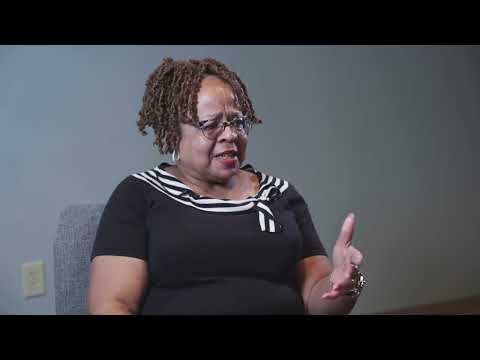
Hello again, and thank you for coming to share your story with us as a part of the Children of the Struggle oral history project. Um, we are at New Day Christian Church in Morganton, North Carolina on Saturday, November 9th, 2024. And we are talking with Beverly Carlton. My name is Lexi and I'll be your primary interviewer. We also having the room, Ella, Hayden, and Clara. We are all students at Appalachian State University and we're conducting these interviews as a part of the class project. We have a standard set of 22 questions and we may or may not get to all of them depending on what you'd like to share with us today. If there's any question you prefer not to answer, we'll be happy to move on. Again, thank you very much for your participation and we'll get started. Alright. So once again, will you just tell us your name and then if you had any other nicknames or different names that you went by in school.
Beverly Carlton: My name is Beverly Forney Carlton. Um, no, no nicknames in school. My mother, you know, at home there were nicknames, but not at school.
Lexi Robinson: What were those nicknames at home then?
Beverly Carlton: Be Van
Lexi Robinson:
Beverly Carlton: Or Bell Belle is the main one. Belle is the one everybody calls me today.
Lexi Robinson: Um, so what school did you attend before integration
Beverly Carlton: Mountain View Elementary in Morganton.
Lexi Robinson: And how old were you when you entered integreted school?
Beverly Carlton: I was 10.
Lexi Robinson: So roughly what grade?
Beverly Carlton: Fifth.
Lexi Robinson: Fifth grade.
Beverly Carlton: Mm-Hmm,
Lexi Robinson: Alright and what was it like being Black in Burke County when you were a child? Did you ever travel outside of Burke County or experience different treatment other places?
Beverly Carlton: Um, actually our lives were kind of controlled by our parents a lot. And so a lot of things we did was in our neighborhood or you know, we walked to church. Um, and church was, you had to walk through town, so walking through town for any reason. Um, you really had to be careful how you walk through town because, uh, it was expected that we were to respect white people no matter who they were. And like, you know, we had to make sure that we were not in their way on the sidewalks, get outta the way or cross the street or something like that. Um, it was, the water fountains were all marked, um, Black and white. I mean, sorry, it wasn't Black, it was colored. And um, so we had to observe all the Jim Crow laws, which said that there was separate but equal and separate wasn't always equal. So, you know, being in town I was always with a parent and they were controlling us basically. 'cause they were the ones that had already gotten the discipline of how to act when they went out into the communities that were not, uh, colored communities.
Lexi Robinson: Thank you for sharing that. Um, when you found out you were gonna be gonna school, um, with other white children, how did you feel and what influenced it
Beverly Carlton: I didn't know what to feel 'cause I'd never done it before. All I knew is that we were going to go to a school that was closest to us and that we didn't have to rely on finding a ride to school. So I didn't have any pre-established kind of feelings about going to school.
Lexi Robinson: Um, what were your parents' feelings about desegregations, about desegregation and what was the general feelings in your community?
Beverly Carlton: I couldn't tell you what their feelings were. All I can tell you is that the concern was that, uh, we did not have a ride to go to Mountain View, which was, seemed like a long distance, but it was not, it took 41 minutes to walk to school. Um, and we had to walk through town, which was like, um, what do you call it, honey, you have to figure out throughout, you know, so that you don't step on land bombs or anything like that.
Um, and we had to get up early to make sure that we could get to school on time. So, uh, the only, their concern was us getting an education and getting to the location where the education was being provided. Now remember before Mountain View was open in 1958, prior to that, the school was in our neighborhood because it was, uh, olive Hill schools were, were the, uh, all the schools, the elementary and the high school, the junior high, all of 'em were at Olive Hill and all of 'em were on the street that I lived on. So they were concerned about us getting an education and getting to that place safely.
Lexi Robinson: Um, what were some of your earliest memories of your desegregation and did your overall experiences with desegregation change over time?
Beverly Carlton: Um, most of it was learn how to stay in your place and respect the white people and you'll be okay. Um, feelings were painful. It was painful to be in that situation as a child and not really understand what to do when we went into classrooms with people who really didn't want us there. Um, so let me read this part because this was, uh, this is actually around the questions that you're asking. In 1963, I was among the first Black children to integrate Morganton City schools. This journey was initially motivated by a practical need for transportation. With the opening of Mount View Elementary School in 1958, Black families in nearby neighborhoods, including my own, requested a bus to ease the two mile 41 minute walk to the school. Instead of providing transportation, the white school board responded by asigning us to local white schools within walking distance, launching us into a new educational environment without any real preparation. We received a brief overview from the NAACP, but there was no official orientation to help us adjust. The white students and teachers met our arrival with visible hostility, creating a harsh and alienating experience from the start. So I attended Central Elementary School for grades five and six from 1963 to 1965. Where Ralph Abernathy was the principal. I hated being in this environment and frequently begged my mom to let me attend Mountain View instead.
So that answers some of that question. I can stop right there.
Lexi Robinson: Definently, that is perfect, is there anymore that you want to add before we move on?
Beverly Carlton: Say it again?
Lexi Robinson: Is there anything else that you'd like to add before we move on? Because it's definitely your space.
Beverly Carlton: Um, in 1955, in 1965 was school choice still in place for one last year I was able to attend Mountain View for the seventh grade, which felt like a relief. By then suburban coach provided transportation, but after that year, school choice was no longer an option and we had to remain in the integrated setting. Although each year brought slight adjustments as being Black, as more Black teachers and students entered the integrated schools, the environment remained uncomfortable. Even through high school graduation, we faced hostility and often fought with the white students leading to suspensions. The atmosphere was never truly welcoming.
Lexi Robinson: So that kind of goes into, um, one of the next questions. So in your experience, how were relationships between students of different races? Um, but were there any relationships between faculty that you remember, either teachers or students?
Beverly Carlton: Um, there was one teacher, uh, in the fifth grade that I had that her husband was in the Vietnam War. And, and I think that might have been why she was a little more concerned about me. Um, but she couldn't really show it, you know, she would, you know, talk to me sometimes after students left. But, um, I did have white friends and the white friends I had were in poverty just like I was. So, and they were shunned by their classmates too. So we became friends. Uh, and one of my, uh, white friends really loved The Beatles 'cause the Beatles came out at that time. And we, she encouraged me to get the cards, you know, so you could get the trading cards by buying the bubblegum or something like that. You had to buy bubble gum.
Lexi Robinson: Do you have any specific memories with teachers?
Beverly Carlton: When I was thinking about this interview, and most of the times when we're taught, telling about that period of time, we're talking about how the white people treated us and how sad it was to just be there. But I wanted to think a little bit deeper about this, and that's why I took my time to write this information out so that we could look at all the aspects. The work that I do now is in community economic development. So I'm thinking about economics all the time and how they impact our community, uh, right now and thinking about this is how did this impact us as individuals? And not just the treatment that was going on, but the impacts that were felt do doing it. And afterwards. So the next thing I looked at was barriers created by poverty for families in our community were significant and multifaceted.
There were economic barriers that limited financial resources. We had limited financial resources that restricted our access to reliable transportation, school supplies and regular meals affecting basic necessities and overall quality of life. The next was social barriers. Poverty often led to social exclusion, making it difficult for families to participate fully in community and school activities, creating feelings of isolation. So when, uh, the schools were desegregated, we would walk over to the Olive Hill schools and participate in activities there. And 'cause that was just a family kind of thing to do that we really enjoyed. Um, then it brought everybody in the communities together. When integration happened that went away, kind of, you know, you really had to be focusing on doing those social types of things.
Lexi Robinson: There were educational barriers without transportation, school attendance became challenges and a lack of resources such as packed lunches affected our ability to focus and perform well academically.
There were nutritional barriers. The cost of meals was prohibitive from many families. And with no free lunch programs available, we sometimes went hungry until dinner.
There were health barriers. Limited healthcare access meant untreated illnesses that could interfere with school attendance and concentration.
There were occupational barriers. Parents in low wage jobs had less flexibility and fewer resources to support their children's educational needs. My parents, my father worked three jobs just to make ends meet. And, you know, around that time it was barely making less than a dollar an hour. And, uh, although the, the cost of living was low, you still, it was still high when you're in poverty and you're only making a dollar an hour. And that probably ended up being like 15, $20 a week. For our family was a total of eight with our parents. Six children and two parents.
There were transportation barriers with no affordable, reliable transportation. Children walk long distances, often in poor weather, adding physical strain and raising safety concerns. Psychological barriers, economic hardship, foster stress and anxiety impacting both parents and children's wellbeing and focus on education. So -hat kind of answers some of the things that you are asking me about and, um, the impact that they had on us. And that was just the, uh, barriers caused by poverty. Then there are cultural barriers. Transitioning from classrooms led by Black teachers to those led by white teachers was traumatic. Black teachers understood our cultural background and learning styles, fostering a supportive environment. White led classrooms on the other hand, often held us in contempt, sometimes openly. This hostility affected our learning and self-confidence laboring us as slow learners rather than acknowledging the trauma and disconnect we felt in a classroom that didn't respect our identities. However, when we were enrolled in Black teachers classes, our grades improved significantly. This pattern was consistent for me throughout my school years, though I only had access to a few Black teachers. Two at the junior high school, three at ninth grade school, and three more during high school. It was during that time when we, um, integrated, um, the old Olive Hill school was turned into a ninth grade only school. So that was kind of like transitioning from the junior high school to the ninth grade school and then to high school.
Um, each time I had the opportunity to learn under Black teachers, my grades re reflected the difference. These teachers understood our struggles, respected our identities, and often offered encouragement that I was largely abs that was largely absent in white LED classrooms. The support from these teachers demonstrated the importance of cultural understanding and education and how vital it was our academic success and self-confidence. Psychologically, I struggled in this environment where I constantly felt unwelcome. My solace came from places like Slades Chapel, which is church I went to and the Mountain Dee Recreation Center, where I found comfort and community. I learned to swim there and even joined the swim team as the only female member. The church and local organizations offered a refuge providing extracurricular activities like dances, talent shows, places where I could find acceptance and belonging and grow then was the high school activism and organizing.
When I reached Morton High in 1968, tensions around the treatment of Black students remained high. I had aspirations to join the cheerleading squad, inspired by my sister, who had made the team in her senior year after her class was integrated from Olive Hill High School in 1965-66, they went in their senior year. Although some of the Black students, including my brother and cousins joined sports teams, successfully my class faced new barriers. None of us made the cheerleading squad. And this along with other grievances began to stir frustrations among Black students. After speaking with my peers, we discovered there were different shared concerns. Unequal treatment of Black athletes disrespect, disrespectful, listings in yearbooks where Black staff were addressed by their first names. While white staff received formal titles in response, we organized a walkout. We left Morganton High, gathered Black students from the West Concord School and marched uptown to protest.
Our first thought was the Burke County Courthouse, where I sing prompted the bailiff to quiet us. Eventually running us off undeterred, we marched to the Morganton City School Board office on Avery Avenue with question, a discussion about our grievances. Though we didn't gain an immediate audience, we received an invitation to meet later while rallying at Slades Chapel. The school sent Revered Mcintosh, a Black math teacher and former coach from Olive Hill High School, who was now at Morgan High. To intervene with us. Mr. Macintosh invited us to Green Seek Presbyterian Church, where he was the pastor. To continue our organizing efforts in a struct in a structured way together, we created a detailed list of grievances and goals for our upcoming meeting with the school board. Mr. McIntosh's role as a supportive educator and mentor had a profound impact on me. I'd initially failed algebra under a white instructor, but when I took it later with Mr. McIntosh, I passed with a B plus. His encouragement and understanding of our learning styles made a powerful difference, underscoring the importance of having teachers who shared and respected our background. This experience solidified my appreciation for the teachers who understood our cultural context and the challenges we faced in an integrated setting.
Then we talk about the lingering impact of systemic exclusion. So we never really, we talk about systemic issues now, but this is looking at it a little bit closely. Growing up in Morgaton during the Jim Crow years, my family and I encountered the stark reality of systemic exclusion and cultural barriers. Despite my mother securing employment at Woolworths downtown in 65 66, we were still not allowed to sit at the lunch counter. A reminder of the barriers imposed on us, even with spaces where we were employed. Similarly, my older sister worked as a cashier at Ingles grocery store, which wasn't too far away from us. It was just across the street from us, which at that time it was, that was when it was first built in Morganton. Yes, the proximity and employment did not grant us inclusion or acceptance. These everyday moments left a lasting impact on us shaping our perspectives and responsive to the world around us.
Many of us carry what feels like a form of PTSD from those experience of constant rejection and exclusion. Personally, I have struggled with trusting that white colleagues genuinely care about my success or wellbeing. Although I've built strong friendships over time, it took many years to reach that level of comfort and trust. This internalized sense of exclusion carried into my professional life where I've encountered numerous, often blatant rejection for positions I was qualified for. Even now as the leader of Olive Hill CDC, I face a subtle form of rejection. Some individuals an interest in supporting the organization only later to imply that it's not worth their investment. This feels intensely personal as they equate my identity with the organization and by extension its worthiness. The cumulative effect of these experiences had shaped how I approached challenges and risks in my career. My tendency, tendency to avoid risk while rooted in self-protection has limited the scope of what I feel comfortable pursuing. These moments also impact how I engage with others. My directness can sometimes be perceived as harsh, yet there are times when I retreat and withhold my voice entirely. These patterns stem from layers of past trauma that I have embedded themselves deeply within me.
The ongoing legacy of systemic barriers that we face in Morganton is early integration efforts did not simply affect individual school experiences. They shaped entire lifetimes and left generational imprints. Education in theory should be a pathway to empowerment and opportunity. However, when integration was implemented with, without an, without adequate support or preparation, it inadvertently became a system of new constraints. These barriers have had lasting effects in multiple areas, like economic limitations and career advancement. The lack of assets to welcoming supportive education environments often led to limited career pathways for Black students. Trapping many of us in low wage jobs or positions without upward mobility. There were many people like my husband, when he went to high school to uh, integrated school. I think he went his last year. The counselor told him not to pursue college, that he could never, um, complete college, that he needs to go work in the furniture factory.
A lot of people got that type of treatment. Self-worth and confidence in pursuing opportunities. The constant exposure to hostile environments and rejections affected self-confidence, limiting our willingness to explore new opportunities, pursue higher education, or aim for leadership roles later in life. I didn't go to college right after high school. I got married instead and started raising a family. I didn't go back to college until, um, 1988 and I graduated in 92. But had I felt like I could, uh, be successful in college, I would probably would've gone. Nevertheless, there's community disinvestment and intergenerational poverty. The perception that Black students and families were undeserving of investment transferred into limited resources for community development leading to long-term poverty and reduced resources for future generations. Our health and psychological wellbeing, the stress of exclusion and systemic neglect has impacted both mental and physical health. With many of us experienced chronic health issues and PTSD like symptoms, we never really think about that, you know, and I started thinking about it like why do I, you know, sometimes be aggressive or retreat and it's psychological. Lack of representation in decision making roles with limited Black representation in leadership roles, policies and practices often overlooked Black community needs.
Creating barriers to economic and social advancement, and then mistrust in institutions. These experiences fostered a mistrust in institution discursion engagement and with educational government and health systems and hindering access to potential support.
And then now we should be on a path towards healing and equity. Recognizing these impacts is the first step towards addressing the root causes of inequity. The legacy of systemic inclusion. Exclusion cause for comprehensive reforms and educational policies, community development, mental health resources and economic opportunities. Healing from these generational wounds requires institutions and individuals to actively work towards inclusion, support and respect for Black communities and all marginalized groups. True equity involves not only opening doors, but also creating environments where everyone feels welcome, valued, and supported. By acknowledging the long-term impacts of systemic barriers, we can better advocate for lasting changes that allow future generations to envision brighter futures free from the weight of historical exclusion. In conclusion, the experience of integrating Morganton city schools highlighted the profound ways poverty and cultural barriers just shaped our educational journey. Our request for transportation when ignored, pushing us into an environment unprepared to receive us. Integration without adequate support left us vulnerable to mislabeling, isolation and mistreatment. The response from the school board and community underscored then difference we face and resilience required to advocate for change. Reflecting on this journey, it's clear that addressing economic, social, and culture changes is essential for true educational equity. The struggles we endured went beyond academics. They impacted our sense of self-worth opportunities, and ultimately shaped the future we can envision for ourselves.
Well, I wanna say that thank you for preparing that. It's extremely well spoken and I think we learned way more and got way more insight onto this than we would've just through our own questions. Um, so thank you for sharing all of that. Um, but, um, you mentioned earlier that you kind of work now as like a community organizer in a way. Um, did your experiences, um, in the school system or desegregation, did it push you towards that career?
Beverly Carlton: Yes, very much so.
Lexi Robinson: And what led you, um, to go back to college later in your life? Um, what inspired you?
Beverly Carlton: Um, the need to make money and having to have a degree to get a good paying job.
Lexi Robinson: Mm-Hmm.
Beverly Carlton: Yeah.
Lexi Robinson: Um, so what is another thing that you think is important for people to know and understand about that period of integration?
Beverly Carlton: Say the last part
Lexi Robinson: About the period of integration
Beverly Carlton: I don't know, but I think we would've been very happy to have stayed segregated, had everything really been equal, you know, so the only thing that we wanted to do was be able to get to our brand new school. 'cause it was a brand new school at the time. And, um, just be with her friends and stay in our culture. Um, that kind of broke up our culture. That kind of, you know, although we were still Black community, still had our own culture, the way things progressed. Like I often look at Hispanic people, uh, and Mexican people and they have, they have a home they knew where they know where they came from. They bring their traditions with them, their foods and their culture, all that. And we lost it. We lost it because we kind of got broke up. Um, that's one of the things that, you know, that we really need to focus on here. Some areas didn't lose it, some areas stayed intact, some Black communities stayed intact, but our Black communities have not stayed intact like that. There may be a couple of pockets of Black communities, but they're not like they used to be.
Lexi Robinson: Um, so are there any other stories or thoughts that you'd like to share or any questions that you wish that we had asked?
Beverly Carlton: No, I think I covered everything I wanted to make sure I got out. So you have any other questions for me since I um, you as a psychology major?
Lexi Robinson: I'm also a public health minor, so hearing about your job and, um, I'm in a community health class right now, so it's building off of each other really well.
Beverly Carlton: Mm-Hmm.
Lexi Robinson: Uh, a big thing for me though, I guess, um, especially as they were talking about, um, the ways communities have changed. How did your, um, individual support systems change, like did anything in your family really change or anything like that?
Beverly Carlton: Not really. Um, no. No. We kinda stayed intact as far as that's concerned. Mm-Hmm.
Lexi Robinson:
Beverly Carlton: Alright.
Lexi Robinson: Thank you again so much.
Beverly Carlton: Yes. You can have a copy of this. [Paper Notes]
Lexi Robinson: I would love to.