
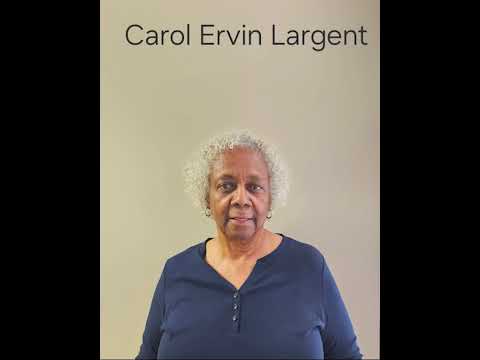
Interview with Carol Largent
Description: Carol Largent attended Mountain View Elementary School from kindergarten to fourth grade. In 1965, she was moved to Hillcrest Elementary, a formerly all-white school, for fourth grade. She was raised by a single mother who worked as a domestic laborer, cooking, cleaning, and catering. She grew up in a small neighborhood on a gravel road surrounded by her large extended family. Even though Hillcrest was the school closest to her home, she had never seen it. As a child, all she knew about desegregation was it meant going to a different school, a school she had never seen. She recalls her uncle "piling all of us in the car and driving us over to Hillcrest so we could see the school."
Date: 2024-11-09 Location: Morganton, North Carolina
Interviewer: Ashley Blanchard
Ashley Blanchard: There you go,
I believe so.
Okay, good. Alright. Alright. Hi. And thank you for coming to share your story with us today as part of the Children of the Struggle Oral history collection. We are at New Day Christian Church in Morganton, North Carolina on Saturday, November 9th, 2024. And we are talking with Carol Largent. My name is Ashley Blanchard and I'll be your primary interviewer. We also have in the room Sarah Wiederhold, Samantha Kinton and Sarah Proper. We are all students of Appalachian State University and we are conducting these interviews as part of a class project. We have a standard set of 22 questions and we may or may not get through all of them depending on what you'd like to share with us. If there is any question you prefer not to answer- answer, we'll be happy to move on to another one. Again, thank you so much for your participation. Let's get started. So we're gonna start with some general just background questions. If you'd like to introduce yourself and say your name, um, and then if you had any nickname or different name when you were in school.
Carol Largent: Oh, my name is Carol Irvin and- Irvin Largent. I was Carol Irvin when I was in school and didn't have any nicknames that I know of. Just plain old Carol.
Ashley Blanchard: Alright. And what school did you attend before Desegregation?
Carol Largent: Uh, I attended Mountain View Elementary School from kindergarten, actually, all the way through the fourth grade.
Ashley Blanchard: Alright. And what school did you integrate into?
Carol Largent: Hillcrest Elementary.
Ashley Blanchard: Alright. How old were you when your school was integrated?
Carol Largent: I would think I was around nine, eight or nine, probably about nine years old. I was in a fourth grade at the time.
Ashley Blanchard: Alright. Um, and kinda stepping outside of school, what do you remember that it was like being black in Burke County when you were a child? And do you have any comparison if you traveled outside of Burke County? Um, any differences between the two?
Carol Largent: Well, I think during that time, um, I guess to describe what the county was like, it was probably, or really what life was like then it was more, um, community in terms of, and that was more in terms of where you were located. Um, I lived in a neighborhood that was, um, actually not too far from here. That was, um, pre- predominantly my relatives. And that was not uncommon back in those days for families to live in- in community together on the same street, on the same roads, you know, in the same neighborhoods. And, and that was no different for us. Uh, I lived on a, a gravel street that was road that was graveled and there were about six houses out there. And all those houses were all my relatives. So I grew up with my cousins. Uh, there was a lot of them about my age.
We all went to school together. Um, but you also seemed to be, it was also easily siloed because you, we didn't travel around a lot in different areas, in different places. Um, it didn't, didn't unless I was going to another relative's house. And so you really, uh, I had a very large family. Uh, my mother had 11 siblings, so, and they all had kids and they all pretty much lived in this area, so it was really easy for us to go from place to place. But the places we went to were our relatives. So I would say that I was, you know, in terms of my growing up and who I was exposed to was pretty limited, uh, to people that were related to me. Um, I had, uh, some experiences outside of that as a, in that my mother was a working mom, a single mom, and she worked outside of the house, outside of the, the, the family.
Uh, and there was some times when she was, she did some domestic work, uh, in other words she worked for, for people and was a, a cook or, or, or, uh, uh, cleaned up. And I think she cooked mostly for people 'cause that's what she did all of her life. And, um, so I, I, I had some opportunities to travel outside of my house because of that. Because she would take me to, we, uh, with her to work sometimes, uh, we would go places. Uh, she also, uh, cooked for a catering. She was caterer, she catered some. And so there were places I went, uh, remember going to, to the Elks Lodge and other restaurants with her while she was cooking and those kind of things. So those are really my activities outside of my house. You know, I didn't have a whole lot of, of other things that we did. My mother did not drive. So in all the time that I was growing up, she never had a driver's license. She walked everywhere she went, or she rode with somebody. So we're very limited in, in, in where we went and the places that we explored. But it was mostly related to her work and her friends, her circle of friends, her people that she knew and our relatives. So.
Ashley Blanchard: Thank you. Do you remember any specific feelings of your parents or other fam- family members, um, towards desegregation? Um, and or just the general feelings in your community that you were a part of?
Carol Largent: Not really. Uh, I think the beauty of that for me was my age. You know, when you're eight or nine, you don't pick a stuff like that. You know, it's not like you just go when people tell you to go, you know, you, you end up where they take you. You know, I got outta the car dropped off where I got dropped off. I mean, I didn't have a lot of, I was in a lot of, of decision making for me during that time. Um, I do recall, uh, being in elementary school and thinking, you know, I, I knew something was going, I remember that something was gonna happen. You know, you, you had a feeling that things were gonna be different, something was gonna happen. 'cause there was a, there was a lot of talk about it. Um, go- but all for us, it just meant going to a different school.
You know, I didn't really think about it in terms of who I was gonna be in school with or who I wasn't gonna be in school with. But just that it was just gonna be a different place. Uh, like I said, we didn't live, my, my original home is not too far here. Um, so Hillcrest, which is right up the street here, the school right on top of the hill, uh, I had never seen that school. I, even though I didn't live that far from it, I never saw it. I hadn't any reason to travel over here. Didn't have any reason to be over here. So I never knew the school even existed. Um, I don't even know that I knew what school I was gonna be going to until we actually came to it, you know, until I actually got there. So there wasn't a whole lot of chatter about it.
Uh, I had brothers that were older than me, but my brothers were, uh, had graduated by the time all that had happened. 'cause they're a lot older than me. And, um, so I wasn't exposed to a lot of discussion about that. The people that I was around were people around my age. So we all kind of were in the same boat together. Just trying to navigate what we did from day to day. But, so I don't remember any particular discord about it. I don't remember any particular, um, a lot of discussion about it. Um, I do remember my uncle, uh, who lived in the neighborhood with us, uh, piling all of us in the car and driving us over here to Hillcrest so we could see the school. And I think it was in the summertime before school actually started. And that was the first time we even saw it. We never even knew, you know, the building existed
Ashley Blanchard: Alright. So you mentioned at the time, because of your age, you didn't have a full understanding of the desegregation that was happening. Um, so as you, as you grew up, did your overall experiences with desegregation change over time? Maybe your perspective, understanding of it?
Carol Largent: Um, well, if I look at it now, of course my perspective about it is a lot different than it, than it was then. I think, uh, I think I probably didn't really have any particular, um, thoughts about it. I've never been, um, an individual who looked at, I mean, I always, if I liked people, I liked them. It didn't matter to me what they did or who they were, it wasn't a big deal for me. Um, and so I just, I never really thought of it in terms of that. I think the thing that I missed the most, and let put it that way, maybe, um, from the time we, we were segregated to the time things were desegregated, I really missed the teachers. Um, there was a big difference to me if there was, you know, anything that I can recall that, that was like a day and night were the teachers that we had when we were in the schools, when they were segregated.
...You know, all the teachers were African American that were there. Um, the way they treated us and the way they looked at us and the way they approached our education was different. And, and I didn't appreciate that until I got further along in school. You know, when I started realizing the things that I was missing and the things that I wasn't getting anymore. Um, it was, it was a difference to me. I mean, I could tell it was like the atmosphere of the instruction or the, um, I think the way that it was presented...was a little bit different...I could tell that there was a difference in that. I, I appreciated what happened in the schools when they were segregated...because African American teachers tended to integrate other things into education.
They didn't, we just weren't sitting in class all day. Um, you know, we had, I mean, there was activities that I remember doing that I just, I loved being involved in...we played games, we did things. There was, um, times when we had, uh, they did a lot of, of, of, of talent show type things. There were things that, that involved music and art and things that involved, you know...we did plays, we did all kinds of things. And they incorporated that in our school time, you know, and our school day. And I think that that was an, an an an avenue for expressing, um, I think some talents for some people, some activities for some people. I think it was a way to, for some people to have a release and not just be sitting and feeling like they were sitting in a structured classroom all day long.
And, and I think it was just a different way of, of developing community and a different way of developing relationships that seemed to be a positive thing, you know, back then to, to us it was positive. It wasn't, we didn't feel like it was a waste of our time. It was something we were learning something we were, we were still learning when we were doing this stuff, you know? So it was really interesting to me that was lost when ...we went through to the other schools. And that just didn't happen. You know, the, the, the focus was different. The things that they asked us to do were different. The ways they asked us to do it were different. Um, so I, I do remember that. I remember that being something that, you know, and, and as time progressed, I would think back, you know, when I, it was in, even in high school, think back on the days when we were in the elementary school...at Mountain View...the things that stick in my mind the most...
Because that were things you just, you just remembered, you know, they were just, it was, it was fun times, it was good things. It was things that, that helped us build and grow, I think, as children. So it was really, it was really important.
Ashley Blanchard: Mm-Hmm
Carol Largent: Oh, absolutely...I can recall, and I tell the story about...when we went to Hillcrest, um, the first days, and I don't know how long it lasted, it may have only been a day, it just seemed like it was forever...they put all of the kids, African American kids..in the gym...I don't know when we were in the gym but we were segregated from the other kids...There were some kids who voluntarily went to Hillcrest the year before I went. [Those kids didn't have to stay in the gym.] So the year I went was the year we had to go.
...so I had a few friends that were already in classes, but we had not been assigned classes. And I think that they assigned them based on alphabetical order, because I was in classes with people that, you know, like Harry Baker, and he was in my class and Carl Evans, and my name is Irvin, so the A, B, C, D, Z. And we were together, and I think we were the only three African Americans in our class. I don't remember anybody else in there. There could have been somebody else there, but I just remember those two because they sat near me, you know,
They were neater than any books that I'd seen before. Uh, I remember...but you put your name in your book, you know, they had a little section in the book where you wrote your name in there. And I can remember having...when I was at Mountain View, like we had books that had lots of names in 'em. People...many people that had 'em before us. But when I went there that, like, I had books that my name was only the second name, you know, or the third name...It was like a new book, you know. And we saw...that, um, you know, and noticed that right off the bat.
Um, when we were there, um, you know, I, I just remember we were in a gym and you...the gym was...right across the hall from the cafeteria. So people were passing by there quite a bit, you know, especially during lunchtime. And I can remember looking in the window at those people going down the hall and wondering why we were standing in the gym. I didn't understand that. I didn't, nobody told us that, you know, you're only gonna be in here for a few minutes. You know, we, we didn't know. It was like, we were just in there and nothing structured was going on. We were just walking around. We could do whatever. I mean, somebody would come every now and then tell us to sit down. But that was about it. You know, we weren't really having class or anything.
Um, so I really didn't understand what was going on. And, and it wasn't a lot of explanation. Um, but then I, I do remember going to our classrooms...And like I said, I don't know, it may have been the next day, it might have been two or three day, I don't know how many days we stayed in that gym, but, um, just didn't understand that process, you know, and not a lot of explanation for it. But, um, when the classes started, um, I can remember some, some anxiety over that just because I didn't really know....anybody...First of all, the teacher, had no clue...who she was. And...of course she was, she was a, a Caucasian. And, and I had never had that before.
And, but it didn't matter. I mean, she was, she was nice and she was friendly, and she, uh, seemed to, I think she, I, I felt like she took time to try to make sure that we were transitioning and acclimating. I can remember...coming to my desk and bending down and talking to me several times, just sitting, you know, just stooping down at my level and talking to me in the class. And, and not that she didn't do that to other people, but I distinctly remember her doing that and, and...making sure I understood what was going on, making sure I had what I needed. She was, you know, you got what you have, you do this...she was asking me questions. So I felt like she really cared...she was really, and so I was fortunate that I had somebody like that because the next year I had somebody that wasn't.
And so I could distinctly tell the difference that...and, and I think that was just a difference in the individuals...Just somebody who, who really saw that there was probably the need for them to, um, make sure that we were okay, that we were transitioning okay. And that kind of thing. And would at least asked you and at least acted like they cared about you till the next year I went to someone who was not that way. And probably just generically, she probably was that way to everybody,
Ashley Blanchard: That was wonderful. Um, kind of leads into our next question. Um, in your experience, how were relationships between students of different races, um, or relationships between faculty, um, and their students? And you can pull these stories from any, um, any year you were in school.
Carol Largent: Well, it definitely got different over time, I think. Um, I think when we, when we first, when schools were first, uh, integrated, I, I didn't really, I didn't experience anything that I would think that would been anything any different than just, you know, elementary school and kids being kids, you know, kind of things. Um, you know, and, and the same thing with the teachers. I mean, I don't know that there was anything particular that any of them...were doing, or any behaviors that I recognized that would've been any different, you know, with, with, with anything else that was going on. But, um, you know, I, I think there were some people that in the classrooms that I distinctly remember my fifth grade year, which was the, the first year that I was, uh, that the schools were integrated for me. Um, there were a few people in that class who were extremely, um, friendly.
You know, they were, you know, they, there was a, one girl in particular, I remember her dad was a preacher. 'cause I remember her talking about that
So we had our 50th class reunion just a couple of weeks ago. And we talked about this. We talked about the fact that there wasn't a person that was in that, that in that class, that it didn't change schools at least two or three times...and it wasn't just, you know, we all did that. I mean, I went from Mountain View to Hillcrest, from Hillcrest to Morganton Junior High, from Morganton Junior High to West Concord, uh, junior high from West Concord to Morganton High School, from Mortganton High to, to Freedom High School. And I did all that before I graduated, you know, so that, you know, so we were really people of change. I mean, I think we were a, an a, um, a generation where those kind of changes were just common for us, you know? Um, and, and I got, when I went to Freedom, we were only at Freedom for a year because we were the senior class at Freedom when we got over there.
So it was my last year...I didn't know half the people I graduated with. I mean, we had a class of over 400 students. I didn't know half of 'em...we didn't know who they were. And so that was not a uncommon feeling for us. I mean, we, we did a lot of moving and a lot of transition, you know, during, during school times. And so I think we all kind of stumbled and, and struggled with, you know, making friends and keeping friends and...keeping friendships going. I think there was a lot of people who just wanted things to stay the same. They wanted things to be the same. They didn't want things to change. And, and so, you know, when, and I talk again about our reunion class, and we were talking about, about this situation where there were people that, you know, that graduated with me that said they hated Freedom High School.
"I hated that school. I didn't wanna go to school there." I'm like, what? You know? So I didn't understand that, you know, because we didn't change so many times, but, and I was used to it. It wasn't a big deal. I mean, you know, that's another place to be. And, you know, but there was some people who really did not manage change very well at all. And, and they didn't like what they were, where they were. They did not enjoy the, the, the environment or the experience of high school or anything else that went along with it, just because they didn't want to change. And I think that that was probably...when I look back at, at all the evolution, you know, from in school for me, you know, and, and my generation of individuals, um, it was, it was characteristic of that.
...One big characteristic of that was change. And we changed a lot. And so, I don't know that, and I know the feeling that a lot of people had. I mean, I, I saw on tv, I can remember when I was in the sixth grade and the seventh grade, and, and remember watching and seeing things on TV with the riots and, and the things that were going on around us, and, and, and understanding why people were doing it. But I never really felt it that way...I think just my makeup and just who I am and how I was raised. I just don't have, um, a lot of animosity toward individuals. I don't have, you know, I, I just wasn't raised that way.
And so I, I just didn't think of those kind of things. I saw it and I was like, well, I'm glad that people are getting along now, or I'm glad that people are, you know, but the struggle wasn't there for me. I personally didn't experience a struggle, and I never, I never did. And I think as, as, um, you know, as I was growing up that the older I got, the less of a struggle I experienced. Now, when I was in junior high school, I had a teacher that I think had some issues. And, and that was probably the only one that I ever ...I ever...looked atcockeyed, you know, kinda like, you, what, what are you thinking?...And again, could have just been the individual, but never got any warm, fuzzy feeling from 'em.
Never felt like they were ever interested in, in me or any other African American in our class for that reason. Um, you know, just, uh, but the only one I ever experienced...and, and I don't re- I don't experience, I don't remember experiencing any other feelings like that with any other, any other teachers we ever had. But, um, in all, I mean, I think that, again, the changes and the things that we went through, uh, it really kind of helped. It helped prep me for a lot of things in life. But I think a lot of people got stuck. A lot of people were, were stuck with the idea of change and the idea of what was gonna come next and, and what was gonna happen next. And they just didn't want it, and just did not acclimate and adjust well enough to it.
Ashley Blanchard: And when you mentioned the transition between schools, was this your parents, the school board, what was causing the change?
Carol Largent: That's, that's the way they were set up. I mean, were set up that way. I went to, uh, you know, of course the Hillcrest change was with the, with, um, you know, with the desegregation. But the, my next school would've been morganton junior high school, and that's where I went to school for two years. So we were then, you know, elementary school went from, uh, first grade to sixth grade, and then elem- then I went to junior high school. I was just seventh and eighth grade in junior high school. So, uh, also, you know, in high school was only 10th, 11th, and 12th grade. So ninth grade was like the middle school was...But in Morganton, we had, um, and I don't know why they did it this way, but they, um, West Concord was the school that was opened up for the ninth grade. And so when I went to Morganton Junior High School in the seventh and eighth grade and the ninth grade, I went to West Concord. And then from West Concord I went to Morganton High
Ashley Blanchard: So you mentioned a little bit about the different talent shows and things that were offered after after school. What kinds of other extracurricular activities, um, do you remember participating in yourself or other people participating in before or after?
Carol Largent: Um, with that, that was all, that would've been a variety of things. I mean, like I said, we were, you know, we'd have, we had spring shows. I can remember every year there was a, um, you know, like, um, I don't know what they called it. Probably had a name. I don't remember what it was. But anyway, it was kind of a little spring fling, but every spring we would have a little talent show kind of thing. Uh, I remember that I remember, you know, choruses, um, glee clubs, we called them. I remember, um, being in, you know, after that there were clubs, you know, in schools and those kind of things that were, that would meet after school. And, um, being in the band, being ba you know, being band, some of were in band, band students and that kind of thing. There was, there was a pretty much the same kind of things that go on now, you know, that that was, that was there.
But, um, more of it was, was probably talent related and individualized when we're in, when before the schools integrated after that, it just seemed to be whatever the school did, you know, um, you know, sport and activities and the kind of things that they did that, you know, if you wanted to participate in them, it was available for you to do that. Um, some of them, you know, they were, I, I didn't get particularly involved in sports, I guess, until I, I did a little bit of basketball, I think when I was in junior high. Didn't do that in high school. I wasn't that interested in it. And, um, you know, but a lot of people did. And there seemed to be a, I think, um, I think it was one of the things that kind of helped people come together, especially during the junior high school days and, and the high school days.
Because as, you know, they were part of teams. They were part of something that was bigger than them, you know. And then they actually got together and did some things that I think helped them congeal and make, um, you know, to make, um, their teams of course work better. They were gonna have to work better together. And they were doing that, and you saw more of that. And so you saw them make more friends, you know, make friends with, um, with one another and, and develop friendships that lasted longer and that kind of thing. 'Cause they probably played sports the entire time...or o- were in the band the entire time, or...whatever it was that they did. So I think those kind of things helped, um, develop relationships.
Ashley Blanchard: Mm-Hmm.
Carol Largent: Um, I think when I think back in...in the fourth grade when I was at Mountain View, um, I had a teacher that I, I was trying to recall if I remember what she said...But I do remember one day her looking at me and putting her hands on my head...and talking to me about something that...I don't recall what the exact conversation, but what I felt from that was the fact that she cared about me and that she...she knew we were gonna integrate. You know, she knew what it meant, but she knew we didn't know...And I think that the kids in her class...she was very, a very, um, loving person. And I think it was her way of saying, "You'll be okay."
Very, very, very caring person. And I think that, that she knew that she would not see us again. We would not be in her class again. Most of us would not be there and unless a few...a few of us did stay at Mountain View, but most, most of us left. And I think she knew that. And I, and it must have been close to the end of school when she did that. And I don't, like I said, I don't remember what she said, it's just what she did. You know, that was that, that, that just kind of blazed a, a memory in my mind, uh, with her. I mean, I could probably imagine that she was, you know, saying something nice. 'cause she always was very friendly. But I do remember that distinctly about her. Um, I remember, uh, and again, my fifth grade teacher, the, the Ms.
McMahan, the, uh, first Caucasian teacher that I had, uh, being again, very caring and very nice, you know, trying to make sure that we were adjusting and doing well, um, you know, working with us and trying to make sure that things were, were, were going well for. So I don't remember anything happening bad in that class at all when she was there. And I remember her always being involved in, in, in talking to her students and doing the things that she did that tried to, to, to make things better for us. I distinctly remember those things. Um, outside of that, uh, when we went to Freedom High School, um, just transitioning to that, that was a big transition I think, in terms of just the dadgum building. I mean, that school was insane. You know, we went from an old school that was about to fall in to this brand new thing that was round and circular that had no walls on the inside of it.
And it was loud and noisy. And, um, it was a, it was a huge transition, you know, for a lot of people. And I can see why people said they didn't like it. You know? It was not, um, yeah, it was a concept. The concept of Freedom High School was...came from...some school out in California, I think is the way it was..It was, you know, there were very few schools built like that in the country. And, uh, Freedom High and, and Eastbrook both were built off the same, um, the same architectural principle. It was supposed to be an open school concept. Well, there were basic, there were no walls in that school. And so you were sitting in class and the next class was right there, and the next class was right there, and the next class was right there.
And you saw people and you heard everything that was going on around you. You had to be extremely focused while you were there to pay attention to what your teacher was saying, because you could hear everything else in, and that was going on around you. There were students above you. There was a mezzanine up at the top. There were people up there, you know, burning up stuff in the biology lab and, and all kind of stuff going on. I mean, it was just crazy. You know, people were walking down the hallway behind you. There was, there was this constant motion, um, that was a, that was a big transition. It was huge. And I think that
Ashley Blanchard: Um, and then moving back kind of to the community as a whole. Um, do you know of any leaders, groups, collective events, um, that your family participated in related to desegregation with the school or church or anything?
Carol Largent: I don't remember anything, and I don't know of anything that they participated in.
Ashley Blanchard: Um, alright. And then moving kind of back to moving to today, um, did your experiences with desegregation shape you as an adult, either personally or in your career?
Carol Largent: Oh, I'm sure it did. I mean, it, it, you could not have lived through that, I think, and not, um, been impacted in some ways...I mean, I can't imagine having been in school for 12 years, uh, you know, through a public school and not been integrated with people in your community. I can, can't imagine what that would look like. Um, there were people that lived through that. I mean, my brothers lived through it. They were old enough that they went through all, they went through school, uh, with total...totally, um, totally segregated schools and, you know, but I, I can't imagine what that would be like, you know? Uh, I see now when I compare the way they interact with people, with the way that I interact with people, they were, you know, like, again, quite a bit older than me, you know, like my youngest brother is 10 years older than me, so, and the older one's older than that.
He's 14 years older than me,
Ashley Blanchard: Alright. And we're gonna get to our final two kind of wrapping up questions. Are there any other questions that you want to ask?
I don't think so.
Alright. So what, in your opinion, um, is important for people to know and understand about desegregation from your point of view?
Carol Largent: Well, I think the first thing is, it is, it hadn't been that long ago.
I mean, I think all of that is really, really more individual and re- and maybe so more of a product of where you came from. Uh, like I said, it was very, communities were very siloed. For instance, when I was growing up in the neighborhood that I lived in, I didn't see a lot of people that, you know, you'll hear people talking about the West Concord mothers, and I know you guys probably have already heard about that. I didn't know anything about that. Uh, well, I didn't live on West Concord, so it was like being in a whole nother city. You know, I was out on Vine Arden out here, you know, and, and I was on the other side of town. And so we didn't have a lot of interaction with them. And so there was not, I mean, not that we didn't know, didn't know that the stuff may have been happening, but we weren't involved in it.
It was like, it was on the other side of town. And so that's how segregated even communities were back in those days. You know, I mean, when you look at, uh, we weren't as fluid, we weren't as mobile. We didn't get out as much. I mean, it wasn't like, you know, I mean, heck, going to Hickory would've been like traveling to, you know, to New York or something. I mean, you know, we just weren't that mobile and you were pretty stationary. So I think because of that, um, depending on where you grew up and how you grew up, um, your, your in your take on this is gonna be very different. I think your outlook's gonna be very different. Um, so, and that's within even the black community. I mean, we all had different takes on how it went. And, um, so yeah, it, it's interesting to me.
I, I, I, uh, am interested in hearing what other people say their experiences were. I hear what they said and I understand, and I've heard stories, but their experience wasn't my experience necessarily. And so, you know, just makes a, makes a big deal of difference. But I think that there's a lot, I mean, I think that it, it has allowed me not to look too harshly at, at people and to, to be more open with individuals that I've, I've dealt with all my life. I mean, I've, you know, I, I don't know. I just have grown up that way and I just don't know a whole lot of other things. I can, I think I was, uh, trying to recall the name of this family, but there was one family that lived kind of on the edge of the road that we lived on. There was, it was white family and they had three sons.
And, uh, we were like mortal enemies, but it was 'cause they were so bad. It wasn't 'cause they were white, it was, 'cause those kids, they were terrible. They used to throw rocks at us. They used to throw, we like, we had pets and they would throw rocks at our pets, you know? And so we would like fight 'em. I mean, we would like physically fight 'em, but it wasn't because it was black and white. It was just 'cause they were bad, you know? And they just would not be, they weren't good kids. And so I, I think about that. And I think, you know, it was, you know, it, people would may have thought it was that, that that's what it was, but it, it really wasn't. And um, even then when I, even now when I think back about it, I said, I don't think we ever called each other a name.
I don't think there was anything. I mean, you know, you know, it wasn't anything like that. It was just that, you know, they was bad and we just fighting 'em 'cause they wouldn't do right. You know, and that was, it was one of those kind of things. So I think that even then as kids, you know, you, you, there's some things of you that are just instinctual and things, some things that you just do just outta instinct. But, um, and I think we did a lot of that. But I think it was really hard for us. And it, you know, except in the churches or even in our church that we went to, it was mostly my family. I mean, it wasn't, there wasn't a lot of other people outside of our family that even went to church with us. So it was very siloed. And, and, you know, and, and so I think as you were interviewing people and, and they were telling you these things, they were giving you from the perspective that they grew up in and the perspectives of very different, even in Morganton, there are very different perspectives, I think. So. Interesting.
Ashley Blanchard: And our last question today, um, are there any other stories or thoughts you would like to share? Or any questions that you wished we had asked you?
Carol Largent: I can't think of any stories necessarily to share. Um, I think the, one of the things I, I I, if I had an opportunity to stop and think about whether or not, um, some activity that was going on during that time or during in school or outside of school was precipitated by discrimination or, um, dislike because of somebody's skin color or because of somebody's ethnicity or whatever. I think there were times when, when those kind of things would happen. But again, how people perceive it and how they take it is very different. There were people that I have encountered in my time and, and I've been, you know, went through, through schools here in Morganton and of course went to, went to college and, and I went to, uh, nursing school. I'm a nurse. And, and so I have encountered people that have not, you know, had the right
And, you know, it, it still to me wasn't a problem because it wasn't my problem, you know? Um, if I was taking care of somebody who I felt like, um, didn't want me to take care of them because, you know, I was black or whatever their problem was with it, that's their problem. You know? I mean, I'm glad to take care of you, but if that's not what you want, then that's fine with me. I mean, you know, I'm okay with that. You know, we can, we can pass you on to somebody else and then we don't have a problem with that. But I, I just, you know, it just never ne- didn't ever stop me from doing anything that I needed to do. It never kept me from doing the right thing for anybody. And I didn't hardly ever encounter it to the point that it, it stopped me in my tracks, you know, nothing there, you know, never did that except for one time, and I'll tell you this story.
So I was, uh, taking care of a patient who, um, I'd had her a number of times. She was very sick, you know, when she came into us and we had taken her to, I think she had actually had gone to, uh, surgery after she'd gotten there. She had gone to the ICU was in the ICU for a night or two. I even went up to check on her because she, we had had her on the floor, on our floor for several days. And I wanted to check on her in the ICU one night. And, uh, she came back to our floor and I still had her, you know, for the nights that I worked, the times that I had, I did take care of her. And, um, so she had gotten better and was, you know, go, gonna be able to go home. And so I went in, it was that morning I went in, I was working night shift and I went in that morning just to talk to her.
Cause I knew she was gonna go home that day and ask her did she have all her stuff. You know, I, we'd pack her stuff, pack her clothes up and doing things for, to make sure she could get ready to go home. And she got up and she was sitting on the side of the bed and I was helping her put her shoes on. And so I sat down beside her on the bed and I said, okay, you got your shoes on. Everything looks good. You got your stuff packed up. You know, it's kinda having a conversation with her. And she padded me on the hand and said, 'I wish I had a girl like you at home with me'. And I think that...moment...there was a lot of anger and rage that just rose up in me...and, and after what she said, you know, she was an older lady and, and, um, and I thought, you know, you know, I just looked at her.
I said, I have taken care of you. I mean, really, I have taken care of you and did everything I knew to do as a professional nurse to manage your care...And you to just be condescending to look at me and say something like that. I mean, she wanted me to come home and be her maid kind of thing, is what she's talking about. You know? And, um, I I, I, that's probably the worst thing that ever happened to me as a nurse, you know, and, and just dealing with a, just dealing with, um, to have to deal with that type of comment. But just knowing that she's an older person and that's just where she was coming from. And I don't think it came out of a spirit of...of ill will from her. I think for her, she was, it was, I mean, it was almost a term of endearment or, or a statement of endearment to her, but she didn't see what it meant to me, you know?
And I think those are the things that happen to us that we can't, we have to reconcile in life. We have to figure out where do we put that? How do you massage that and make that something that doesn't scar you or mar you for life? Is it something I, I remember, yes. I'll always remember that because I, of the way it made me feel and, and I did not have, you know, a I had to get up and walk out. It made me so mad I couldn't even talk to her. I had to get up and leave. I mean, 'cause I thought if I said anything, it wasn't gonna be nice, you know,
But again, it took me a while to try to figure out where that, what that was and what it meant, you know, and, and how I was supposed to process that and what I was supposed to do with that. You know, those kind of feelings. And so you have to, I think in, in life, you know, those kind of, those kind of things are going to, things like that will occur and we have to figure out what to do with it. Um, you know, uh, and you would just hope you would have to encounter it very much. And I didn't encounter it very often. That was, you know, one of the few things that ever happened to me. And so, you know, I, I know that, but it's something I grew from and something I had to, I had to learn, you know, had to learn from.
And then you learn how to deal with it. But it, it's, you know, so you see that kinda stuff happen from time to time. But as far as that, you know, any other stories? I, I don't have a lot. Um, I probably have a lot, but, you know, we'd be here all day. But, um, you know, just trying to, you raise children in environments and get them, uh, adjusted and, and accustomed to managing things has been interesting. Uh, I think over time, I think my, the, you know, I see my kids who are now in their forties, or they're not kids, but they're adults, but you know, when, when they're growing up, you know, trying to get them understanding, watching them and seeing them, um, as they interacted with people and, and see how people treated them. And then make sure that they were able again, to put things in the right perspective.
And when they were growing up, that they would not take things so personally, but look at people as people and try to individualize the interactions that they had with people and not make everybody a bad guy, you know, because somebody did something. You know, that kind of thing. You, you really just gotta have to, you know, I think that's, that's just part of being what you have to do as a parent these days. And try to make sure that, you know, your kids are coming up in an environment where they can take on whatever they need to take on and be who they need to be, but also be able to, you know, respect other people's feelings in the, in the feeling and the, uh, and attitudes of other people. So hopefully I've done, done that. I don't know. But they look like they're all right and they manage.
And so I think they're okay. But, uh, anyway, uh, and I can, I can't think of any other stories or anything else that would be, I can't think of any other questions either. You said that, was there a question that you should have asked? I don't know, um, that there's, uh, any particular question I wouldn't cover all that, that you would not, that would have not been covered in some of the other sets you already asked. But I think that, I always wondered if, you know, when I was talking about the teachers and the people that we, as we transitioned through the schools, I always wondered what people told them. You know, how did they, what did they, anybody train them? Or they sit them down in a classroom and say, you know, you're gonna get, you know, these kids who have never seen white people before, you know,
They did, they didn't come with us, you know, some of them were relocated in schools around the, in the, in the area. Um, but they were, they were not at my school, you know? And, and I don't think, if I recall, I don't believe there were any African American teachers at that school. And, um, so I always wondered, you know, what did they tell these teachers? You know, how did they talk to them? Or how did they prepare them for what was gonna happen? Did they, you know, prepare them or they just think they were just gonna, you know,
But I didn't know that, you know, I didn't know that when I was in school that the, that it was that way. I heard people say that it was that way, but I didn't, I didn't know that, that my books were inferior until I went over there and saw that nobody had written in my book,
Why didn't they just give the predominantly black schools the books and the things that they needed? Why didn't they just do that? You know? And, and, but you know, they didn't, I mean, they did what they did and it was all good. It was all good. But I always wonder about stuff like that. Those are the kind of things that, that just, you know, get planted in your head sometimes and you just, you know, try to figure it out. But I think that, that, you know, everybody's communities, you know, African American communities, Asian communities, Latino communities, all communities have, you know, their own identities and they have their own. Um, and, and I, I think that there's sometimes that gets lost. And I think that's what I was talking about when I was talking about the things that we did at the, at the schools before they were segregated, and then one thing, they came integrated.
Uh, we kinda lost that thing. I think that that's the, you know, the identity is what we lost and the identity of what that meant in those schools. And I think that, that that's the thing that people were trying so hard to get back. And do you really have an identity now once you, they blended you in with everybody else? Can you keep, you know, can you keep your identity? I think that, that the people that are able to keep their individual identities were probably better off than people that, that blended in with and thought that their identity was locked into a group. Because if that's the way you feel, then you, your group gets gone, your identity gets gone, you know? And um, and I kind of felt like, you know, maybe, maybe, and I don't know, maybe, uh, because I was raised with predominantly family members, um, maybe that had something to do with it.
I don't know. Maybe my identity was more tied up in my family than it was with being African American, you know? And, and, and maybe it was more tied up in, you know, and I know it sounds kind of strange, how do you separate those two things? You know, you don't, I mean, they were my family. I mean, I didn't care much whether they black, white, green, or purple. They were my people, you know? And so that was who I grew up with, and that's what I knew. And so, I don't know, I don't know. I don't know how all of this makes us feel as individuals and, and as human beings, you know, how do we manage to put all that stuff somewhere and do something with it? I think it's just hard to do over time. But, but again, it's just all about, uh, I think the culture and, and, and what you were raised in and just how you interpret the world, you know? So.
Ashley Blanchard: Well, thank you so much for your time and thank you for sharing your story with us today.
Carol Largent: You are welcome.
Ashley Blanchard: Um, after our interview, um, after they're transcribed, Dr. McKesson will get in touch with you, um, and give you further information about it. Um, and if you have any further questions for her, you can see her.
Carol Largent: Okay.
Ashley Blanchard: Alright. Thank you for coming.
Carol Largent: Thank you.
Ashley Blanchard: Thank you so much.
Carol Largent: Yeah, you're welcome.