
Interview with Carol Poole
Description: At the age of fourteen, Carol Poole attended the newly formed West Concord School, a desegregated school for ninth graders in the same buildings that a year prior housed Olive Hill High School, the historically Black high school. Poole describes support from friends, teachers, guidance counselors, and her church. She credits Black teachers with preparing students for the coming challenges of desegregation.
Date: 2024-11-09 Location: Morganton, North Carolina
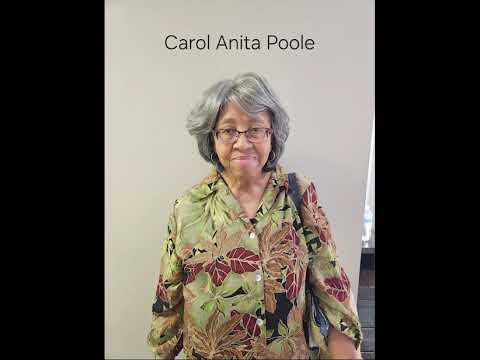
Sarah Witterhold: All right. Hi. And thank you for coming to share your story with us as a part of the Children of the Struggle Oral history collection. We are at New Day Christian Church in Morganton, North Carolina on Saturday, November 9th, 2024. And we were talking with Carol. Anita, last name again?
Carol Anita Poole: It's Pitman Poole. Pitman
Sarah Witterhold: Poole. Okay. Here with Carol Anita Pittman Poole. And my name is Sarah Witterhold and I'll be your primary interviewer. And here we have Ashley Blanchard, who is doing audio. Samantha Keaton who is doing notes. And Sarah Proper, who is my co-interviewer. And we are all students at Appalachian State University. And we're conducting these interviews as a part of a class project. And we have a standard set of 22 questions and we may or may not get through all of them, depending on what you'd like to share with us. And if there is any question you prefer not to answer, we'll be happy to move on to another one. And thank you again for participating.
Carol Anita Poole: You're welcome.
Sarah Witterhold: So you said your name is Carol, but did you have a nickname growing up or in school?
Carol Anita Poole: No, they would either call me Carol or Anita. Either one.
Sarah Witterhold: Yes ma'am. And what school did you attend before integration?
Carol Anita Poole: Mountain View.
Sarah Witterhold: Mountain View. And around how old were you once your school was integrated?
Carol Anita Poole: I was 14.
Sarah Witterhold: Fourteen. Okay. And so going to your county and how it was like living in Burke County, what was it like being black when you were a child, like in Burke County?
Carol Anita Poole: It was calm. Calm. It was calm. That was the word I'd use. Calm.
Sarah Witterhold: Yes ma'am. And did you ever travel outside of Burke as a child?
Carol Anita Poole: Yes.
Sarah Witterhold: And did you notice any differences in treatment in those places?
Carol Anita Poole: Yes.
Sarah Witterhold: Yes ma'am. Would you like to elaborate on those?
Carol Anita Poole: Mother's family was from Tennessee and we would go by train to Tennessee lots of times. And Tennessee still had some places, had the segregated signs.
Sarah Witterhold: Up? Yes ma'am. And when you found out that you were going to be into an integrated school, what feelings arose within you when you found out?
Carol Anita Poole: It was just a challenge.
Sarah Witterhold: And did your parents, guardians or friends or family, did they have any certain opinions that you remember about desegregation?
Carol Anita Poole: No, they didn't. Didn't voice any objections at all.
Sarah Witterhold: Yes ma'am.
Carol Anita Poole: Didn't even voice any concerns.
Sarah Witterhold: Because…
Carol Anita Poole: I was reared to rise to a challenge.
Sarah Witterhold: Yes ma'am. And what were some of your earliest memories about desegregation?
Carol Anita Poole: I remember I didn't go to segregated classes, like I said, until I was 14, until the ninth grade was all in West Concord. But some of my classmates went in the seventh and eighth grade. But I chose to stay at Mountain View mainly because my mom worked at the Mountain View Recreation Center, which was right up above. So…
Sarah Witterhold: Yes ma'am. And was the transition during desegregation for you…did you see any differences with your peers who may have gone to other schools?
Carol Anita Poole: No, I didn't know.
Sarah Witterhold: Yes ma'am.
Carol Anita Poole: Anybody.
Sarah Witterhold: And did the racial makeup of your class, did you notice any significant changes?
Carol Anita Poole: No. In several of my classes though, I was the only one. But that was just for that period. Just depending on which period you had your class, first period or second period or whatever.
Sarah Witterhold: Yes ma'am. And in your experiences and observations, how were your relationships with students of other races?
Carol Anita Poole: Once we got to know each other it was fine. Mostly the girls. We had several friends that were white and I had never had any white friends before. Yes. But we were all goal-oriented, so that made a difference too. because I went to school. A lot of students that were doctors children and city government's, children and people like that.
Sarah Witterhold: Yes ma'am. And what type of resources did your school provide? Did you notice a difference between materials or books? Like before integration?
Carol Anita Poole: Yes, I did notice a change in the books. The books were more detailed. It seemed like ours were older, but we took care of what we had. We always had to cover our books with paper to make sure that they would last for the next person that came along.
Sarah Witterhold: Yes ma'am. Alright. And do you feel like you had the resources you needed to succeed before desegregation?
Carol Anita Poole: Oh yes.
Sarah Witterhold: Yes ma'am. Okay.
Carol Anita Poole: Yes.
Sarah Witterhold: And talking about school, did you partake in any extracurriculars at school and if so,
Carol Anita Poole: No, not at first. My sophomore or senior year…I can't remember…or junior year I think it was, I was asked to join the Anchor Club.
Sarah Witterhold: At…
Carol Anita Poole: Morganton High. So I enjoyed doing that because that was all girls.
Sarah Witterhold: And what did you do in the Anchor Club?
Carol Anita Poole: It was a club that was oriented towards community service.
Sarah Witterhold: Okay, nice. And did you participate…and you said that was before or after desegregation?
Carol Anita Poole: After.
Sarah Witterhold: After. Okay. And what support systems did you have for education? Any faculty or teachers who stand out to you? Maybe even your parents?
Carol Anita Poole: Yeah, mostly my parents. There were a couple of teachers that were very supportive.
Sarah Witterhold: Yes, ma'am.
Carol Anita Poole: My French teacher and my English teacher were very supportive at that time.
Sarah Witterhold: In what ways did they support you?
Carol Anita Poole: Just the encouragement and whenever I asked a question, they were very thorough to answer it. Some of the teachers, well there was just maybe one that was not, didn't really want to answer my questions, but whatever was said, I just took it like it was.
Sarah Witterhold: Yes ma'am. Do you feel like any of your family or friendships changed after desegregation?
Carol Anita Poole: No, not really because most of my friends were, we were all tied with the church. The church was essential for all of us. And so our churches would sometimes have different programs in the afternoon at different churches and we'd visit each other and see each other.
Sarah Witterhold: Was your church a close knit community?
Carol Anita Poole: Yes, I think so.
Sarah Witterhold: Do you remember any tensions throughout your community or your school during this time that was related to desegregation?
Carol Anita Poole: Yes, there was a tension as far as the cheerleaders, I remember that there were no black cheerleaders for a good while. I think by my senior year, I think there was one.
Sarah Witterhold: Okay. And how did that make you feel?
Carol Anita Poole: Well, it made me feel, of course I wasn't going to be a cheerleader, but it made me feel closed in.
Sarah Witterhold: The…
Carol Anita Poole: Opportunity wasn't really there, but we had to speak up about it.
Sarah Witterhold: And how did it make you feel once a black student became a cheerleader?
Carol Anita Poole: Great. Made me feel great.
Sarah Witterhold: That's great. Were there any leaders or groups that you can recall that may have helped or became a support system for your community as desegregation was happening?
Carol Anita Poole: I'm sure there were some. I can't recall right now who it was. Okay.
Sarah Witterhold: And did you have experiences with discrimination outside the school environment?
Carol Anita Poole: Not so much here, but my mother did. There was a dress shop uptown that Mother was going to take me. It was something special. She wanted to get me a dress. Anyway, when she came in with me, there were other people in the store and then people came in after Mother, but she waited on the white customers first before she waited on my mom. But my mother was always a person of dignity and she just waited her turn.
Sarah Witterhold: Right. Well thank you for sharing that story. Do you feel like these experiences shaped you into the person you are today? And if so, how?
Carol Anita Poole: I think so. You're going to meet people in all walks of life and it's how they were reared and you can't really blame them for how they were reared. If they were reared to be negative towards black people. That's the only thing they knew until they got out in the world and maybe the people that they were working with, then they got to know people. It was just a matter of not knowing, I think.
Sarah Witterhold: Yes ma'am. And when you grew up, what was your career like?
Carol Anita Poole: What did I want to do?
Sarah Witterhold: What did you aspire to do?
Carol Anita Poole: I wanted to, I liked math. I liked math and science and I wanted to help people. And when Western Piedmont, I got a catalog and I was looking through and said what nursing wasn't here at that time, I didn't want to be a nurse. I said I can't do that. But the medical laboratory curriculum came open and I said that's what I want.
Sarah Witterhold: And did you feel like you were supported in that?
Carol Anita Poole: Oh yes.
Sarah Witterhold: For your choice?
Carol Anita Poole: Yes,
Sarah Witterhold: By…
Carol Anita Poole: All my teachers. The principal during my last couple of years, I think that's when they came as Laughinghouse and, excuse me, Mrs. Laughinghouse was the guidance counselor and she was always supportive of everybody. She would find money if there's money to be found in scholarship or grant or something, she would find it.
Sarah Witterhold: Good. So we have two more questions for you and you are free to share anything you'd like to share during these two. What do you think is important for people to know and understand about desegregation from your point of view?
Carol Anita Poole: Just to understand that it was giving everyone an equal opportunity. Equal opportunities are important to a community, to a town, to a state. It's very important that people can come in on an equal footing and that they can fulfill their goals and life for their families.
Sarah Witterhold: And do you feel like you were given an equal opportunity after desegregation?
Carol Anita Poole: Yes, I think so.
Sarah Witterhold: And are there any other stories or thoughts you want to add or anything you wish we had asked?
Carol Anita Poole: No, I can't think of anything. It was just like I was saying, our teachers had prepared us for the challenge because they knew it was coming. So we prepared ourselves for that challenge because they might think that we didn't know as much as them or could not grasp or understand as much as they did. And we rose to that challenge.
Sarah Witterhold: Yes ma'am. Alright, well if there's nothing else you'd like to add, you are free to go. And thank you so much for your time and sharing your story. So after our interviews are transcribed, Dr. McKesson, she will reach out to you with any further information and if you have any questions for her, you are free to ask her once you leave. So thank you so much.
Carol Anita Poole: Thank you.
Sarah Witterhold: It was really nice meeting you.
Carol Anita Poole: Good to meet you.