
Interview with Elias Bryant
Description: Elias Bryant attended MacAlpine Elementary School and Olive Hill High School for most of his high school years. During his senior year in 1964-1965, due to desegregation he was reassigned to Glen Alpine High School. On his first day at Glen Alpine High School, the principal sent white students to one side of the gym and Black students to the other and addressed Black students using a racial epithet.
Date: 2015-09-09 Location: Morganton, North Carolina
Interviewer: Claude Sitton; Allen Fullwood; History Museum of Burke County
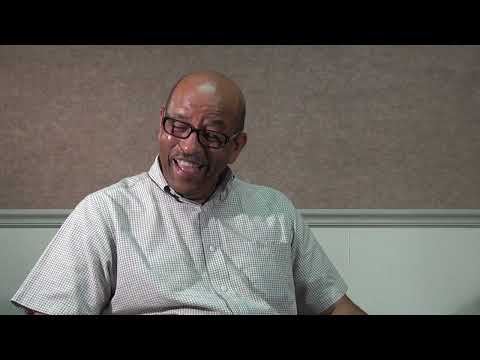
Today is September the 9th, 2015. I'm Claude Sitton and I will be interviewing Elias Bryant at the History Museum of Burke County. Good afternoon.
Elias Bryant: Good afternoon, Mr.Sitton.
Claude Sitton: And I ask you to tell us a little bit about yourself, your background, where you grew up, your name, your family, whatever you want to tell about going to school, etc.
Elias Bryant: I'm Elias Bryant. I'm the second of five children born to Robert Bryant and Mildred Bryant. We lived in the... we call it Tip Top section of Burke County. That would have been the... MacAlpine Elementary School where I went to school and after I went to Mac Alpine Elementary School I ended up going to Olive Hill. I went to Olive Hill for Three of my high school and in 19 and 65, 64, 65 we integrated. We was then assigned to Grand Pond High School. All right and.
Claude Sitton: Tell us a little bit about what happened during those years of, say, '64 and '65 when you–
Elias Bryant: Well, initially, when I first came to high school, I remember coming to high school, and I remember Mr. Carson and Mr. McIntosh. They were very good you know people who were there. And they knew most of my parents. They knew just about everybody, but they knew my parents. I also was in Mr. Coley's Future Farmers Home America program, and a lot of learning in that program. I had a good high school. I was in the band. Basically did that and we rode up. We bussed from McAlpine Elementary School to Olive Hill on one bus you know at that time.
Claude Sitton: Now how many years would you have gone to Olive Hill High School?
Elias Bryant: Three years. Three years.
Claude Sitton: So you really were integrated on your last year.
Elias Bryant: Senior year, yeah.
Claude Sitton: Well tell us a little bit about your experiences during this period of time.
Elias Bryant: Well, the first three years you know was was pretty good. I enjoyed my friends because you had friends, people that you know you grew up with and went to school with, and you made new friends. Well, in 1965, '66 was the first year of integration. And I'll never forget it because it left a little bad taste in my mouth, but I gained a great experience at the school. But the first year we came out, I'll never forget it, the principal said, I want all of the non-white students to go into the first floor of the of the auditorium, and I want the, he used the N-word, to go to the second part of the auditorium. And he says, Now the law says we got to go to school with these N-words, And we're not going to have any trouble. I remember that plain as it was just like yesterday.
Claude Sitton: Well, let me ask that—
Elias Bryant: And that's the only way I can remember. Yeah, it's the place where I can remember. And I and I was my uncle Chef. I don't know if you know Chef Brown or not. He was a concrete finisher, one of the prominent concrete finishers there, worked for a lot of the carpenters and people and he knew a lot of the people at that area.
Claude Sitton: Did we live down on Hwy. 18 South?
Elias Bryant: No, I lived. I lived at your uncle. No, Chef lived. He lived up at the we call it Tip Top.
Claude Sitton: OK,
Elias Bryant: up on the Cathy Rd. His house,the 1st house after you passed.
Claude Sitton: OK,
Elias Bryant: now that's where Tip Top is on. I would do slang. That's where he lives on Cathy Rd. All right. And and I said, oh, I said, but first, before I get that, my grandmother always taught me something a long time ago. Don't let nobody find who you are. So that was that was really not a problem. It was a problem that I that was my first experience at Burston County and to an integrated society because, you know, I knew, I knew where the bus, I knew my place then. I knew where the finals were when I came to Morganton. I knew where they were. So I knew where those places were and I knew what you could do and what you couldn't do. But my grandmother as a youth growing up, she was very in my life. She says don't let anybody find you. And so when I told my uncle about it, he reminded me, he said, you're going to school to get an education, disregard what the person said. And I went on and I finished. Well, I had a homeroom teacher by the name of Miss Miller, if you know or not. Her husband was a chaplain at the West Carolina Center. And she she helped me a lot getting through that. You know I kind of talked to her a little bit about it and she says everybody is not sensitive to some of the things and needs of everybody, so was able to get through that process. English teacher was Miss Linda Taylor. Judd Wilson was the football coach. And most of the people that was around sports didn't have too much problem because if you could play football, you know, back in that day, Glen Wade was, I think, more conference champion most of the years, if not all of them.
Claude Sitton: Let me ask you who the principal was.
Elias Bryant: The principal was, I just looked at my graduate diploma when I left home, Lane Arrington. The school board, the chairman at that time, was Mr. Young.
Claude Sitton: OK. Now, when you got together in this group, was it the principal or who was that that The principals and
Elias Bryant: The administrators were on the stage at this time. They had cheers. And the the way to describe it, the white students were sitting in the lower level of the auditorium, and we were sitting in the balcony.
Claude Sitton: All right. I have another question. You mentioned you knew where all the fountains were in Morganton. What significance to knowing where the fountains were?
Elias Bryant: Because of certain fountains you didn't go to.
Claude Sitton: Why?
Elias Bryant: Because they had signs of one. One said white and one said color.
Claude Sitton: So in other words, you say that you knew where that you were welcomed and knew where you were not welcomed. You knew
Elias Bryant: And where the boundaries were.
Claude Sitton: All right.
Elias Bryant: We rode the Burke transit and Burke transit we rode from we got to Morganton if we wanted to come on Saturdays or do something like that, whatever. We knew that the back of the we could the bus had you from the back of the bus we could ride to the front of the bus we couldn't sit in. But you know it was always ironic. I don't want to say this but one I can't remember the guy's name I wish to clip but sometime in the winter time and those buses had one heater. You know what the heater was up front. And if you if he picked us up at the at the last place he stopped to put up near 70 up there, if we got on the bus, he would say come up near the heater. But when we got to Glam Pine, we know we had to migrate back to the back. So at least we'd be warm if we got that. And that's just the way it was in those days.
Claude Sitton: All right. Now in those days, were those the days prior to integration or the days of integration?
Elias Bryant: It was a day of segregation and moving into integration.
Claude Sitton: Now, what was your experience after school started and the students?
Elias Bryant: I made some good friends. And some friends were just like you know this today. You know Had some good friends. In fact, I kept in touch with one-- give you an example how-- and that experience wasn't all that bad. Over the period of time, I made a lot of good friends. And And the the good thing that we kept in touch, we did our 35th class reunion. you know And now we can laugh about it. We were sitting at the Morganton Community House, I'll never forget it. We were sitting there with some friends and one of the friends said, you know the year that we integrated Glen Alpine, they used to have a junior and senior prom. That transformed to a junior and senior banquet. I remember the menu, green beans, potatoes, fried chicken and that. We went to the cafeteria. We sat like we was going to a restaurant you know somewhere. We sat down and we ate and at the end of the eating we left and that was it. That That was the stand of that. And then they had a trip I think either to the beach or Washington DC. That never happened after we went there. And at the 35th reunion some of the people were sitting down and we would laugh. We could laugh about it then. They said if our parents only knew because we were all there, you know Bo Taylor, Barbara Taylor, these are people now that that were classmates of mine at that time. We were sitting down laughing about how A better word, I guess the word ignorance, they were at that time and transitioning was that you know they did it then because you know they didn't know. They didn't know about us, we didn't know about them. So they they made it, that was one of the things that I can remember too.
Claude Sitton: All right, are you saying that there was no dancing going on in effect?
Elias Bryant: No, this this was just banquette, is what it said. We went there and sat down, ate, and we got up and left.
Claude Sitton: All right, when you ate,Did you sectionalize the group depending on?
Elias Bryant: No, what that means. Whoever got there, you just got a place there.
Claude Sitton: So you mingled together.
Elias Bryant: Yeah.
Claude Sitton: Now, what courses and activities did you take?
Elias Bryant: I took English under Miss Linda Taylor. I took Agriculture under Mr. Russell Gaylord. uh I can't remember the history teacher guy because I didn't like him. I'll tell you later why I didn't. Mrs. Miller was my homeroom teacher. Jud Wilson was the guy that at that time, I don't know if you remember that, they had the JTPA jobs and Mr. Jud Wilson was my supervisor. I came to the gym after school in the afternoon and they kind of did that. That was pretty much what I did.
Claude Sitton: Did you participate in anything like band or social clubs?
Elias Bryant: No, just Mr. Gaylord was an agriculture program to have there. You know I will tell you a bit of an interesting story about that is we were at Mr. Gaylord took us out we went to Gamewell and different places and he always, you know, take care of us as students and stuff. And we we ended up being judging. We were judging different things. I think there were animals, cows and dirt. We judged a lot of different things. And we came out pretty good on the score. We scored pretty good our of a lot of high schools. And they were having a banquet at the Hush Puppy Fish Camp, never forget it. So Mr. Gaylord called me and another student in and informed and said, you know, we really, now the schools integrated, but not all the all the places weren't integrating. So he called us in and he said, I really appreciate y'all have done a good job in the program, you know I did good grades. He said, we got a little problem. We're going to go and celebrate our accomplishments and they had that award and stuff. He said, I'll give you awards now. I can wait and give them to you after we go to the thing. At that time I said okay to it. I really didn't think about it. So I went on to talk to my dad. And I talked to my dad about it. You know Something just didn't feel right, just didn't feel right. And I will tell you it was. So I sat down and so Tommy Carpenter, you can verify this with him. Tommy Carpenter, he's doing medicine now. He said, Elias what you're gonna do? I said, “Well, we just won't go, Tommy.” The more I thought about it, the more I said, “No, that ain't right.” So that day I pulled up in his dad's driveway, Mr. Carpenter's driveway. I said, “Tommy let's go.” “We're going?” I said, “We're going to Hush Hush Puppy Fish Camp.” He said, “We are.” I said, “Yep, get in.” So we pulled up at the fish camp. And the people didn't know where them. They said, Oh, excuse us, sir. What, you know, you know and I just stayed like it was those days. You know, we had to go to the window, and everybody else got seats in the place. So they said, “What are you here for?” We said, “We're here with the Glen Alpine Green Wave,” what we call ourselves, the Green Wave. “Agricultural class is having a banquet here, and we're part of the banquet.” And they looked at us. By that time, Mr. Gaylord had come to the door and he didn't know what to say and they come on in, come on in. So we went on in, we sat down and we ate and that was the end of that. I'll never, I'll never forget that. That was expected. And and and and Whitman and and Reverend Cartman and I now laugh and talk about and joke about it because you know it's 40 years, almost going on 50 years past.
Claude Sitton: How many went to an 8?
Elias Bryant: Just me and him was on us too, at that time. Because see, in my class, in my in my senior class, there were only nine. Minorities. And I seem like I want to thank, now I've got my bloombody, I'm trying to find manual. Seemed like it was 80 total. That was 80 total of my other students, of my other friends. Yeah.
Claude Sitton: A moment ago, you said something about as one of the teachers that you did not like, and you tell me later, tell me of that situation.
Elias Bryant: Okay, I couldn't remember his name. There was an underclassman and I went in that's taking U.S. History. You ever know that's required, the best history is required. And I wish I could think of his name. And we we like to talk about it. Now he lives in Greensboro. He moved away. And we like to talk about, his mom was Mrs. Dora Tate. And we sat behind each other. And so what happened was, we were taking, we studied the Civil War. which I didn't have any problem with. I didn't have any problem with the Confederacy, I didn't have any problem with what was all going on because you know that was part of history. But he would get to the point, he says now, I want you to understand that the the Civil War was not between the North and the South over... It was better if he said slavery, but he didn't use that slavery word, he used the N-word. So later on, I've always been one of those kind of people that, you know so later on, Louis Tate was Oscar's brother. We said, we waited after school. And we said, we didn't talk with, I wish I could remember his name. For that reason, I can't remember his name. But anyway.
Claude Sitton: Maybe the mind's a brilliant thing. [chuckles]
Elias Bryant: It is, probably. But anyway, anyway, I went to him and he said, well, I just can't say Negroes were said, well, say colored people. He said, no, that's not what's in the book. He said, Negroes is in the book. I said, well, you just said it. See, you know, you know anyway, we were young. He was, he was, he was, he was. I don't like exactly how old it was. But I have some other good memories. My brother, Robert Brown, he's deceased now. He played for the Green Whites, played for Jerry Butler. He was the point guard and he was the basketball coach there at the at Glen Alpine. And I got to know him and my brother had more. And also my brother, he graduated from Glen Alpine and then, you know, it was very, very. yeah
Claude Sitton: Did your brother ever tell you any of the situations that he ran into or experienced?Tell us about it.
Elias Bryant: A good experience was my brother was playing Salem. I'll never forget it. My brother went down the court, in the court court he directs the traffic, right? So all of a sudden, this guy comes up and fouls him. And the first reason he didn't call him. And the coach sitting on the bench, I just told his name earlier, he said,So anyway, he's just like, you know just kind of suck it up. You know So anyway, my brother went on. So at the end of the game, at the end of the game, they won by the way, we we won, we won by the way. And so at the end of the game, Mr. Butler, my brother said, here's your uniform. I said, I'm still playing basketball for you. And he says, really, he said, you didn't stand up for me. I said, I'm not gonna play basketball for you. And I'll never forget this… the the And so we thought that was the end of it. So Mr. Butler found out where my dad lives. We lived up at that time on Bryant Ave. It's right Rd. now up there, but we lived there. And so Mr. Butler showed up one day. And he come in the house, my dad invited me like he needed anybody else. And Mr. Butler said, come on Mr. Butler. He said, you know, I said, yeah. He said, “Are you Robert's dad?” He said, “Yeah.” He said, “He's a very bright student.” My dad said, “I know that.” He said, “He's a very bright point guard.” My dad said, “I know that.” He said, “I need for you to get him to come back and play point guard for me so we can have a run for the championship.” And I know what my dad said. That's one time my dad said, he's sitting right over there. You can ask him if he'll come back. If he'll come back, he'll come back. If he says he's not going to come back, he said. I really not come back, he says, because I respect his decision. And my brother said, “I'm not coming back.” And that was the end of it.
I got drafted in 1969 and I went in service. Nobody is responsible for you but you, and I got two boys and I told them the same thing. I asked this seargent this one time, who’s going to take care of my laundry, and he asked “Did you bring your mom or your girlfriend with you?”, and I said “No”, and he said “Well then you’d better learn to do it yourself.” And from that day on, that’s what I remember. So all these things in my high school and formative years taught me a lot about life, I ran into some good people in service, and I ran into some bad people. But guess what? I ran into more good people than did bad people.
Claude Sitton: Great, now you talked a little bit about the water fountains in Morganton. Now let's talk a little bit about restaurants, hotels, the depot, going to movies, et cetera. What was your experience during that period of time, say ‘64 through ‘69?
Elias Bryant: That was transitioning, I think the city about that time took down the white colored signs, I can’t remember what year it was, but they took it down. You still didn’t feel easy going to them since they still had that stigma to them. So I basically didn’t go at all. Unless I went to the movies. Now the movies, it was still there, we had to go through the balcony, and going to the bathroom. I remember as a boy going through the balcony.
Claude Sitton: Did you have the same entrances and exits going to the movies?
Elias Bryant: I can’t remember that. All I do know is that when you went there, the white patrons went down and the black patrons went up. I do remember that.
Claude Sitton: I recall that there was a stairwell to the side going up to the balcony.
Elias Bryant: I think that was the way it was, I think that’s right. I know that when we come out we didn’t go through the same door they went out. I don’t know what door we went. Money’s green, so I don’t remember that.
Claude Sitton: Now did you eat at home, or did you eat at restaurants, did you eat at restaurants in Glen Alpine, or did you come and eat at restaurants in Morganton during this time period?
Elias Bryant: Most of the time we ate at home. We only came to town for shopping, we didn’t come for restaurants. When we did go to restaurants after they took they signs off at hush puppies I thought they had the best fish ever.
Claude Sitton: During this period of time, there may have been a group called the KKK. Did you ever see any KKK members, and if so how were they dressed and where you were?
Elias Bryant: No, I didn’t see nothing. My parents told me anything after ten o’clock was trouble. So I was home at a certain time. One night I do remember walking from Olive Hill to Glen Alpine. We walked from here to home, but anyway, right up there near a curve, that bridge near that curve. A lot of people got killed at that little bridge. And we were going home that night, and someone was throwing eggs at us. They were throwing eggs, and we were throwing rocks, and eventually, they ran away.
Claude Sitton: Were they on foot, or were they?
Elias Bryant: They were on foot. I’m trying to think of something else interesting about… I went to Western Piedmont Community College. I think that was very important, and I think that was good for the community. If anything, community college helped the community. I was there for two years. At that time I went to community college, (unintelligible),and then I went to Appalachian.
Claude Sitton: Alan Fullwood is sitting in with us here. What experiences have you observed with him and his involvement, if you recall?
Elias Bryant: I remember his wife, she was my biology teacher. She was a biology teacher, I had more contact with her than I did with Alan, but I’d seen him around the community, I know him.
Claude Sitton: What was your experience with attending the biology courses along with other students?
Elias Bryant: Well I don’t know, it was part of the learning, part of the process.
Claude Sitton: Did you see other students respecting her?
Elias Bryant: Yeah, yeah. There was more respect for teachers 50 years ago than there is now. When I was going to school, it was Mr. Carson, Ms. Carson, Ms Fullwood. It's just different today.
Claude Sitton: Well, does anything else come to mind that you’d like to tell us during those years of transition from segregation to integration during the desegregation process?
Elias Bryant: I think segregation was wrong. I think desegregation was an important part of the process, that we’re still going through the process now. I do think that problems that affect youth from rural areas was very important. Even the job that I had at JT was important, because even though it wasn’t much fun or pay, you learned skills, you learned a few little skills that you could do. Those were just temporary jobs that could get you where you wanted to go. I use that same analogy when I talked to my son when he went to state, he worked at McDonald’s. McDonalds isn't the place you want to be your whole life, but McDonald’s is a start, you don’t want to work at McDonald’s all your life. I think some of those things are lost cause they don’t have problems like that, you know everything now is transitioning to high tech and stuff like this, there’s a lot of kids that will come along and not get the experience.
Claude Sitton: You’ve spoken about one son, do you have any other family? What about you and your spouse?
Elias Bryant: I’ve got two sons, and a wife, and both of them were able to go through the Burke County School system. One of them went to Appalachian State University, and one of them went to State. They were both involved in city things. But one of the things was that my sons got to enjoy the city of Morganton Recreation Center, and we never got the benefit of that. We would have picnics annually, and we would go to Holly Hill Park. And they had a recreation center and a place you could cook, and we did that And that was another thing that was very important.
Claude Sitton: Anything else that you think you want to tell us for the benefit of your family, and us, the History Museum and our exhibit?
Elias Bryant: Well, Morganton is a good city, I grew up in it. The school system here is one of the jewels we had. I went through Western Piedmont Community College. It gave me some insights I wouldn’t have gotten otherwise.
Claude Sitton: I remember you went into service, tell me about your service years. Where you were and so on?
Elias Bryant: You wouldn’t believe if I told you, but I’ll tell you anyway. My Grandmother and mother told me, I always believe that there’s a place and a purpose for everybody. I got drafted in 1969, and the draft notice said “I want you,” and I had no idea about firing a weapon of any kind. I think my dad had a 22 rifle of some kind, and I had only shot it two or three times throughout my lifetime. And the first thing they put me in was 11 Bravo, that was infantry. I was able to go there and get in there and learn a lot about discipline, learn a lot about physical training and discipline. I’ll share one experience with you that may help a lot of people understand. When I first got into service in 1969, I’d never played sports, so we had to run a mile. I tell this to my son and his classmates. My first mile was nine minutes, and my sergeant said “You’ll never get through life in the army doing this”. That afternoon I was working, and a young white guy came up to me and said, “You were struggling today with the mile.” I said, “Yeah I was struggling.” And he says, “What are you doing today after Chow?” Chow was what we called lunch or supper, and I said, “Nothing.” So he says, “Meet me at the track”. He said he ran the track at high school, and had a 4:25 minute mile, so I sitting there thinking, wow this guy can fly. He said “The first thing I noticed today was that you didn’t pace yourself.” So every day after Chow for, well what it was is if you don’t pass after eight weeks of basic training you’ve gotta recycle, that’s what it was. So I went down there for seven weeks with him. And I finished that mile 5 minutes and 25 seconds, and you had to get a certain percentile to beat it. There were 100 people in that class, and I made 2 in basic training. It just shows that two people working together can do a lot. I thank him for that forever. I didn’t know anything about him, and didn’t know about running. I thought for long distance and the mile you just had to run, I didn’t know anything about pacing yourself. So that was just one experience I had that helped me a lot. Then, like I said, I had a real good friend that went to Glen Alpine, and she’s deceased now, but she always kept in contact for reunions. And there were always good people in school, some people say things that are cruel, but that doesn’t bother you. You have to go on.
Claude Sitton: Alan, do you have any questions you’d like to ask him?
Allen Fullwood: Maybe Elias Bryant can talk about his experience at Olive Hill, since this year commemorates 50 years since its closing.
Elias Bryant: I was in the band, and Mr. Mculler was the Band Instructor, and he was also the Glee Club. I was in music, and I got in the Glee club, you had to be real real good to get in. But anyway, I enjoyed the activities, I was in the Band, I was in the glee Club. Mr. Mculler had a little shop, and we built bookcases and things like that.
Allen Fullwood: You were in Olive Hill for three years and Glen Alpine for one, how was that?
Elias Bryant: The faculty at Glen Alpine was great, some of em. The principal was… yeah. Let me give you an example, My homeroom teacher says, “If you want to get a job at West Carolina Center, when you leave, let me know.” Just an example like that. Ms. Miller lived not too far from where I lived, and she was the English teacher. We had Macbeth, and I thought I would never get through it, and she says “I’ll get you through it,” and she did, so you know.
Claude Sitton: Anything else?
Elias Bryant: No.
Allen Fullwood: I’d just like to thank you, Elias Bryant.
Elias Bryant: Well, you know. One of things I’d like to tell you is that the education system had some good and bad, but more good than bad. What I tell the young people of today is to get a good education. It really helps.
Claude Sitton: On behalf of the History Museum, I’d like to thank you and tell you we appreciate you for coming and sitting down with us.
Elias Bryant: I hope I didn’t ramble too much.
Claude Sitton: No, you did great, have a nice day.