
Interview with Doris Fullwood
Description: Doris Anne Luck Fullwood taught biology, math, and physical education during desegregation. She grew up in Asheboro in Randolph County and attended segregated schools. She went to an all-women's college and accepted a position at Olive Hill High School in Morganton as her first teaching job. After desegregation and the closure of Olive Hill High School, Fullwood was one of the few Black teachers retained by the school system. When Freedom High School opened in 1973 or 1974, Fullwood became Chair of the Biology department where she wrote the curriculum, developed workshops, managed the budget, and supervised faculty.
Date: 2024-11-09 Location: Morganton, North Carolina
Interviewer: Alex Bouk
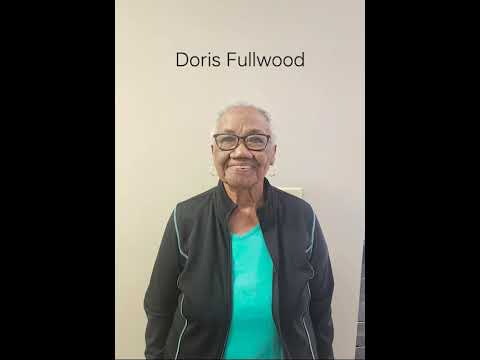
Alex Bouk: Alrighty. We'll go ahead and get started then. So, hello and thank you for coming to share your story with us today as part of the Children of the Struggle Oral History Collection. We are at New Day Christian Church in Morganton, North Carolina on Saturday, November 9th, 2024. And we are talking with Ms. Doris Fullwood. My name is Alex Bouk, I'll be your primary interviewer. We also have in the room Keya Nandi and Ethan Scheurich. So Keya will be kind of like my backup, if there's anything I miss, she'll kinda ask you some questions. Ethan's gonna take some notes just so we have like a good documentation of the order of this interview for, um, when we put it in, like written format. Mm-Hmm.
Doris Fullwood: Yes, I certainly will. My name is Doris Luck Fullwood. Uh, Luck is my maiden name. And, uh, to some I am known as Anne because I grew up as Doris Anne.
Alex Bouk: Doris Anne, very beautiful.
Doris Fullwood: That's the reason that's all written there.
Alex Bouk: Yes. Thank you so much. Um, you were a teacher or a student during desegregation?
Doris Fullwood: I was a teacher.
Alex Bouk: A teacher. And what did you teach?
Doris Fullwood: I taught biology and math. And physical ed.
Alex Bouk: Did you have a preference on a subject to teach?
Doris Fullwood: Oh, I loved teaching Biology.
Alex Bouk: Biology, yeah. Yeah, that's a good one. Um, do you remember what it was like being black in Burke County as a child?
Doris Fullwood: I was not a child in Burke County.
Alex Bouk: Oh.
Doris Fullwood: I actually came here as a first year teacher, um, at the all black school, which was Olive Hilll High School at the county. So I did not experience being, well, a student in, in Burke County.
Alex Bouk: Where did you come from? Where did you come from teaching?
Doris Fullwood: So I was in Randolph County. I went to, uh, an all black school. And, uh, felt very comfortable because we didn't know any difference at the time.
Alex Bouk: Yeah.
Doris Fullwood: And, uh, it was a good setting. I had a good support from family and, uh, the school staff with expectations for behavior and academics.
Alex Bouk: Most definitely. Yeah.
Keya Nandi: Okay. Um, so now we're gonna move on to a different section of the interview with the questions. So when you found out you'd be going to work at a school with white and black children, how did you feel? And did anything, like any family members or parents influence your feelings?
Doris Fullwood: Not really, because, um, having grown up in a very nurturing environment, uh, both in Asheboro and I went to an all-women college for women, which actually helped to give you that self-esteem. Yeah. I felt comfortable.
Keya Nandi: Awesome. Okay. Um, and what were the general feelings in your community when this happened?
Doris Fullwood: Uh, of course there were people who were against it. On both, from both sides.
Keya Nandi: Yeah.
Doris Fullwood: But, uh, the faculty, we made it work.
Alex Bouk: We've heard from some students that eventually everything kind of mellowed out. Did that reflect on the staff and the faculty at your school?
Doris Fullwood: Sure. Mellowed out.
Alex Bouk: Like everyone kind of eventually got along and we were just all kind of together. Did that ever, did that reflect in the staff and faculty?
Doris Fullwood: Yeah, I would say. I would say so.
Alex Bouk: Yeah
Doris Fullwood: It became an accepted thing. This is the way it is. And, uh, we'll go from there. Uh, I don't know if this is in your questions, but one of the things that uh, concerned me was that students who would've been recognized in the all black school students who would run for the president of the student government and, you know, leading in the choir, and those kinds of experiences did not happen, uh, for many students once, uh, desegregation occurred. That's, that's one of the things that, uh, concerned me.
Alex Bouk: Mm-Hmm.
Doris Fullwood: I felt that there was students who fell through the cracks.
Alex Bouk: Yeah. Yeah.
Again, um, growing up and working in the environment that I did, there were expectations. I felt that, many times, black students were not expected to one excel.
Keya Nandi: Okay. Um, and again, if there's any questions that we don't ask and you want to share, please feel free. Um, do you wanna move on to the next question. We are right here.
Alex Bouk: Yeah. Sorry. I'm just like all over the place. Um, what was the transition from teaching at an all black school to teaching an integrated school? Like, was there any big changes for you? Other than the people
Doris Fullwood: I'll tell you one of the things that happened, um, I'm gonna back up and give you a little backstory.
Alex Bouk: Yeah.
Doris Fullwood: I feel privileged that I was able to see the evolution of education in Burke County. I came as a young teacher, worked in the all black school. I was a part of the desegregation process that just didn't happen.
Alex Bouk: Mm-Hmm.
Doris Fullwood: You know, it took several years. And then the consolidation of schools, school boards and schools. Because I was at Olive Hill, I went to Oak Hill and then with the consolidation of schools, I went to Freedom High School. So that brought a different, uh, group of students, students who had never been, uh, in a school with black kids.
Alex Bouk: Mm-Hmm.
Doris Fullwood: For instance, Salem was an all white school. Um, so prior to going into Freedom where the consolidation had occurred, um, there were workshops for the teachers, um, as to how we were to work with the, uh, diversity of the students. Um, I spoke to a woman recently and told her that I remember her in our workshops. She did not like me then, but I have a relationship with her now, that I could say this. In fact, it's been about two weeks till I told her. So she said, well, what did I do? Thinking I would say but of course I would not, it was just her air that, uh, she did not want to be there. This was a white teacher. But again, I have developed a relationship, in fact, she called me last week to see how I was doing with, uh. Because a tree fell on our house, and we are not in our house. But anyway, that was one of my stories.
Keya Nandi: One of the experiences. Thank you for that. Um, and I had a question, but were there any changes in resources? Would you say like, were um, books better in different schools?
Doris Fullwood: Oh, absolutely.
Keya Nandi: Can you elaborate on any of that?
Doris Fullwood: Yeah. At the all black school, the books were used books, uh, sometimes you know where you wrote the name of the student in the book, all the spaces would be filled. All the athletic equipment, the um band uniforms all came from white school that were used, they were not new. Okay. And then, you know, during the desegregation you saw those resources that, uh, other students have been exposed to.
Keya Nandi: Mm-Hmm.
Doris Fullwood: I'm sorry?
Keya Nandi: Um in the integrated schools, afterwards, do you think that: yes, there were more resources and they were distributed equally?
Doris Fullwood: Oh yeah!
Keya Nandi: Yes, okay.
Alex Bouk: Good. Um, in your observation of your students, how were relationships between black and white children in your school?
Doris Fullwood: Uh, they were just fine.
Alex Bouk: Yeah. They all got along pretty good?
Doris Fullwood: Both with me and my students? Yeah.
Alex Bouk: Or the, between the students?
Doris Fullwood: Oh, between the students! Uh, I guess the first couple of years it was difficult. One thing at one of the schools I worked in at Oak Hill High School, again, teaching science and math, um, the principal made the difference. It was an outstanding principal that did not tolerate no stuff going on. And I think he was the, um, catalyst for making it work at, at that particular school. And, and, uh, that was, let me see how many years this was after they actually did desegregated schools. Okay '65, maybe. Maybe, well. Yeah, in the next few years he was the catalyst that made it work at that particular school. I'm not so sure that all that happened at the other school 'cause you're gonna hear some other stories.
Alex Bouk: Mm-Hmm.
Doris Fullwood: Yeah. There are a lot of stories there.
Alex Bouk: Right. Um, could you tell us about a typical day in school before the integration processes started? Like at, um, Olive Hill. Olive Hill. Yes, sorry, I'm getting all my hills mixed up. What was a day in life at Olive Hill?
Doris Fullwood: Well, let's say we had home room, as a teacher, I had a home room class. I have a picture of how my room was. Um, the bell rang. We exchanged, you know, not exchanged but changed classes. Um, just like a typical high school.
Alex Bouk: Just like a typical high school. Yeah. Mm-Hmm.
Doris Fullwood: Yeah. Okay. And, uh, uh, the, you had hour, one hour periods. Um, students moved through the hall. And, uh, my first year we had a principal that did not. I'm talking about two different principals, because he did not tolerate ridiculous behavior.
Alex Bouk: And so you would say it didn't change after?
Doris Fullwood: Yeah.
Alex Bouk: Okay. Perfect. Um, what kind of resources did your school provide to you before integration in terms of professional development? You talked about, um, work, like workshops and stuff. Were there any kind of things like that for you? Not until afterwards?
Doris Fullwood: Not until afterwards. Okay. And as a department chair, at, um, at Freedom. And this was in [inaudible] I was department chair, so I actually had funds that I could control for, along with the staff, for equipment, um, workshops. Um, I mean, we had a pretty good, a good setting.
Keya Nandi: So, yeah. So you would say that you actively participated in creating some of those workshops, do you think?
Doris Fullwood: Oh, yes!
Keya Nandi: Okay. Awesome.
Doris Fullwood: In fact, again, and this is over, let see 73-74, um, when Freedom High opened. Um, I actually helped write the curriculum for the biology department. And, uh, we, we were, um, on quarter system. And so, um, students would change teachers sometimes, uh, at the, at the end of a quarter and so we, we wrote them biology curriculum, for that setting
Keya Nandi: To cater to that system?
Doris Fullwood: Yeah! Yep, yep. So I helped in writing, and I did workshops and, and even after, after
Keya Nandi: Um, did you deal with any difficult teachers during that period or when you were advising?
Doris Fullwood: Oh of course.
Keya Nandi: Oh, of course. Okay. Oh, um, can you share any experiences again?
Doris Fullwood: I think once you establish yourself, the respect comes. When you respect the individuals, they will respect you. And I think I established, and I don't mean sound cocky, but a level of confidence and then that helped me being accepted.
Keya Nandi: Yeah. Okay. Yeah. That's good to know.
Doris Fullwood: Um, and, and again, we're talking about over a, well, how many years? About 10?
Alex Bouk: About 10. Yeah.
Doris Fullwood: And, and, and those changes were going on in, in the county. Uh, not just desegregation, but also the consolidation of those schools. Where there had been no black kids in schools, you know. Does that make sense?
Alex Bouk: Yeah, yeah. Um, what kind of support system did you and your students have for education specifically before, um, desegregation?
Keya Nandi: Um, and by this we mean like, were there administrators that they particularly felt close, um, depending on, or churches that they were attending and the pastors influenced them a lot, if that makes sense? Communities that influenced them outside of school?
Doris Fullwood: Oh, absolutely. Um, the black community and the black churches are, and were very, um, instrumental in what was going on students, because back then kids went to, went to church. They had that, yeah. One of the things that really impressed me when I first went to Olive Hill, I worked at the school, was that the parents went to the prom.
Keya Nandi: Hmm. Oh, cool.
Doris Fullwood: Yeah. I thought that was really neat. You know, everybody got dressed up and, and, and went to the prom.
Keya Nandi: Um, and after integration, did this change do you think?
Doris Fullwood: Yes, I don't think parents were, uh, as involved. Um, and, and over the years, I don't know how it's changed 'cause I've been out about 20 something years. But, uh, I did not see the involvement of African American parents. And, uh, unless something happened that you had to come. In fact, one of my best friends, have you ever been to Freedom Hill High school? Okay. Now, first off, there were no walls. There were very limited walls. You cannot imagine
Alex Bouk: No. Yeah.
Doris Fullwood: Wow. Very limited walls.
Keya Nandi: Wow. Yeah.
Doris Fullwood: So, so I was, I was teaching next to my friend Steven [inaudible], and he was teaching next to Nelda. And, uh, sometimes our subjects were coordinating and we really worked together as a team. And sometimes he would teach my class, sometimes I would teach his class. And so I always said I felt like I became a better teacher because of the setting we were in, that forced us to work together. I thought I was pretty good anyway, you can tell. Yeah. But I felt that I became a better teacher because of that, um, corporation that was developed.
Alex Bouk: Right. Yeah. That's cool to know.
Doris Fullwood: Mm-Hmm.
Alex Bouk: Is there any, um, person that really stands out to you from your experience in segregated and desegregated schools?
Doris Fullwood: Well, Bill Gray, who was the principal of Oak Hill High School.
Keya Nandi: And that's the exemplary principal you were talking about earlier. Okay. And honestly, you were probably that person for a lot of students.
Doris Fullwood: Well, I get told so.
Keya Nandi: Um, describe any tensions you remember around desegregation in your school or in the community and what came of them.
Doris Fullwood: Mmm, have to think about that.
Keya Nandi: Um, and I know some of these questions are worded difficultly, so I know that one, um, previous interviewee, he spoke about how the Western Concord mothers spoke to the school board and got them transportation. So that's kind of what we mean.
Doris Fullwood: There were issues with who's gonna be a cheerleader. Mm-Hmm.
Alex Bouk: Yeah. Someone else told us about that story.
Doris Fullwood: Yeah. That, that was the one thing that stands out.
Keya Nandi: Okay.
Alex Bouk: Cheerleaders, how many and who, um, yeah. I don't know why that stands out or not.
Keya Nandi:
Doris Fullwood: Yep. Yep. I'm trying to think. Um, I don't remember actual walk out. I'm trying to remember. I don't remember.
Keya Nandi: That's okay. We can come back to it if you remember anything.
Doris Fullwood: Yeah. Because again, that principal Bill Gray, he just did not tolerate anything in the schools and he was respected where we lived, he lived in the community. Yup.
Keya Nandi: That's, that's really nice to hear. Mm-Hmm.
Doris Fullwood: I'm sure there were, I was
Keya Nandi: Okay. Um, describe any groups or collective events that you or your family participated in that were related to desegregation.
Doris Fullwood: Of course we were members of the NAACP. And our church.
Alex Bouk: Which church was that for you?
Doris Fullwood: The Gaston Chapel. Gaston Chapel. Mm-Hmm.
Keya Nandi: And when you met with your other NAACP members, um, did y'all have meetings, uh, like weekly? Or how did they work?
Doris Fullwood: There were meetings, but I was, I was a member, but, but not an active members.
Alex Bouk: Okay. Do you remember any influential active members in your community that really stood out to you?
Doris Fullwood: Um, Reverend Hunt, after I remember his first name. Um, he was, uh, the pastor at [inaudible] Chapel, AME Zion Church. And I'm sure that anybody you talk to mentioned Fleming Macintosh, you'll hear that name over and over. Yeah. And then the other part that, that I can include was my husband Allen Fullwood who was on the school board. During the late sixties, and in the early seventies.
Keya Nandi: And, um, what, what attitude or what actions did they bring forward to the community that helped, um, not helped but kind of like convince everyone that this change was so necessary?
Doris Fullwood: Well, one thing was, there was a lot of respect for, for Reverend Hunt. And, uh, also provided a place for meetings. And you'll hear this particularly with the, uh, the mothers. Mm-Hmm.
Keya Nandi: Okay. So he allowed or kind of supported meetings.
Doris Fullwood: Yep, yep. He supported meeting, gave them place to meet and, um, that sort of thing.
Keya Nandi: Perfect. Okay.
Doris Fullwood: And I'm gonna think his first name in a minute.
Keya Nandi:
Alex Bouk: We will figure it out. It's all good.
Doris Fullwood: And, and his son, if his son were to walk in that door right now, I'd have the biggest hug and he would tell me that you are the reason I'm majoring in biology and work in science. I get that, I get it a lot.
Alex Bouk: That's such a nice thing to hear, it has to feel so good.
Doris Fullwood: It does. It feels so good.
Alex Bouk: Good, good.
Doris Fullwood: And I get that a lot that. You know, if you set out, I do appreciate it.
Alex Bouk: It must be such like a, I know that teaching is like such a rewarding, um, thing to do, so it must be really rewarding still, even now.
Doris Fullwood: It is, particularly during those times. Yeah. You know, so there were kids that, again, I'm not bragging, b there were kids that I encouraged to go to college and nobody in their family had ever been to college. Mm-Hmm.
Alex Bouk: Good, yeah.
Doris Fullwood: Anyway. That's not brag. That just fact.
Alex Bouk: I like that.
Keya Nandi: Yeah. I mean, I, oh, we are all here to kind of honor education. So this is really the point of what we're doing.
Alex Bouk: This is kind of a really negative question, but
Doris Fullwood: So, uh, going into the Belk department store at the, um, this is the first one that comes to my mind. Uh, going into the makeup counter, the cosmetic counter. And, uh, a white woman came and she was waited on before me. That's, that's the first one that stands out. Um, there was, uh, an incident in a restaurant that I, when I worked, I would call that restaurant to order food. And, uh, somebody white would be line behind me and they would be waited on. That's, that's the most, it bothered, probably bothered me more than anything else. So, and I must say yes, some of my experiences were probably more noticeable about being a woman.
Keya Nandi: Mm-Hmm.
Doris Fullwood: Than being black.
Keya Nandi: Okay. That was my next question. Do you think that being a woman, um, significantly impacted your experiences during all this?
Doris Fullwood: I, I don't think so. During desegregation, the only thing that I would remember is when I was at the central office and administration, the, uh, men had a secretary and the women had a shared secretary.
Alex Bouk: Hmm. That had to be-
Doris Fullwood: Don't forget that!
Alex Bouk: Don't forget that! How did these experiences shape you as an adult, either personally or in your career?
Doris Fullwood: Overall, I have had very positive experiences. I would, I would say. Again, I think it goes back to respect and being, um, and, and maybe being seen as cocky. And I think again, that came from the environment I grew up in and going to an all black college for women.
Keya Nandi: Yeah. Um, is there anything that you'd to share with the younger generation, um, about your experience that you want them to remember?
Doris Fullwood: Um, I'd have to think about that. Um, keep busy, stay outta trouble. That's the way I raised my, I have two adult daughters.
Keya Nandi: Mm-Hmm.
Doris Fullwood: And, uh, they were involved. They both went to Freedom. They probably hated that I was teaching them when they were in high school because everybody knew them. But, uh, they were involved. They were in band, they lead. Um, American Field Service. In fact, one my daughters went to Bolivia during the summer, um, for a summer program. And so being involved and, and the thing that I think parents, you need to know what's going on with your kids before, um, the principal calls and says they've been in trouble.
Keya Nandi: Um, sorry, go ahead.
Doris Fullwood: Did that make sense?
Keya Nandi: Yes, yes. Of course. Of course. That answered our question too. Um, are there any other stories or thoughts you wanna share? This is our last question. So it's kind of just whatever you wanna share with the, um, what, like, what you want on the website basically.
Doris Fullwood: Okay. And maybe I, I began by saying I feel, um, privileged to have experienced the evolution of education in Burke county. Cause I, I went through it all. And, uh, wow. I, that's my story!
Alex Bouk: Yeah.
Doris Fullwood: Yep. So, and I love Burke County. And actually again, I came here as a, as a first year teacher. I walked to school every morning, with my three inch heels. Because I was about half as big as I am right now. And I had to separate myself from the, uh, from students! But, uh, I had students that tell me, [inaudible] and, and they were being cocky. "You can tell us what to do 'cause we're as old as you."
Keya Nandi: Mm-Hmm.
Doris Fullwood: And back then with the GI bill, uh, they could come back and finish high school. So, I did have, uh, students in my class who were not quite as old, but close to being my age. So I, I felt that it was important for me to separate my, myself, from the students. Uh, in part, one way to do it is to dress. I went to, um, a workshop on discipline and I [inaudible]. Now you ladies, in general or partly, you will get this. But I looked at the way the teachers were dressed and I said, no wonder you have discipline problems, cause you have to separate yourself from the kids.
Keya Nandi: Mm-Hmm.
Doris Fullwood: And one of the ways to do it is to dress. And that's, that's one my [inaudible].
Alex Bouk: How did you dress? Like what kind of, just really formal or?
Doris Fullwood: I don't know. Let's see. Well, first of all, as a woman, I couldn't wear pants.
Keya Nandi: Wow. I didn't know that!
Doris Fullwood: Yes. In 1961, I could not wear pants. So I wore lots of um dresses and wore suits. And I wore heels. Um, yeah. And I can say that I was about half as big as I am now. But anyway, I just felt that that was important. Well, I was taught that way. Yeah. Again, growing up, uh, in the environment that I grew up in and the time and the, and the college that I went to, the college I went to emphasized, uh, the way you dress, the way you carry yourself.
Keya Nandi: Mm-Hmm.
Doris Fullwood: Um, you wouldn't believe this. I mean, schools in Grangeville, the school is still there. And if we went downtown, we had hats on and we wore gloves.
Alex Bouk: Mm-Hmm.
Keya Nandi: We need to adapt that. Yeah. Now people come to school in sweats
Alex Bouk: People show up at school in pajamas. It's like,
Doris Fullwood: I know. I know, I know. Yeah. Yeah. But, uh, we were in, the South. We were set aside in our behavior, they way we looked, and the way we dressed. So we actually had workshops, not workshops, classes! On how to set a table. The forks and spoons.
Alex Bouk: Yeah. Yeah.
Doris Fullwood: That was part of, uh, and a lot of kids who had come to this college didn't have, you know, didn't have that kind of background. Mm-Hmm.
Keya Nandi: Do you mind me asking what college you went to?
Doris Fullwood: I went to Bennett College. Which, which is a historically black college in
Alex Bouk: Yeah. I've heard, I've heard of them. Mm-Hmm.
Doris Fullwood: And that and Spellman, they're both historically black. And then [inaudible] was across the, uh, railroad tracks. Again, yes.
Ethan Scheurich: Um, I, I just had this question. Um, so before desegregation like 1965-1966, what were your thoughts or what were your colleagues' thoughts on like, what you thought would happen? Like were you hopeful about it?
Doris Fullwood: Oh, yeah.
Ethan Scheurich: Yeah.
Doris Fullwood: Well, yeah. We, we, we, we knew the differences. Yeah. And felt that, uh, uh, it was, it was needed. Yeah. Uh, they, uh, uh, it was unequal.
Alex Bouk: Yeah.
Doris Fullwood: And it, it was not equal. And uh, I think that's the key word that people felt, um, that uh, once, and it was separate, but it was not equal. Right. I'm trying to think if I had a microscope in my biology class. Maybe. If I did, I didn't have it on. When I was at Freedom High School, there were so many microscropes.
Keya Nandi: Thank you for sharing your story with us. Those were the, um, last of our questions.
Doris Fullwood: Okay. Um, did you have anything else?
Ethan Scheurich: Um, no, it's okay.
Alex Bouk: So we will send you, um, the transcription of this, of this interview just in case there's anything that you really don't want out there. We will, no worries, take it out.
Doris Fullwood: I didn't say too much.
Alex Bouk: But we will send you a copy of what we've recorded and stuff just, just so you have it and it's yours. We wanna make sure your story stays your story. And if you have any questions, you can ask Dr. McKesson. You can talk to her now. You can send her an email, call, or whatever you gotta do.
Doris Fullwood: Okay. Well, were there any questions that I didn't answer?
Alex Bouk: You pretty much hit all of our questions, which is really, we're really thankful for that.
Doris Fullwood: Well. I am so honored to have been asked them. And uh, well
Alex Bouk: It means a lot to us that you, really, that you came out today.
Ethan Scheurich: Yes.
Alex Bouk: Yeah. This has been a pretty incredible experience for us. Just in terms of like getting to hear all these stories and stuff.
[Rest is small talk about Ms. Fullwood's home being affected by the hurricane.]