
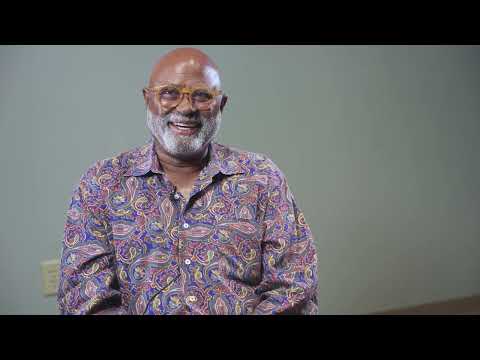
Gary Harbison
Description: Gary Harbison attended Mountain View Elementary, a segregated elementary school. At age 14, he desegregated Morganton Junior High School. He fondly remembers growing up in his community and Mountain View Recreation Center being an important gathering place to play sports, hold dances, swim, meet people from other cities like Gastonia. Harbison speaks about the difficulties and pain of desegregation and details the 1968 student walkout. Harbison was part of efforts to honor the West Concord Mothers who organized for transportation and achieved the pilot desegregation program for their children. He facilitated a Black History Month event at New Day Christian and asked the surviving Mothers and their children to speak. He also worked with Dr. Leslie McKesson to install a historical marker at Slades Chapel AME Church downtown to honor the Mothers.
Date: 2024-11-09 Location: Morganton, North Carolina
Interviewer: Alex Bouk; Ethan Scheurich
Alex Bouk: Okay, I'm gonna start with a little script. It's just for documentation purposes for our friends at NCSSM to kind of line everything up.
So, hello, and thank you for coming to share your story with us today as part of the Children of the Struggle Oral History collection. We are at New Day Christian Church in Morganton, North Carolina on Saturday, November 9th, 2024. And we are talking with Gary Harbison. My name is Alex Bouk, I'll be your primary interviewer. We also have in the room, Keya Nandi and Ethan Scheurich. We are all students at Appalachian State University, and we are conducting these interviews as part of a class project. We have a standard set of 22 questions, and we may or may not get through all of them, depending on what you'd like to share with us. If there is any question you prefer not to answer, we'll be happy to move, move on to another one. If there's anything you'd like to share that we don't ask you, there will be time for you to just Sure. Do whatever you'd like to do. Uh, we wanna thank you again for your participation and we'll get started. So, um, what is your name, and did you have a nickname or a different name when you were in school?
Gary Harbison: My name is Gary Harbison. That's Gary Harbison Senior. Uh, in elementary school, they called me Gary. Uh, when we integrated into middle school, they called me Harb
Alex Bouk: What school did you attend before desegregation?
Gary Harbison: It was Mountain View Elementary School.
Alex Bouk: And how old were you when your school was integrated?
Gary Harbison: I was 14.
Alex Bouk: What was it like being black in Burke County when you were a child?
Gary Harbison: Well, uh, growing up in a predominantly black neighborhood, of course, uh, our favorite meeting place was Mountain View Recreation Center. It was a, I had fun, we had intramural sports. We played football, basketball, baseball, and also, uh, the adults played baseball. And we had other, uh, communities from, uh, a far city, Gastonia. They would come to Mountain View Recreation Center for entertainment, uh, competing sports. And also we had a swimming pool, which a lot of these communities didn't have. So they would bring busloads of, uh, people there to Mountain View Recreation Center to enjoy the facilities. But overall, we had dances; We had a, we had a great time, uh, because everybody knew each other. And so we just sort of got along. And of course, there were a few fights along the way with older individuals, but most of the time it was, it was a good childhood.
Alex Bouk: Did you ever travel outside of Burke County as a kid or experience kind of like the different elements of what was going on?
Gary Harbison: Uh, no, not really, because my parents, they worked and, uh, on the weekends that was their times to relax and stuff. Relax, yeah. So, no, I never got to travel outside
Alex Bouk: What did your parents do for work?
Gary Harbison: My dad worked at Great Lakes Carbon Plant, uh, and my mom worked for Gerald Drexel Heritage.
Alex Bouk: Mm. We've talked about Drexel, yes.
When you found out that you would be going to a school with white children, how did you feel?
Gary Harbison: Well, uh, you know, I just uncertain.
Mm-Hmm.
you know how I would feel, because we were not talked to about the upcoming integration, that we were not prepped by anyone. It was just sort of like, okay, on this date, you will be going to, uh, middle school where you will mix with, white students.
Alex Bouk: And what was, did you, was it Mountain View Middle School, or what middle school was it?
Gary Harbison: No, it was called Morganton Junior High School.
Alex Bouk: Morganton Junior High.
Gary Harbison: We didn't call it middle school back in them days. You know, actually the building still stands, uh, along College Street Recreation Center near the comma.
Alex Bouk: So it's a, it's a recreation center now.
Gary Harbison: I'm sorry. Uh, uh, I'm sorry. I got College Street. College Street.
Alex Bouk: Right.
Gary Harbison: That's the street that it's on. Uh, but it is, it's going to be turned into some apartments.
Alex Bouk: Apartments, got it.
Gary Harbison: Yeah, they're working on that now.
Alex Bouk: Was there anything that kind of influenced your feelings about integration when you heard about it?
Gary Harbison: Well, like I said, it was just uncertain what's gonna happen. Right. Uh, you know, uh, we were never exposed to many white students, you know, growing up. And, uh, so on that particular first day, uh, walking to the school, because we had to walk everywhere we went. Mm-Hmm.
Alex Bouk: Oh,
Gary Harbison: Goodness. Uh, I remember the first day, uh, I heard someone said, look, here they come,
Alex Bouk: Do you remember, um, the way your parents felt about sending you to an integrated school?
Gary Harbison: Well, they did not express any hard feelings or anything. It's just behave.
Alex Bouk: Behave. Yeah, of
Gary Harbison: Course.
Alex Bouk: Just general parent advice.
Gary Harbison:
Alex Bouk: So do you remember kind of like how the commu-was there like a shift in your community when the integrated schools opened?
Gary Harbison: What do you mean by shift?
Alex Bouk: Like, was there a general feeling of, I know you said that you felt uncertain, but was that like a general, like everyone kind of felt uncertain or was it kind of just you? Do you remember?
Gary Harbison: I think it was just me. I just really didn't talk to anyone about it. Yeah. Other students.
Alex Bouk: Right.
Gary Harbison: Uh, of course, uh, there was a fellowship with like five other guys who grew up from the first grade all the way up to the time we integrated. Mm-Hmm.
Alex Bouk: Everything kind of changed.
Gary Harbison: Yeah. Uh, it was a, a real, I guess, anxiety for me. Yeah. Because I was the only black in every class that I had.
Alex Bouk: Oh my goodness.
Gary Harbison: Yeah. And I'm like, I was looking around like the first day I'm like, well, where are some of the people I went to school with? I'm like, and so all through that first year Mm-Hmm.
Alex Bouk: -Mm-Hmm.
Gary Harbison: But I soon adjusted, you know, to
Alex Bouk: Yeah. Do you remember, um, how your experiences with desegregation kind of changed over time? Like, I know you said it was kind of anxiety inducing before. Did it ever become like second nature? Like you ne- did you ever like really fully adjust to having mixed
Gary Harbison: Oh, yes. Populations? Oh, yes. I got to know, uh, other students very well. Yeah. Females, they, they were sort of warmed up to me,
Alex Bouk: Mm-Hmm.
Gary Harbison:
Alex Bouk: What kind of issues happened in high school? Do you want, do you feel comfortable sharing any?
Gary Harbison: Sure, sure, sure, sure. Uh, at the time, I say 1969, 68-69, a lot of the star athletes on the football and basketball team were black. And, um, so during the school year, we would vote on cheerleaders for the next year. And we were always outvoted. I I, my particular senior class, or either junior or middle school on up to my junior year or sophomore year, it was like 162 students in our class, per se. And only 23 were black. And so, as I say, the black athletes were the stars of the team. They, football, basketball, you know. And, uh, so when it came down to voting for the cheerleading squad, we were always outnumbered. Mm-Hmm.
Uh, I don't think she was quite petite like they wanted. So I'm just thinking this is what happened. And so the word got around and they got to talking. And so we staged the walkout on a, on a Wednesday at one o'clock. So I'd say about 95% of the black students walked out of high school that day. And of course, it was a big shock to everybody, the, the principal and the, the teachers. And, uh, so, uh, I was just joining the crowd. I, you know, I wasn't one of those that were part of the keeping the, uh, the stuff going and talking about what's happening. So I just went on, I just left with them. I knew what, what it was about, but I just, I wasn't really into the, the mix of talking about it. Mm-Hmm.
We only had three black, uh, instructors at, at the school compared to about, I guess I would say 60 white teachers. So one of Reverend Willie McIntosh, he was a, he was a mathematician. Uh, so they sent him after us. And so we went, met at his church. He was also a minister, so we walked down his church. And, uh, so the ones that were doing the talking told him what, why we walked out. And so he spoke to the school board, and we went to the school board and sat down on the floor and talked to them. Of course, none of this was documented at the time,
Alex Bouk: Right.
Gary Harbison: So they walked out.
Alex Bouk: Oh, goodness.
Gary Harbison:
Speaker 4: Mm.
Gary Harbison:
Alex Bouk: Mm-Hmm.
Gary Harbison:
Alex Bouk: Oh goodness.
Gary Harbison: Because I got kicked out of class. And, uh, the principal had, uh, Reverend McIntosh, the black mathematician there to talk to me. And he explained to me the lady had a right to her opinion. And I told him, I said, and I got a right to mine too,
I wasn't the best student, but, you know, I stood my ground
Alex Bouk: A student nonetheless.
A student nonetheless.
Gary Harbison: Yes. So, uh, you know, overall, we, we, we mellowed out.
Alex Bouk: Good. Good.
Ethan Scheurich: Um, hi. Um, what was the transition, um, between a segregated school and a desegregated school? Like, do you remember any particularly big differences, you know, between the two time
Gary Harbison: Well, I would say, uh, the courses that we took, because we were, had to use the used books in elementary school where the white students had more advanced learning and training. So we just sort of had to do a catch-up- thing, you know, and it was sort of difficult at first, but sort of we caught on, you know.
Ethan Scheurich: Nice. Um, I know, um, we kind of discussed this a little bit. Sure. Um, you said that, um, you were the only black kid in your class most of the time. Mm-Hmm.
Gary Harbison: Right, right.
Ethan Scheurich: But did you notice that change at all? Like, did it get more or less like the racial makeup of the classes?
Gary Harbison: I would, I would say so. Uh, now when we left middle school, we went over to the ninth grade and it was only ninth graders there. And like I said, we did get along pretty well. I did get in a fight there also with this big six-seven guy and busted me in my nose and blood went everywhere,
Alex Bouk: But the classes after you did have a good,
Gary Harbison: The, the class after us,
Alex Bouk: I think. Nice.
Ethan Scheurich: You were more integrated. How do you remember, um, relationships between students of different races? Like in general? Um,
Gary Harbison: Uh, you're saying different races as in
Alex Bouk: Like the black and white students? Yeah. Like, do you remember how a like a typical interaction might be between them
Gary Harbison: Now? I know, uh, from talking to some of the, uh, females
Alex Bouk: Mm-Hmm.
Gary Harbison: That they were not treated well by some of the white females.
Alex Bouk: Right.
Gary Harbison: And,
Uh, and I would say, uh, that's the case with some of the black males also, I got along with everybody. I'm, uh, you know,
Alex Bouk: Yeah.
Gary Harbison: Except for a few guys that, you know, showed their prejudice Mm-Hmm.
Ethan Scheurich: Um, I know you had mentioned a few anecdotes regarding this some, but how were relationships between faculty and students that were um different races, like a white teacher and a black student?
Gary Harbison: Uh, well, I, uh, I think it was good. Other than a few, yeah. Like I said, I can't speak for the whole student body, of course. Uh, but as far as the classes I was in, I pretty much got along except for that one
Ethan Scheurich: Um, could you tell me, um, what a typical day looked like before, um, integration? Like at school?
Gary Harbison: Uh, well, we would have our classes, uh, and then we would go out for physical education, which was always enjoyable with the, with the group. Uh, we, uh, we were all in the same class. Like I say, it was only like 20 of us. Mm-Hmm.
Ethan Scheurich: Were there any, um, significant changes in that routine after integration?
Gary Harbison: Oh, yeah. I, uh, I would say once we were integrated, then that closeness that I had with some of my students was sort of not as close as we were.
Ethan Scheurich: Yeah.
Gary Harbison: Because we were all in different classes and traveling different areas. They lived in different areas of town. Everybody did not live on that section of town where I lived. Mm-Hmm.
Speaker 3: Mm-Hmm.
Gary Harbison: What they did, because I was talking to one of the ladies, Leslie, it happened over in her county also, which is Caldwell County.
Speaker 3: Mm-Hmm.
Gary Harbison:
Alex Bouk: Of course.
Gary Harbison: But, uh, in this lady's biography, you know, I don't wanna get off track, but she was saying that, you know, that was the first year that Morgan High School won the, uh, girl's basketball championship and said "On court they were a team, but in school. Mm-Hmm.
Alex Bouk: Yeah.
Ethan Scheurich: So, um, what did you remember, um, your school offering you before segregation? Like, um, educational resources, like textbooks and extracurricular activities?
Gary Harbison: Uh, I couldn't say they offered any extracurricular activities. Uh, we had our textbooks and, uh, there was no advanced courses. And the thing, uh, in the earlier years, we had what they call the Glee Club, which is a choir. But as you got on up in the fifth, sixth grades, uh, they did not have an opportunity to participate in stuff. They d-me-id have plays, you know, we had plays and stuff.
Ethan Scheurich: Did you feel that, um, you had the resources you needed to succeed with those educational materials you had?
Gary Harbison: Probably not
Ethan Scheurich: And you had said, um, afterwards, after desegregation and improved, like, y'all got a different curriculum, y'all got the same textbooks as everybody else.
Gary Harbison: Right, right, right. Yeah. Uh, it was a little, it was a little tough. It was a little tough. Uh, but, uh, you know, we managed
Ethan Scheurich: Um, were there any extracurricular activities after desegregation and did you or anybody, you know, participate in,
Gary Harbison: Well, that was football and basketball. I, I did, I did not participate in those sports. I was, I was more or less a flirter
Ethan Scheurich: Alright.
Thank you.
Alex Bouk: Mm. What kind of support systems did you have for education before integration? Like,
Speaker 3: Go ahead.
Alex Bouk: Parents, teachers, community, church.
Gary Harbison: No, and, and I discussed that with my wife, that, uh, some of the, uh, teachers, they did not have any after school programs. They had a summer school.
Speaker 4: Right.
Gary Harbison: You know, students that had to get back up to level. But as far as any after school projects or anything going on, it wasn't there. And my parents, like I said, they worked all day. So I was pretty much on my own, had to pick it up and learn. So, uh,
Alex Bouk: In terms of, um, teachers and staff, like you said, did that change after integration or were there still like not very many resources for you?
Gary Harbison: Uh, I would say no. It wasn't many resources at all.
Alex Bouk: That's
Unfortunate.
Gary Harbison: You know, it was, I know, um, you know, when you first integrate, you get to know people. And then like, I guess the middle school, then, like, after we went to the ninth grade, I guess that's pre-High School.
Alex Bouk: Mm-Hmm.
Gary Harbison: I noticed a lot of, some of the students weren't there that I got to know. Mm-Hmm.
Alex Bouk: Mm-Hmm.
Gary Harbison: The ones, the affluent ones that ran the business that kept it for their kids. So e even today, uh, there's no opportunities for college education, educated kids to come back here. So from, I would say Winston-Salem onto to Raleigh, the opportunities are much better. So they don't come back here to work.
Alex Bouk: Hmm. Um, did in your experience, or just obs- observation, did family or friendship or community relationships change because of desegregation? And if so, how?
Gary Harbison: I don't think it did.
Alex Bouk: Yeah.
Gary Harbison: Much. Uh, of course, like I said, like my parents and the other students' parents, they worked all day. Mm-Hmm.
Alex Bouk: Mm-Hmm.
Gary Harbison:
Alex Bouk: Yeah.
Gary Harbison: Gather there. But as far as the adults getting together and discussing our future and what direction they think we should go, I don't, it didn't happen. It didn't happen. Uh,
Alex Bouk: Is there any particular person or event or prominent figure that you can tell us about that stands out to you from your experience in this educational system?
Gary Harbison: Well, uh, so let me think here.
Alex Bouk:
No worries.
Gary Harbison: Uh, well, I, you know, I knew some educators Mm-Hmm. One that taught my daughter when they integrated a lot of the black teachers had to leave the county to work. And, uh, I interacted with her and, you know, and I noticed that she was telling me some different things that she tried to do with some of the students that were below me in grade level. Mm-Hmm.
Alex Bouk: Okay. There was, um, do you remember any specific tensions around desegregation in your community and what happened with those?
Gary Harbison: Well, uh, I, I was young. You got I years old.
Alex Bouk: Yeah. 14. Yeah.
Gary Harbison: Now there were what they call the West Concord Mothers. Mm-Hmm.
Alex Bouk: Mm-Hmm.
Gary Harbison:
Alex Bouk: Mm-Hmm.
Gary Harbison: And so they could, they said, well, we can't provide a bus for your kids, even though the white kids had buses to ride. And so they contracted with a, a local bus company that would travel from Morganton to the various towns of Glen Alpine to bring the kids down to Mountain View School. I often wonder, I'm like, well, how come nobody gave us a ride? Well, we had to go on the other side of town. But unfortunately, uh, you know, uh, the elementary school where they lived, which was an all-white school Mm-Hmm.
Alex Bouk: Mm-Hmm.
Gary Harbison: By force. They were allowed to attend these schools. Uh, and course they were mistreated. Mm-Hmm.
Alex Bouk: Mm-Hmm.
Gary Harbison: So I did black history and included these ladies. And actually one of the ladies that participated in the, uh, school board march or whatever, went over to the school board. I had her to speak. And so, uh, you know, I decided to, I wanted to give each family a plaque.
Alex Bouk: Mm-Hmm.
Gary Harbison: And, uh, I don't know if you noticed the young lady that went out had the last interview, Beverly,
Alex Bouk: Mm-Hmm.
Gary Harbison: But she was the one that was running out for the cheerleading squad, and she didn't quite make it.
Alex Bouk: Oh
Goodness.
Gary Harbison: I'm thinking it involved around her, so don't quote me on that
Alex Bouk: Mm-Hmm.
Gary Harbison: So it all started getting together, and she was interested in it. And so we ended up putting a plaque in the History Museum. Well, Leslie, is part of the, I guess the North Carolina Historical Society.
Alex Bouk: Mm-Hmm.
Gary Harbison: So we, anyway, got the wheels rolling. And, uh, so we actually had a plaque put up outside the church where these ladies would gather to meet, honoring these ladies. It didn't call their names per se. Mm-Hmm.
Alex Bouk: Very good. Um, did you, going back kind of like, sure. We're gonna dig back in. That's good. That's to you as a child.
Gary Harbison: Yeah.
Alex Bouk: Um, did you have any experiences with discrimination outside of school? I know you mentioned you've gotten a couple,
Gary Harbison: Well,
Alex Bouk: Couple tussles, but did anything
Happen high school?
Uh, there's a mural downtown that I talk about. Mm-Hmm.
Mm-Hmm.
Gary Harbison: Uh, like I said, we had the hand me down books. Uh, we, uh, set upstairs at the movie theater. I think a lot of it was a given. This word had passed down through the history. You know, nobody said, "you can't go up there", so we just automatically went
Alex Bouk: Mm-Hmm.
Gary Harbison: Upstairs at the theater, which is now, it's still up. It's a, it's a photography place now. Um, Woolworths, it was a given that you don't sit down at the counter. We, we would stand and order, you know, at, uh, so, uh, then College Street Recreation, which I mentioned earlier by mistake. Uh, we had the Mountain View Recreation Center, which we had an outside basketball court out of cement that was a gathering place for everybody. And so College Street Recreation Center opened up. It had the nice wood floors.
Alex Bouk: Mm-Hmm.
Gary Harbison:
Like that.
Alex Bouk: Yeah.
Gary Harbison: Okay. Well, we were cool with that. So we'd go out and make our little hustles cutting grass. So we would buy Converse tennis shoes, which you have on today.
Alex Bouk: Yes.
Gary Harbison: Uh, so we save our money and we would go up to the recreation center with our tennis shoes across our shoulders, only to be met at the door again, saying, "I'm sorry, you can't come in. We're refinishing the floors". So, you know, all it was, it just didn't want us in there playing. Like I said, we did not know it was built by private donations for the white students.
Alex Bouk: Mm-Hmm.
Gary Harbison:
Alex Bouk: Mm-Hmm.
Gary Harbison: So, as I grew up knowing these individuals, you know, I'd go some of the basketball games and stuff, you never saw them wear blue, blue jeans. They all more or less dressed for success. They wore casual clothes. Uh, uh, most of them are dead now. I think there's a few of 'em still around, but you never see 'em in blue jeans.
Alex Bouk: Hmm.
Gary Harbison: They
Always, they always wear their casual clothes.
Alex Bouk: Very
Interesting. Did you have any specific career aspirations as a kid? And then did any, did integration kind of change that for you? And how did that affect your, in your
Gary Harbison: As a kid? I didn't, because like I said, I was having fun, you know?
Alex Bouk: Yeah.
Gary Harbison: But, uh, in, in high school, we met with the guidance counselor.
Alex Bouk: Mm-Hmm.
Gary Harbison:
It was a good job. And so eventually I left and went to the, uh, correction facility. Mm-Hmm.
Alex Bouk: Mm-Hmm.
Gary Harbison: And so they put a guy over, these two guys in Morganton who was black. He had the whole western region. And so when he came through and introduced himself, and soon as he left the office headed to Charlotte, uh, they called him from Raleigh, said, uh, we would like for you to come to Raleigh. He said, well, lemme make round of Charlotte. Said, no, you come to Raleigh now. Said, what did you say to these guys, down in Morganton? And they, he said, well, I went in and showed 'em my identification and told 'em I'm their new supervisor. He said, well, as soon as you, uh, left out, they called Raleigh, said, get our retirement papers ready, we're leaving.
Alex Bouk: Oh my goodness.
Gary Harbison: So they retired and two guys that actually came in took over. And, um, so I interviewed with them and I guess they were impressed. There was like 135 applicants. So, uh, I was the first black to work probation parole in Morganton. And actually they have a correction police, uh, uh, department thing at the History Museum.
Alex Bouk: Mm-Hmm.
Gary Harbison: So now I'm in the History Museum. It's the first black to work probation parole here in Morganton.
Alex Bouk: Fancy, fancy
Go ahead.
Ethan Scheurich: Um, so from your point of view, um, do you feel that there's anything important for people to know and understand about desegregation?
Gary Harbison: Well, I know a lot of the young kids today, they have no idea what we went through. Uh, I would love to, and I spoke with a pastor at one church. I said, "love for you to bring your, your students up here." But I, I just got the feeling they could care less. You know, they don't, they didn't have to go through it. They had all the benefits of computers and stuff like that. So I don't think history is that important to them.
Alex Bouk: Mm-Hmm.
Gary Harbison: Uh, I just feel like that we're two different worlds when it comes to the young people today, here, especially here, in Burke County, they got their own things. They got their own ways. You know, back in our days we had the Afros and we braided our hair, and then they, I don't know, they got a different hairstyle, different way of wearing their clothes. So it's not really a good connection, I would say.
Alex Bouk: Is there anything you think that could build that connection between generations,
Gary Harbison: Unless they were in church and the pastor really, uh, made an impression on 'em that they should know? I don't, I, I don't see it. I really don't. Okay. Just being experienced surrounding and stuff. Yeah. It's just, it's just like some of 'em don't have any goals or any ambition. Some of them do, but from what I've encountered, I don't, I don't see it.
Ethan Scheurich: Um, are there any other stories or thoughts you'd like to share that we didn't cover?
Gary Harbison:
Alex Bouk: Yeah.
Gary Harbison: But,
But it was sort of, it could be dangerous at times on the weekend. So
Alex Bouk: Are there any questions you wish we would've asked you during this interview that we didn't get to
Gary Harbison:
Alex Bouk: Good. Good. Glad to hear
Gary Harbison: It.
Hopefully I didn't go off on a rabbit trail and
Alex Bouk: Oh, we'd love rabbit trails.
Gary Harbison: Story. No problem. I
Alex Bouk: Appreciate after we get all of these interviews transcribed, you'll be sent a copy.
Gary Harbison: Sure.
Alex Bouk: Just to make sure that everything that's in there is something you'd want presented to the museum for people to
Gary Harbison: Sure.
Alex Bouk: Use to expand their knowledge. And then Sure. If you have any questions, reach out to Dr. McKesson and she will be happy to answer them for you.
Speaker 3: Alright,
Gary Harbison: No problem. Thank you so much. All right. Thank you ladies. Thank you for.