
Interview with Andrea Chambers Lytle (2022)
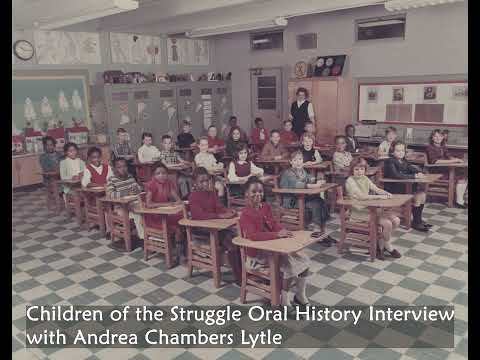
Description: Andrea Chambers Lytle and Jeannie Chambers Logan are the daughters of Willette Chambers, one of the Seven Mothers. Andrea recalls the Seven Mothers meeting at Reverend McIntosh’s home at night in order to develop a plan for their children to attend the white schools closer to their homes.
Date: 2022-04-09 Location: Morganton, North Carolina
Interviewer: Leslie D. McKesson
Leslie McKesson: Okay, Andrea, I am going to ask you to spell your full name for me, please.
Andrea Chambers Lytle: It's Andrea, A-N-D-R-E-A, C for Chambers, Lytle, L-Y-T-LE.
Leslie McKesson: Okay, thank you. This is an interview with Andrea Lytle on April 9th, 2022, and the interviewer is Leslie McKesson. Andrea, you are one of the children of one of what we call the West Concord Mothers.
Andrea Chambers Lytle: Yes, the Seven Mothers.
Leslie McKesson: The Seven Mothers. Tell me about that. What is the proper name for this group of women that we're talking about?
Andrea Chambers Lytle: It was the Seven Mothers.
Leslie McKesson: The Seven Mothers?
Andrea Chambers Lytle: Yes.
Leslie McKesson: Okay. When was that name first used?
Andrea Chambers Lytle: It was first used when they got together, all these mothers came together. There was six from the West Concord area, and then one that came from I would say Vine Arden. That was Laura-- What was her name?
Leslie McKesson: Thomas
Andrea Chambers Lytle: Thomas, yes. Laura Thomas. There was my mother, Willette Chambers, my aunt, Annie J. Hicks, Rose Johnson, Mildred Largent who spearheaded the whole thing, Ms. Lucille Rutherford, and, she's a Forney.
Leslie McKesson: Beverly Charles's mother.
Andrea Chambers Lytle: Beverly's mother, yes.
Leslie McKesson: I know who you're talking about, and I've got her name written down. What are your earliest memories of the Seven Mothers?
Andrea Chambers Lytle: My earliest memories was once they met in the community, then they reached out to Reverend McIntosh, and he had them come into his house up on the I used to call Yellow Mountain Road. They would go in at night, and they would meet on several occasions until he helped them to develop a plan on how they were going to get their children going to the segregated schools.
There was like Forest Hill which was closer to West Concord Street. We all used to have to go to Mountain View. (I'm going to have to pull this down.) I went to Mountain View up until the fifth grade. In 1964, that's when they did the integrations of the schools. At that time, there was four of us from my family that went to Mountain View school and that was Gary, Dennis, Jeannie, and myself.
Leslie McKesson: Wow.
Andrea Chambers Lytle: Well, one of the reasons they wanted us to go to Forest Hill because it was closer to home, and Mountain View was way across the other side of town. The way we got to school because there was no bus service, we all had to go in a taxi.
Leslie McKesson: Oh, wow.
Andrea Chambers Lytle: Boonie Fleming was the taxi that transported us to Mountain View. Forest Hill was within walking distance. Part of the plan was once they came together with a plan, the parents escorted the children to the Mountain View school. There was four-
Leslie McKesson: To Mountain View or Forest Hill?
Andrea Chambers Lytle: Forest Hill.
Leslie McKesson: To Forest Hill school.
Andrea Chambers Lytle: Yes. There was actually four of us. It was documented in my talk with Judge Sitton, but as I read the literature that's been printed and everything, there's no mention of us, the four that had to go to Central. Where the courthouse sits in downtown Morganton, there was a school called Central. That school was where a lot of the children from Riverside Drive and put all their little kids--
Leslie McKesson: It was Central what?
Andrea Chambers Lytle: I guess it was an elementary, middle school all combined but it was called Central. People that actually went to that school was Robert Forney, Beverly Forney, Marilyn Forney, and myself.
Leslie McKesson: Marilyn?
Andrea Chambers Lytle: Forney, which was basically Beverly Forney's sister, baby sister. We were all supposed to have been, well, at the time of integration, I had passed the fifth grade at Mountain View, but when we got sent to Central, Bobby Forney and myself got put into a special ed class.
Leslie McKesson: Wow.
Andrea Chambers Lytle: While we were in that class, that classroom consisted of a lot of children that had physical and mental development. We were more like an assistant to the teacher than we were getting an education.
Leslie McKesson: Wow.
Andrea Chambers Lytle: We had to help the teacher and take the kids to the restroom and do all that type of things. During that time, Bobby, I call Robert Forney, Bobby, he and I was on, I guess, it was, I don't know, quarterly basis or something. We was visited by a psychologist that came and gave us the inkblot test. Every time they did the test, they would come back maybe a couple of weeks later and say, "We don't understand."
I say, "Well, what is it you don't understand?" "Well, we just have to continue testing." They did that test for a year and a half. That final year that they did that testing, they told us, "We made a mistake." That's when I sit back and I said, "You made a mistake? Okay. What are you going to do to rectify this mistake?" They said, "Well, we have to talk to the principal and some other people and get your parents to come in."
When they tried to, with the church, when they came to try to make it right, they said, Okay, we can put you back into fifth grade. I said, "Why is that?" They said, "Because half of the school year is over and to put you back in your regular grade would not help you. So I got put back into the fifth grade. That was the year that I went to Forest Hill and finished the fifth grade, the sixth grade after two years taken from me. That put me into the grade with my sister and my brother.
Leslie McKesson: You never got to catch up. You just lost the year.
Andrea Chambers Lytle: I lost two years. They took two years out of my life.
Leslie McKesson: Two years?
Andrea Chambers Lytle: Yes. When I went to junior high, in high school, especially high school, I could not play sports. I played one year of basketball, and then I couldn't play anymore because they said I aged out of the program. That was not my fault but their fault. There was a lot of mistreated students there. When teachers asked other students, the white students, to assist us in math or something like that, they called us names, all kinds of names.
Even when walking home, from the junior high back to West Concord Street, there was three of us that used to walk together and that was Candace Forney, Revelee Ervin, and myself and the kids would not let us on the sidewalk. They would come down the sidewalk singing the N-word and push us out into the street. That went on all that year, but we had to fight. I hate to say it, but we had to fight. Every time we fought, we got reported to the schools. The schools would contact our parents and tell us that they need to do something about it or else we were going to be suspended from school. It put a lot of hatred in me during that time.
Leslie McKesson: The kids, the white kids were never punished or reprimanded?
Andrea Chambers Lytle: No, never, never. I had to endure that. It hurt, but we fought. Then finally, after so many fights with the kids, they started letting us pass. [silence] That went on up until, I guess you would say, when we got to high school. It leveled off a little bit. It wasn't as bad.
Leslie McKesson: Help me get my head around the timing here. You went to Central School in the fifth grade, right?
Andrea Chambers Lytle: Yes, supposedly.
Leslie McKesson: When you were in the fifth grade, but then they--
Andrea Chambers Lytle: I had finished. At the time they integrated the schools, I had just finished Mountain View, and then when they integrated the school, I was sent to Central.
Jeannie Chambers Logan: Wasn't it 1963?
Andrea Chambers Lytle: 64 somewhere?
Jeannie Chambers Logan: 63, because I remember my teacher Ms. Putnam. I was in her class, and that was the third grade. I went to Ms. Putnam. Y'all took the beating more than we did.
Andrea Chambers Lytle: We got the worst beating.
Jeannie Chambers Logan: Andrea and them got the beating more than we did. We was not accepted that much, and they tried to sit us in the back of the class and Mama made them bring us up to the front. She said, "I want her up front."
Leslie McKesson: Tell me what year--
Andrea Chambers Lytle: I think it was '63, somewhere around there.
Leslie McKesson: Jeannie, you were in third grade?
Jeannie Chambers Logan: Third grade, yes.
Leslie McKesson McKesson: Andrea, you were in--
Andrea Chambers Lytle: I guess I'd be in-- [crosstalk]
Leslie McKesson: You'd be in fifth at that time?
Andrea Chambers Lytle: I should have been in the sixth grade because then they held me back.
Leslie McKesson: When the teacher was trying to make you sit in the back, was that happening to all of the black kids that were in the class with you?
Jeannie Chambers Logan: I'm trying to see how many was in there with me.
Andrea Chambers Lytle: Was Gary Dean in there with you? They separated y'all, Jeannie was a twin.
Jeannie Chambers Logan: We were separated. It wasn't that many of us, but I do remember Mama speaking up and saying, "I want my child up front."
Andrea Chambers Lytle: It was you, and Freda and them, and Mildred's children Kakie and Wanda-
Jeannie Chambers Logan: That went to Forest Hill, and Frank Corpening.
Leslie McKesson: One of the things that she did was to speak up for you and get you moved off the back of that class?
Jeannie Chambers Logan: Yes.
Andrea Chambers Lytle: Even when my parents went to speak up for me, when they told them that they made a mistake, they said they couldn't do anything about it, except put me back in the fifth grade and start all over again.
Leslie McKesson: Wow. That had to be so frustrating.
Andrea Chambers Lytle: It was, it really was.
Jeannie Chambers Logan: There was always fights at the school.
Andrea Chambers Lytle: Oh, yes because of the anguish and the calling of names. [silence]
Leslie McKesson: How did this make you all feel?
Andrea Chambers Lytle: I was angry, and I would retaliate because of the slurs and the things they would call you in the classroom. The teacher did nothing about it. Even in the ninth grade, I recalled where a student pushed me into my locker as we was exchanging classes. I turned to him and I said, "You need to say excuse me." He said, "Why should I, N-word?" I followed him to his classroom, and I politely went up to the teacher and I asked the teacher, I said, "There's a young man in here that just knocked me into my locker and called me the N-word." I said, "What are you going to do about it?" She wouldn't do anything. I walked over to him, and I said, "I'm still looking for an apology." He wouldn't apologize. I lost it, and I turned around and I slapped him. I slapped him so hard that my fingerprints was left on his face. After I did that, I walked up to the teacher, I said, "Excuse me for interrupting your class, but I took care of it." I walked out the door.
Leslie McKesson: What did they do to you after that?
Andrea Chambers Lytle: Nothing. They didn't do anything to me. The principal kept telling us that they were going to call our parents because I remember Alice Kay, Deborah O'Neil and we had a principal named Abernathy, and he was saying that if we didn't get ourself under control, not the white kids, but the black kids, that they were going to have to call our parents in and do something about this. With that, I went on to graduate high school. I couldn't play basketball, but they made me like a-- What is the--
Jeannie Chambers Logan: You helped out.
Andrea Chambers Lytle: Yes, I helped with the team.
Leslie McKesson: Like a manager or something?
Andrea Chambers Lytle: An assistant manager, not a manager, assistant manager, but a manager of the basketball team. That really hurt, but I was able to go to college and still play basketball and then went on to graduate school, got a graduate assistantship and then coached a little bit in basketball at Illinois State. During that time, I just said, "I'm not going to look back." When I was in undergrad at St. Augustine, Burke County came to our college recruiting teachers. That anger was still built up in me and when I went for my interview, oh, they was telling me, "Oh, you are familiar with Burke County School, you this, that and the other, and we would love to have you to come back." At the time, I dressed militant when I went for that interview, my blue jean, my jacket, my Afro. I just looked at him. I said, "Well, if you know what I had to endure, I don't think I want to come back."
Jeannie Chambers Logan: That's why I wanted Andrea to be here because she went through more hardship than any of us. Ours wasn't like that.
Leslie McKesson: When would that have been?
Andrea Chambers Lytle: I graduated from there in what? '70?
Jeannie Chambers Logan: Was it '72?
Andrea Chambers Lytle: I graduated from Morganton High in '72. I'd say '76 right before I graduated. At that time, when I went for the interview, I had gotten that graduate assistantship, and I just said, "No, I'm not going back."
Jeannie Chambers Logan: Leslie, there's another young lady that wanted to talk with you. Her mother's in this picture with Mama, but they had emergency, and she had to go see about her brother today, and she wouldn't be back until Monday.
Leslie McKesson: Well, I'm going to--
Andrea Chambers Lytle: Her name is Christober. She was-- [crosstalk]
Jeannie Chambers Logan: She's a Johnson, and now, she's a Ferguson.
Leslie McKesson: I'm going to try to set up a way that we can capture these stories. I was telling Andrea that I'd like to get them like I'm recording this and get them in a transcript form so they can be available digitally. It can be a research database, and it can be something that works along with and supplements what they've done over there at the history museum, just so that we can get a fuller picture of the story while people are still around who remembered what happened.
Andrea Chambers Lytle: Exactly.
Leslie McKesson: What's her name?
Jeannie Chambers Logan: Her name is Christober.
Leslie McKesson: T-O-B-E-R?
Jeannie Chambers Logan: Yes, T-O-B. She's a Ferguson but she was a Johnson, and then it was Lucille ...
Leslie McKesson: She's Ms. Lucille's daughter.
Jeannie Chambers Logan: She was wanting to know, she said Monday or Tuesday is good for her. Either day that is good for you.
Leslie McKesson: If you would give her my phone number, and I'll pull out my calendar and see when-
Jeannie Chambers Logan: She can come.
Leslie McKesson: -we might be able to talk. I'm working now 20 hours a week. I got to play around that. I think this is going to be an ongoing thing because I want to capture as many stories as I can from people who--
Andrea Chambers Lytle: We didn't see Beverly and Marilyn that much except for outside of school. I don't know their story and what they endured. That may something you might want to capture-
Leslie McKesson: Beverly Colton?
Andrea Chambers Lytle: Yes.
Jeannie Chambers Logan: Yes.
Leslie McKesson: I've got her. She sent me a little bit of information on the email because Charles was one of the people that was working with the mothers, I believe. Does that sound right? Not working with them, but the mothers advised and taught and, like they did the rest of the kids.
Andrea Chambers Lytle: I guess so.
Leslie McKesson: Yes. Talk to her. What about Carl Ferguson?
Andrea Chambers Lytle: He was Rose Johnson's son. At the time, he was with my brother, Ervin, who is deceased. They went to junior high and high school. They were ahead of us. Now, my oldest brother, Roy Chambers, he went to Morganton High School with Artie Logan and all that group.
Jeannie Chambers Logan: Andrea, what about Robert Forney?
Andrea Chambers Lytle: Robert Forney, that's who I was telling her about. You can--
Leslie McKesson: He's the one who used to be married to Babe. Is that the Robert you're-
Andrea Chambers Lytle: Yes.
Jeannie Chambers Logan: Yes. I have his phone number.
Andrea Chambers Lytle: I think I have it in my phone too.
Leslie McKesson: Now, tell me about your brother Roy, again.
Andrea Chambers Lytle: He went to Morganton High School and graduated Morganton High School. He was in the class with Artie Logan.
Jeannie Chambers Logan: Now, who was the, I know, I wouldn't say the first black but the kids that was in the first class to graduate from Morganton High, you remember that?
Andrea Chambers Lytle: I think it was, was it Artie now. I think it was.
Leslie McKesson: I talked to her last Tuesday, I think.
Andrea Chambers Lytle: Artie?
Leslie McKesson: Yes. I'm going to do an article for Burke County Notebook that will publish not-- Tomorrow's Sunday, right? Not tomorrow, but next Sunday. What I'm thinking because there are so many stories in this, I'm going to set the stage for who they were and what they did, tell a little bit about the history of how they got started, so that stuff you told me about Rev McIntosh was gold, then speed forward to some of the things they accomplished. There's so many individual stories that can be a whole article. You just think about what you've told me, there's a whole article.
Jeannie Chambers Logan: It is a whole article. That's why I wanted you to talk with her. Now, did you tell him about her Rev McIntosh opened up his church and had Mom and them down there?
Andrea Chambers Lytle: They met a lot of places in the basement because the scrutiny-- [crosstalk]
Leslie McKesson: They had to hide. Artie told me they also met at Slades. Did they meet at Slades some?
Andrea Chambers Lytle: The only thing I remember is when the people, how I want to phrase this, the people when they came, the people would walk through Burke County, that's when we met at Slades and we got out there and marched with the marchers. What was that? Mildred Largent had spearheaded that. I guess we was the freedom marchers or whatever they wanted to call them, they came through Burke County and that was when the Hunts was here. Reverend Hunt was here. We went and marched to a certain point as they was going through Morganton going to the other counties and cities across.
Leslie McKesson: Wow. Was there any news coverage of that? Anything? One thing that I've seen to be noticing is that the news was absent.
Andrea Chambers Lytle: Yes, they were
Jeannie Chambers Logan: Yes. Even when mom and them walked us to school, the first day of school, going to the white schools, there was no coverage. We was not covered in the media.
Andrea Chambers Lytle: The media. I even remember Woolworth in downtown Morganton, I think they did a walk-in, a sit down there. I can't tell you who were the people were, but I know we had to go in the back door in order to go into the store. The water fountains downtown on the streets says, "For white only, and coloreds here," and all that. Those phrases that I do recall all that.
Leslie McKesson: There's a whole lot of stuff that happened in Morganton that didn't get reported.
Andrea Chambers Lytle: Exactly.
Leslie McKesson: I don't know if you've read, and I will send it to you all if you haven't read it, there's a senior thesis by Michael Ervin, who is one of the Ervin's, you know, Sam. His senior thesis is called "A powder keg waiting to explode," something like that, paternalism, and something in Morganton, North Carolina. Basically what he's talking about is how leadership and the media did everything they could to keep a lid on.
Andrea Chambers Lytle: Exactly.
Leslie McKesson: They didn't publicize things that were happening in the county because one thing I'm trying to do, I'm on the North Carolina African American Heritage Commission, and there is a committee called the North Carolina Civil Rights Trail Advisory Committee, and they are putting up 50 markers across the state that commemorate civil rights things in the state. Burke County is what's called a hometown-strong county, so we should have a priority. I think that this would be the story to tell for Burke County. Jeannie, can I get a copy? Is that about the mothers?
Jeannie Chambers Logan: Yes.
Leslie McKesson: Awesome.
Jeannie Chambers Logan: You want a copy of that?
Leslie McKesson: Yes. Anything you've got--
Andrea Chambers Lytle: This was an article that was done in 2012, and that one was done on March 6th, 2005.
Jeannie Chambers Logan: That was my mama's kitchen.
Leslie McKesson: This is from the News Herald.
Jeannie Chambers Logan: Yes.
Andrea Chambers Lytle: Yes.
Leslie McKesson: Good. I'm glad to see these because I hadn't been able to pull up anything. See when they do these markers, you have to substantiate them with what they call primary research information which comes from newspapers. I'm telling them, "You've got newspapers who did not want to tell the story. That was as much a part of oppression as anything else in the civil rights movement, so you have to get over that."
Andrea Chambers Lytle: That is so true.
Leslie McKesson: You got to look at testimonies and things of that nature to be fair and to tell the stories that actually happened." I'm hoping that we'll get a marker here in Burke County, and it needs to be in a prominent place where it is fairly easy to see. I thought if they made it Slades, Slades would be a good place because it's close to downtown, walking distance, but it needs to have been a place where they met.
Andrea Chambers Lytle: That was up from the Lake where McIntosh--
Leslie McKesson: Mack's was way up there at my house, drive all the way out there. I guess the Mack's Church .
Jeannie Chambers Logan: Yes, even at his church.
Leslie McKesson: Green Street.
Andrea Chambers Lytle: I think they might have met there for a little while, where they didn't have to be scrutinized where they had to go because they didn't want to get him in trouble.
Leslie McKesson: Yes, that's part of what I'm telling in this story, Sunday, how everything had to be very secretive.
Andrea Chambers Lytle: Yes, it's because he's the one that put them in contact with a lawyer, and it's specified in that article right there-
Leslie McKesson: Oh, okay. Good.
Andrea Chambers Lytle: -how they had to get a lawyer and get some direction on what they needed to do. It's more on the second page after they break it down into the plan. They knew everything.
Leslie McKesson: Excellent. Excellent. Jeannie, can I make a copy of these and bring them?
Jeannie Chambers Logan: Yes.
Leslie McKesson: Oh, I forgot she-- She got on, yes. [crosstalk] Is that a second one or is that the same?
Jeannie Chambers Logan: This is one that was done in 2012 where they was interviewing people in the community like Larry Brewer and Artie and Ruth Roseboro ...
Leslie McKesson: If you give me a copy of that too, that'd be great. Downtown Morganton Woolworth had a sit-in, huh?
Andrea Chambers Lytle: I'm thinking they had a sit-in, but I know that it was for white only, at the restaurant. Because you could go in there and order food, but we couldn't sit in there and eat food, we had to go out, take the food out, but you had to come in the back. You could shop there.
Leslie McKesson: Of course, you could spend your money there.
Andrea Chambers Lytle: Some of them that's a lot older than me could probably shed a lot more light, but we were able to go in and shop.
Leslie McKesson: It's important, I think, to capture and preserve these stories for younger people, who don't have any context for it.
Andrea Chambers Lytle: Exactly. That's why when I used to go to a lot of those NAACP lunch and banquets and stuff, and they would have these speakers, my concern was, "Why come y'all are not recording this?" I would say that every year. I'd say, "For our young people that can't attend or won't come, they could go back and hear these speeches."
Leslie McKesson: Even if it's 20 years later.
Andrea Chambers Lytle: Thank you. All they did was take pictures. I think I've recorded one, I have to go back and see if I could find it. I don't know if it was when Dr. Barber was here, the head of the NAACP. I think he was from Hickory at the time.
Leslie McKesson: Oh, I didn't realize he had local connections.
Andrea Chambers Lytle: I know I recorded one, but I have to go back and find it. I say, "I can't believe this."
Leslie McKesson: Man. Now, if there are a few things that you think are most important for people to remember about the Seven Mothers, what would they be?
Andrea Chambers Lytle: They took a big risk, I think. I think they had the carpool to Reverend McIntosh's house. I don't think my mother was driving during that time, but Mildred would transport and maybe one other, I think, Boonie may have taken some of them up there, Boonie Fleming.
Leslie McKesson: He was a cab driver?
Andrea Chambers Lytle: Yes. It was late evening, maybe dusk dark, when they had to leave out and be careful because they didn't know who was watching them. Like a lot of those mothers, they had to do domestic type work, and they worked in the homes of a lot of the white people, taking care of their children, even though they had children-
Leslie McKesson: Of their own.
Andrea Chambers Lytle: -of their own. That's why they had to be a little bit protective when they met with the school boards and talk about their children's situation and getting the integration passed so that we could go to the public schools. That's why my mother, I think, she couldn't protect me like she would want to because of that factor.
Leslie McKesson: Yes, that had to be a hard conflict, putting that maternal instinct against what you're trying to accomplish in the community.
Andrea Chambers Lytle: Right. Because my mother, I can remember distinctly, there was a lot of hurt, but I have gotten over it. She even told me at one point that's when the kids were marching the streets and we were retaliating because they were hitting us and going on, "If you don't stop this, they're going to put you in a reformatory school." That hurt, but now I understand why, but then, I did not.
Leslie McKesson: Didn't understand it.
Andrea Chambers Lytle: I didn't understand it. They had to work with the white man system instead of-- She had other children she had to protect too.
Leslie McKesson: I think it goes to the point of what Michael Ervin is saying in his paper, even though these women were trying to change society for the benefit of their children, they had to do it according to the laws and rules that the white people had established.
Fairness was not what called the shots, it was the systems that were already in place.
Andrea Chambers Lytle: Already put in place, exactly.
Leslie McKesson: That's deep. There was a huge sacrifice that your generation made for civil rights.
Andrea Chambers Lytle: I agree.
Leslie McKesson: So young. When we integrated, in Lenoir, I was in the fourth grade, we finally, was it '67? Yes, because I started in '64, so in '67 was when they finally mandated it and we all got integrated. I think sometimes the younger kids did get out of it unhurt as opposed to the older kids who were going through more developmental stuff, who probably faced more cruelty.
Andrea Chambers Lytle: Exactly, because I was even called "retard" by my siblings and other black children in the community because I was put in that special-ed class, so I had to endure that. It took me getting away from Burke County to find myself, and to live in the inner city and the diversity of people that I encountered in my life. It helped me to understand a whole lot of what I went through and where I am now in my life because it hurt a whole lot.
Leslie McKesson: The crazy thing about it, you get held back basically for two years, and you go to grad school.
Andrea Chambers Lytle: Right. I was robbed and I said, "Oh my lord, okay."
Leslie McKesson: You look back at that, and you think, "How in the world could that have been justified for someone who has the intellectual capacity to get through graduate school?"
Andrea Chambers Lytle: Thank you. After that, I even had an opportunity to go overseas and play basketball for a year in the South of France.
Leslie McKesson: That's cool.
Andrea Chambers Lytle: Who was it? Gloria had said, "I wanted to do the black history." I said, "A lot of people--" I look at it like this, you had the people and the black families in Burke County that was, I call it, the upper echelon, and you had some of them in the schools, and I can remember in the elementary schools, I had teachers to beat my hand, my knuckles. I'm lefthanded, and I used to turn my paper slanted to write, and my dad was left-handed, and they would beat my knuckles to try to make me write-
Leslie McKesson: With your right hand.
Andrea Chambers Lytle: Yes. I'm even-handed to a certain point, but every time I turn my paper, they turn my paper this way. I've come to forgive them after I moved back here. After they learned that I went off and made something of myself, there was a lot acceptable to me and I just said, "Oh, is that what it had to take?"
Leslie McKesson: How the times have changed, yes. Wow. Now, was that some of the black teachers that you had that were--
Andrea Chambers Lytle: Yes.
Leslie McKesson: Yes, I was going to say that sounded familiar-- [crosstalk]
Andrea Chambers Lytle: In the elementary school down at Mountain View. Out of all my momma's children, I think I endured the worst. [silence]
Leslie McKesson: You know what? Your story sounds like a book to me, I'm sorry, it really sounds like--
Andrea Chambers Lytle: [laughs] Sometimes, I say I'll write a book, and then I'll say, "No. I'll just keep going."
Leslie McKesson: Just keep on keeping on.
Andrea Chambers Lytle: Because I'm 70 years old now and--
Leslie McKesson: No. Well, I guess you have to be, but I look at you and I'm like, "No."
Andrea Chambers Lytle: March the 28th of this year, I turn 70.
Leslie McKesson: Wow.
Andrea Chambers Lytle: People say, "You don't look 70. You don't act 70." I say, "Well, I'm just me." I say, "I love me." [chuckles]
Leslie McKesson: That's a good thing, to be able to come out of all you've endured and be able to say, "I love me." That's powerful.
Andrea Chambers Lytle: That's why I had to find me and come to love me.
Leslie McKesson: A story, a book, or a children's book or something that just talks about resilience. Wow. Jeannie was right. She was right. Okay, let's see. I got Carl, who is Ms. Ferguson's son, Christober who is Ms. Lucille's daughter.
Andrea Chambers Lytle: Yes.
Leslie McKesson: Diane Tate was Thomas-
Andrea Chambers Lytle: Laura Thomas.
Leslie McKesson: Laura Thomas's daughter. You all are Ms. Willette's daughters. I'm going to talk to Beverly because Charles is dead, right?. Talk to Beverly.
Andrea Chambers Lytle: Ask her about Central because she, her and Marilyn, I'd say there was four of us that went to Central.
Jeannie Chambers Logan: Did Beverly go to Central? I knew Marilyn did.
Andrea Chambers Lytle: It was me, Bobby, Marilyn, and Beverly. Like I said, I didn't see them inside the school. I saw them more so outside the school, but I think they got into their regular classes. Bobby and myself was placed in--
Jeannie Chambers Logan: Bobby would be a good one to talk to.
Leslie McKesson: Bobby, do I have his--
Andrea Chambers Lytle: His name is Robert Forney, but we called him Bobby because we all-
Leslie McKesson: That was married to Babe at one point.
Andrea Chambers Lytle: We was all raised up together on West Concord Street, and we came from big families. [chuckles]
Leslie McKesson: Wow. That's how they used to have big families back in those days.
Jeannie Chambers Logan: We need to call them and see.
Andrea Chambers Lytle: Let me see if I can still find his number.
Leslie McKesson: You know just tell them, I'm just trying to capture these stories, and there's no big time limit on it. Just, if it's something they want to talk about, we can get together and do an interview about it.
Jeannie Chambers Logan: I know Christober, she truly wants to but I can-- [crosstalk]
Andrea Chambers Lytle: Let me see if I can get him now.
Leslie McKesson: Okay. [phone ringing]
Andrea Chambers Lytle: I just saw him this week in the store.
Leslie McKesson: I haven't seen him in a long time.
Bobby Forney: Hello.
I'm fine. Who this be?
Andrea Chambers Lytle: This be your friend and your playmate, Andrea Lytle, Chamber's Lytle.
Bobby Forney: Okie dokie. Now, I got the voice.
Andrea Chambers Lytle: You got the voice?
Bobby Forney: Yes.
Andrea Chambers Lytle: Okay. I'm meeting here at the public library with Leslie McKesson.
Bobby Forney: Yes, I know.
Andrea Chambers Lytle: She's trying to capture some information about when we were integrating the schools and I was trying to tell her the story of Central, you and I attended. Would you be willing to talk to her and let her get some information from you about that experience there, going through the Seven Mothers and all that?
Bobby Forney: Yes, when you want this done?
Leslie McKesson: How are you doing, Robert, this is Leslie.
Bobby Forney: Hey, Leslie, how are you?
Leslie McKesson: I'm good. Good to talk to you, it's been a minute.
Bobby Forney: Same here.
Leslie McKesson: I am not on a time frame. I got with Andrea and a few of them to do an article about the West Concord mothers for the paper next week, but the rest of this is just a project that I'm taking on over time, so we could do it anytime that is convenient for you.
Bobby Forney: Okay, because I'm just getting ready to head off to Lenoir do some work right now.
Leslie McKesson: No problem. Well, you want me to just have her to send you my phone number?
Bobby Forney: Yes, that'll be great.
Leslie McKesson: We can text back and forth, or whatever and set up the time.
Bobby Forney: Right, because I've got to get some things straight too about the year and all that stuff-
Leslie McKesson: Yes. That'll be good.
Bobby Forney: -and tell you why Andrea did while she was there. [laughter]
Leslie McKesson: We kept them children. [laughter]
I was going to say she spilled the tea on herself pretty good already. [laughter]
Bobby Forney: I hear you. Tell her go ahead, do that and I'll be glad to-
Andrea Chambers Lytle: Can I give her your phone number?
Bobby Forney: Yes, that's fine.
Leslie McKesson: Good. All right, thank you so much, Robert, I'll look forward to talking to you.
Bobby Forney: We lost our girl didn't we?
Leslie McKesson: Yes. Yes indeed, that was heartbreaking.
Bobby Forney: It was.
Leslie McKesson: Surprising to me, I didn't realize she had been sick.
Bobby Forney: You know, me and her, we talk quite often, but I didn't know that either.
Leslie McKesson: Oh, really? Wow.
Bobby Forney: Yes. I think it's something that she just wanted just maybe keep inside of her.
Leslie McKesson: Wanted to keep to herself. Do you know if Mary knows? You remember Mary from Legal Aid, Mary Wilson?
Bobby Forney: Oh, yes, I remember Mary.
Leslie McKesson: I asked Shandra if she had told her so, maybe, she said she'll reach out to her, so hopefully she will.
Bobby Forney: All right, I'll make sure that she gets the messages.
Leslie McKesson: All right. Sounds good. I look forward talking with you.
Bobby Forney: All right. Same here.
Leslie McKesson: Thank you.
Andrea Chambers Lytle: All right, you take care.
Bobby Forney: Bye-bye.
Leslie McKesson: Bye-bye.
Bobby Forney: You too, Andrea.
Andrea Chambers Lytle: All right. Bye. His phone number is [redacted for privacy].
Leslie McKesson: 8-2-7-9. Mine is-- You know what? I got a card I can give you. I can be professional.
Andrea Chambers Lytle: You gave me a card.
Leslie McKesson: That was a different one, but it's got the same number on it. You know what? This doesn't have my phone number on, but I'm going to write it on here. [silence] That's my cell phone number. You got to put some numbers on here. You know that's what the new businesses are doing these days, they just put an email address and no phone number, makes it hard to get in touch with anybody. Y'all, this has been gold.
Jeannie Chambers Logan: I'll never forget the day that the man came down from Boone to interview Mama and Ms. Lucille. He's from Boone, and he was white.
Andrea Chambers Lytle: That one was done in 2012. At the top of that one, it says-
Jeannie Chambers Logan: No, right here.
Leslie McKesson: This?
Andrea Chambers Lytle: It says March 6, 2005.
Leslie McKesson: 2005? This 2012. Which one is the one where the guy came down from Boone?
Jeannie Chambers Logan: That one right there.
Leslie McKesson: This one, okay.
Jeannie Chambers Logan: I wish I remembered his name, I don't know-- [crosstalk]
Andrea Chambers Lytle: They didn't give you their name because--
Leslie McKesson: They've got it listed on the Sharon McBrayer.
Andrea Chambers Lytle: I remember a lady coming.
Jeannie Chambers Logan: It was a man, I was there that day. Christober may remember.
Leslie McKesson: Does anybody still have this original photo that we could get a copy of? You know where it is?
Andrea Chambers Lytle: Will they have an original in there? I had that paper, and I don't know where I packed it away, but I had a picture-- I think it was a color picture that was-- I'm just going to have to look, and they have it packed out in my storage building at some point.
Leslie McKesson: You know, honestly, they may have it at the News Herald because they got permission to run it so they may have kept the original. This is something that needs to be done, I might have to pull in some help on this one. I've got a friend who is the head of the documentary department up at Appalachian, the one that did the Dulatown documentary. She's very interested in this.
Andrea Chambers Lytle: Oh, is she?
Leslie McKesson: Very interested. She was supposed to meet me yesterday and give me some real recording equipment, but she didn't get to come down here. I said, "It's all right, me and my iPhone, we got this, we'll do it."
Andrea Chambers Lytle: I was reading that article that Larry Brewer, where they interviewed him, and he was saying that he doesn't remember a lot about integration except what he was told and then talked about the people. If you read that article, I said, "Oh, this is interesting." I said, "No one ever came to me and say, 'What's your story?"' I said, "I could tell a story," even when Sitton and I was in, he e was really fascinated. He said, "All this happened to you?" He said, "Why did--" I started to say, "I didn't fit in that group of people, and sometimes, I still feel like I'm an outsider looking in ." I just said--
Jeannie Chambers Logan: Some of the family, people that had children that went to the school when they were integrated, I don't know who it was, but they got to some of the parents they were integrated, I don't know who it was, but they got to some of the parents
Leslie McKesson: Won't saying anything.
Jeannie Chambers Logan: Right, say everything.
Leslie McKesson: Even all these years--
Jeannie Chambers Logan: All these years, they buried it, they told them, "Hush, hush." Don't want them talking about it, and their parents told them not to talk about it.
Leslie McKesson: You know that's what happened with slavery.
Jeannie Chambers Logan: Yes, they did. [crosstalk]
Leslie McKesson: That's been going on throughout our history, "Shut up, don't talk about it."
Andrea Chambers Lytle: I said, "I have to talk about it now." I couldn't talk about it then because I was hurting, but I talk about it now. I said, "This is what I went through." If you weren't there, you don't know.
Leslie McKesson: Absolutely. Stuff like this, folk need to know, so it's not allowed to happen again.
Jeannie Chambers Logan: Yes, exactly.
Andrea Chambers Lytle: Yes, exactly. Because that's why they're trying to revert everything and take us back to that day.
Leslie McKesson: Just put a clamp on ii. Can't shut out the truth. It's going to come out.
Jeannie Chambers Logan: I can give Chris Tober your number and let her call you.
Leslie McKesson: Yes, and tell her she might have to leave a message.
Jeannie Chambers Logan: I'll tell her.
Leslie McKesson: Because my phone sees numbers it doesn't recognize and it automatically sends it to voicemail, so just leave me a message and I'll get back with her.
Andrea Chambers Lytle: Because like Bobby Forney said, "I'll tell you some of the things that Andrea did." Me, his sister, Candace Forney--
Jeannie Chambers Logan: Who is deceased.
Andrea Chambers Lytle: She's deceased now, and Revelee Ervin, we were the ones that had to fight our way from Morganton Junior High over the hill to West Concord to get home against the white folks.
Leslie McKesson: Y'all the ones that they wouldn't let walk on the sidewalks?
Andrea Chambers Lytle: Right, but we fought our way.
Leslie McKesson: That is a part of the story I needed to hear because I hadn't heard that side.
Jeannie Chambers Logan: Revelee lives in Charlotte, but she visits here.
Andrea Chambers Lytle: Greensboro.
Jeannie Chambers Logan: Is it Greensboro?
Andrea Chambers Lytle: Yes, she's in Greensboro.
Jeannie Chambers Logan: I can get her number from Carol because that's Carol's cousin, and maybe she can call you Andrea and get-
Andrea Chambers Lytle: She hit me up on Facebook, but I don't think 1-- I've seen her in Greensboro one time, but I don't think I got her number.
Jeannie Chambers Logan: I can get her number from Carol.
Leslie McKesson: Yes, and tell them this is going to be a long-term thing, so don't freak out if we don't connect within the next little bit because this is going to continue, it's going to build.
Jeannie Chambers Logan: Okay, continue with it.
Leslie McKesson: Yes. Well, thank you all so much.
Jeannie Chambers Logan: Thank you. I knew Andrea had a story to tell, that's why I told you-[crosstalk]
Leslie McKesson: Yes, and that's a story that a lot of people haven't said anything about. It's still a kumbaya story, "It wasn't that bad."
Andrea Chambers Lytle: Oh yes, it was. [chuckles]
Leslie McKesson: People were this and that.
Jeannie Chambers Logan: They went through it.
Andrea Chambers Lytle: I went through it.
Jeannie Chambers Logan: You went through, you, Bobby and--
Andrea Chambers Lytle: I said I can't tell Beverly's story because we didn't see them inside the school, we didn't have lunch at the time they were having lunches and everything.
Leslie McKesson: I know she's got a story, I've heard bits and pieces of it, I haven't heard the whole story, but I'll definitely get with her and get her story too. Was Gary Caldwell in there anywhere?
Andrea Chambers Lytle: Gary, I would have been in the school-- If I had been in my right grades, I would have been with Gary Caldwell, Perry Lattimore, Greg Crisp, and all them, but I got pushed back.
Jeannie Chambers Logan: Gary Caldwell was in the--
Andrea Chambers Lytle: Yes, he was in there, but he was ahead of me. They were two years ahead of me in school. I graduated in '72, and they graduated in '70, and I was supposed to graduate in '70.
Jeannie Chambers Logan: You might see Gary tomorrow if you-
Leslie McKesson: Yes, I probably will.
Jeannie Chambers Logan: You have to mention it to him.
Leslie McKesson: I'll tell him about it and see if he will-- We did something at, Western Piedmont, a few years ago, a couple of years before I retired, and we called it "The Home Game." It just has some of them talk about their experiences. Judge Sitton was there. He talked a little bit from the perspective of an adult white male at the time, but the purpose of the panel was to highlight these stories and let people hear some of the stuff that was going on then. Andrea?
Andrea Chambers Lytle: Yes
Leslie McKesson: Thank you. Thank you. That's a whole story. I told her that's a book. That's a children's book about resiliency and overcoming and stuff. Yes. Thank you.
Andrea Chambers Lytle: I stayed away 15 years. [laughs]
Leslie McKesson: I can understand why. Took some healing time.
Andrea Chambers Lytle: Oh, yes. A whole lot of healing.
Leslie McKesson: Yes. Thank you, Jeannie
Jeannie Chambers Logan: Yes.