
Interview with Rita Rankin
Description: In third grade, Rita Rankin was transferred from McAlpine Elementary, the segregated Black school, to Glen Alpine Elementary, the formerly all-white school. Rankin recalls segregated water foundations in downtown Morganton and the impact these experiences and the erasure of this history through courthouse square renovations and the presence of the Confederate statue has had on her. She discusses losing a close childhood friend when her friend's father prohibited an interracial friendship. Rankin describes the sense of community at McAlpine Elementary School and seeing Black adults in professional roles that she no longer saw them in after desegregation, and the loss of cultural nourishment when she was transferred to Glen Alpine Elementary--"it was like going from home to a strange land." Rankin's mother visited her children's schools to advocate for better treatment on several occassions after they were abused and humiliated by teachers. She describes differences in desegregation between Glen Alpine and Morganton. Rankin credits her family, parents, NAACP, church, and the Black community with providing support and advocacy during this time.
Date: 2024-11-09 Location: Morganton, North Carolina
Interviewer: Alexis Robinson; Ella Lowman; Hayden Zeagler
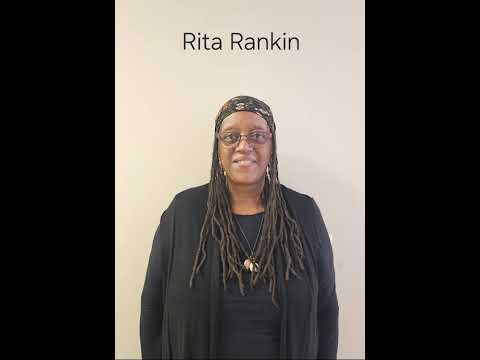
Alexis Robinson: There we go. Right, right. Set. I already turn that on. You got that one on? Mm-Hmm.
Ella Lowman: Okay.
Alexis Robinson: You try testing that for us, Rita?
Rita Rankin: Sure. Testing 1, 2, 3. Testing.
Ella Lowman: She here. You may need to move through.
Alexis Robinson: Think I just hear it through.
Hayden Zeagler: You probably need to move them up closer.
Rita Rankin: Me closer? Or the mic?
Clara Wilson: No, you could stay where you are.
Hayden Zeagler: As long as you're comfortable, doctor.
Rita Rankin: Oh, I'm going get comfortable. So I'll stop sweating.
Hayden Zeagler: That's perfect. Alright.
Rita Rankin: Try again. Okay. Testing one, two. Testing.
Ella Lowman: Good. Okay, great. Yay. We've all become a little techie productionist
Rita Rankin: I am sure.
Ella Lowman: You have. Yes. Let's see. Thank you for coming.
Rita Rankin: Sure.
Ella Lowman: and for being willing to share your story with us. We, so my name is Ella. We can do introductions first.
Alexis Robinson: Yeah. My Name's Lexi.
Hayden Zeagler: Nice to meet you. I'm Hayden Hayden.
Clara Wilson: And I'm Clara. Clara.
Ella Lowman: And so thank you so much for coming to share your story. Today as a part of the Children of the Struggle oral history collection. We are at New Day Christian Church in Morganton, North Carolina on Saturday, November 9th, 2024. And we are talking with Rita. My name is Ella and I'll be your primary interviewer. We also have Lexie, Hayden, and Clara in the room. We are all students at Appalachian State University. And we're conducting these interviews as a part of our class project. We have a standard set of 22 questions but this is your interview, so anything you want to share and you feel prompted to share, this is your space. And we may or may not get through all those questions, but it's okay. Okay. And if there's any question you prefer not to answer, let us know and we'll just move on. And again, thank you so much for your participation and we can get started. So first off, what is your name?
Rita Rankin:
Ella Lowman: And did you go by any nicknames?
Rita Rankin: And I, I just go by Rita.
Ella Lowman: Rita?
Rita Rankin: Mm-Hmm.
Ella Lowman: That's a beautiful name. Thank you. And what school did you attend or work at before desegregation or during desegregation?
Rita Rankin: So, I, initially, I started school at first grade Uhhuh. And I went to first and second grade at McAlpine Elementary, which was just for the Black students. And then at third grade, I went to Glen Alpine Elementary, and that's the school I finished. Uhhuh,
Ella Lowman: Through junior high. And how old were you? So you were in elementary?
Rita Rankin: I was probably seven. Seven going on eight. Okay. I was probably eight. My birthday fell in the fall, so I would've been third grade and turning eight, I believe.
Ella Lowman: Yeah. Mm-Hmm.
Rita Rankin: Yeah. I didn't travel outside of Burke County that I remember until probably sixth grade, The summer of before sixth grade. And we went to DC actually to the Capitol, to the White House year, all that stuff. And my mom's brother lived there, so we had a great time. But you're okay.
But prior to going to the school, to Glen Alpine, I remember, you know, the Colored water fountains. I remember being in town with my mom and dad and using the Colored water fountain that is now well, it's now gone, but it's the basement of the old jail area where the, the courthouse square is that beautiful new park where we, or area where we can have music and, and all that stuff. But you know, so I remember a lot about that time. I remember that we were segregated. You know, I knew that from having the tv I remember you know, things like John F. Kennedy's assassination, you know, my mom getting that phone call. So, you know, I knew what was going on.
Ella Lowman: Mm-Hmm.
Clara Wilson:
Rita Rankin: Generally.
Ella Lowman: Yeah. Yeah. And here, lemme move on to the next one, but with the, I was just gonna ask with the color, the water fountain at that time and the separation between that and now moving into you like events being held there. Do you, when you're there, does it strike up any memories or, yeah,
Rita Rankin: I'm never really comfortable there because the Confederate statue is on the other side.
I, you know, that it is not a comfortable place sitting there. I don't go to usually go to those events. Like summertime, we have a great TGIF of bands come every Friday, different bands from like May to the end of Summer. And I, I go, if someone invites me or you know, the kids, my young people say, “Hey, let's go.” Which doesn't happen often, but, you know, I would go, but it's not something I look forward to. And so I purposefully miss, you know, seeing like the entertainment on the square. 'Cause I just don't feel comfortable there, you know? And I do, I know when they were renovating it and they did away with the old jail and, you know, I, my constant wonder has been, you know, that history is, is gone and, you know, we, it's not like we wanna see it every day, but we don't want it to people to forget. Yeah. And, and a lot of people don't know, you know, I was walking in a museum in Atlanta, the one beside the aquarium, I believe it's a civil, the Civil Rights Museum. And there was a large group of students with a guide and their teachers. And I said to the guide, 'cause I couldn't not say anything 'cause we're in this museum with all this history and, but the history was my life.
Ella Lowman: Yes.
Rita Rankin: And I was, I, I told her, I said, I know you know, you, you have a plan for your students, but I was a a kid during this time. So if you if they have any questions for me, I'd be glad to answer. You know, it's just, it's a unique history to have. Mm-Hmm.
Clara Wilson: You said with the like underlying, like you don't go to the town meetings and everything 'cause of like the underlying history that you remember being there. Are there any places in town that you have like a positive like connection to, like your past or anything around town that make you feel like happier about back that time in your life?
Rita Rankin: I would say being with my friends that, that we grew up with. 'Cause we were like in, you know, pockets of the county because before we went to high school, when we, when we were ninth, ninth graders, they built our, our high school and consolidated the four Glen Alpine, Oak Hill, Salem, and Morganton schools into one. And we, we have recently started the class of ‘76. We've recently started just trying to get together some of us that grew up in Glen Alpine together and went to school in Glen Alpine. And that gives me joy. That gives me joy. You know, I do go, like I say, I would, I would go to the courthouse for things I'm interested in. I know from time to time they have like an open day at the courthouse that where it's used for court business. Mm-Hmm.
Ella Lowman: Yeah.
Rita Rankin: Throughout my social media, I would, I enjoy history and, you know, I would go for something like that. But, and I've even been up there that a lot of times when they do our September festivals or whatever, there'll be vendors up there and if you want to see what the vendors have you, you have to go up there, you know,
Clara Wilson: Mm-Hmm.
Rita Rankin: And how it impacts your daily life. You know, I, I drive by there, you know, through town and you just, you know, you just wanna make a, like, let's put it somewhere. Come on. Yeah. We're past that. Yeah. Well, we would think,
Ella Lowman: Yes. Yes. We would think. So going back more into the education experience and the integration. When you found out you're gonna be going to a school an integrated school, we kind of talked about you couldn't exactly pinpoint feelings. But do you have any memories around that?
Rita Rankin: Mm-Hmm.
Ella Lowman:
Rita Rankin: On that? Yeah. sadly, I can't remember specifically.
Ella Lowman: Yeah.
Rita Rankin: But my parents were the kind of parents that you did what you were supposed to do.
Ella Lowman: Mm-Hmm.
Rita Rankin: And they always told us you know, “You have to be better. You, you have to be two times better. You're gonna have to do,” you know, so you, I'm sure at eight they, they might not have been saying that, you know, but as time, you know, probably within the next, within the next few months they were gonna be saying it. But yes, it, they were, you do what you're supposed to do. And so it was, get ready to go to school. School was the most important thing outside of church and family. And so education was the most important thing. I don't remember any specific things about them, but I do remember that one of the things that sticks out at, as I was thinking about this interview is in around probably third grade, but fourth grade I had this, had the friend, her name was Cynthia. And wonderful, wonderful friend, you know, she was white and we made friends at, after we met there at Glen Alpine, and we would talk on the phone every day.
And I remember saying, you know, “Why?” Because that was the obvious first response. But in my heart, I knew why, told my mom and dad, and I remember her explaining, yeah, you know, “It's because you're black and she's white.” And we knew him because well knew of him. They did, because he ran a local store with his name on it, you know, in Morganton. So I've never forgotten, you know, I've passed by that store. It's a store. It's just a friendship that, you know, we weren't able to continue. But we, we still loved each other as friends and haven't seen her in years. But, you know, saw her say 25 years ago and, you know, it was just wonderful to see her. But the friendship ended.
Ella Lowman: Yeah. Yeah. So.
Well and then with the transition between, so that kind of touches a little bit on it, but the transition between segregated schools and, you know, going to McAlpine, but McAlpine did you notice any specific differences?
Rita Rankin: When we were at McAlpine in first and second grade? Mm-Hmm.
Ella Lowman: Yeah.
Rita Rankin: You know, on the bus. Our bus driver was, you know, everybody around us was Black.
Ella Lowman: Yeah.
Rita Rankin: So you, you know, that's important because you saw people in, you know, even, even now, it means more to me now because we saw people in those roles that we eventually didn't see them in anymore. But we would go in the mornings have breakfast, we'd actually watch, I can remember watching a little tv. That's the only time I remember ever watching The Three Stooges. ‘Cause we didn’t watch at home
Ella Lowman: Mm-Hmm.
Rita Rankin: That was more of a feeling then.
Ella Lowman: Yeah.
Rita Rankin: Yeah. But it was because things were different. You know, you're, you no longer saw Black teachers. I'm trying to think. Probably the next time I had a teacher of color was at 10th grade when I took Spanish.
Ella Lowman: Mm-Hmm.
Rita Rankin: So, you know, things just changed.
Ella Lowman: Mm-Hmm.
Rita Rankin: Yeah. Yeah. That's one of the things I thought about. You know, you can remember, I can remember the teachers who were, they’re teachers. Like my third and fourth grade teacher. I try, I, I can't remember. I remember a name and I think she was the fourth grade. Can't really remember the third grade teacher. But the fifth grade teacher was mean to us. And she ended up being our seventh or eighth grade teacher. 'Cause when we went to junior high, we ended up back at McAlpine. All of us from Glen Alpine, because they used, I guess maybe size was an issue then or something, or they were trying something new. But they put seventh and eighth grade in a different place. Okay. So we were back up on, on Kathy Road at McAlpine, where we had gone to school in. And, and I remember my fifth grade teacher turned, she was ending up being my eighth grade teacher. Or maybe we changed classes, I don't remember. And we had her for math. She was so horribly mean and never smiled. And she was just mean to us. And so I remember her. I remember you know, you remember my sixth grade teacher, lemme tell you about the fifth grade teacher she put us in.
She fixed our desk based on our grades. So I can't remember the names of who was first you know, but they were all white females except for a couple of the, the two young men that I can remember that were always making A's. And then, and she had those chairs slanted on. And then the middle was about three or four rows. And I was like, in the middle of the middle. And then over here she slanted and she had the kids who were, you know, it was all by our grade, whatever your grade average was. And so, of course, I can remember who was the last person in the seat. Can you imagine how he felt, you know. So and then I remember our sixth grade teacher, and, you know, I still remember her name and I've wondered about her so many times.
Cause she was so sweet to us, you know? And and, and my, I have brothers who are younger than me, but my mom has, you know, had, had gone down. And my mom's was a wonderfully sweet, not really aggressive person at all. But she didn't teach us to fight. We weren't supposed to fight. If anybody did anything to us, we were pretty much supposed to not hit back, you know. But because of that fifth grade teacher that I had, who ended up having one of my, my brothers, I mean, she had to come to the school, you know, literally to talk to that teacher about the treatment of my brother. And another, one of the teachers I remember in fourth grade tore up my brother's homework. So things like that in front of him, in the front of the class because he did the wrong homework. And my mom had helped him with it. And 'cause he, you know, needed help and a fourth grader, and she tore it up in front of him. So another visit to the school, you know, she didn't have to do that for me. But, you know there were a lot of instances where we, we were mistreated, you know? And I think that one teacher, she, even though she may have liked those girls that she put over here on the side, she was just mean, period.
Ella Lowman: Mm-Hmm.
Rita Rankin: You know?
Ella Lowman: Mm-Hmm. Yeah. Do you have anything?
Clara Wilson: You talked about like the differences between being taught by like Black teachers as opposed to white teachers. Mm-Hmm. Did you notice anything different, like with how you understood material with the different types of teachings?
Rita Rankin: You know, it was first and second grade. Yeah. So, you know, different. I would say though just in general and having, having had children who have been through the school system, the same school system that I went through I didn't, I oftentimes as a mom of students, I found that things weren't a lot different as far as expectations. You know, counselors were given I had a counselor tell one of my kids, you need to go to community college. And my kids were all being groomed or being you know, being taught to go and, and prepared to go to college, you know, or whatever they wanted to do. But college was it. So your question again?
Clara Wilson: It was just how you felt you understood material.
Rita Rankin: Yeah. I, I, you know, I struggled in, in, in math and then I became a nurse. So, you know, people weren't doing their their best
So, you know, and, and I struggled with math all the way through school when actually, and I was probably a, I was a C student in math, I remember in high school and struggled with algebra two. But it, we talk about that a lot with kids because it's a general thing that has happened to Black students. I know as a parent and a teacher, when I taught just a little while at Freedom, that was one of the issues that the, the principal prior that hired me had, was trying to fix the grades in math, because that's where populations of Black males and Black females struggled. And I did. And it was, you know, she, there was no way you were gonna ask another question or get clarification when you're hit, you know, when you get something wrong. So.
Ella Lowman: Mhmm
Rita Rankin: Yeah.
Ella Lowman: Absolutely. Yes. And then on, so we kind of talked on the teacher basis and the faculty basis. Do you have any memories of the relationships between students of different races? And different backgrounds?
Rita Rankin: Yeah. you know, I think generally the kids, we as kids, like kids will do. We, like I said, I made a friend
Ella Lowman: Mm-Hmm.
Rita Rankin: You know, I, I can can remember having in third grade, I can remember the, the building that is no longer there, where we had classes. 'Cause you know, they've renovated and torn that particular building down. But I can remember us being outside, playing dodge ball and having fun. You know, I, I remember fun times I'm sure, and I, I do remember that, you know, older students, like the ones that were in high school would have more, you know, to say about that transition as adults, as we talked as adults. Yeah. But generally we were, you know, the, the other kids, I don't remember being picked on particularly because of my race or called names outside of my character, you know, by other students at that time. I, I don't remember. I've had that stuff happen.
Ella Lowman: Yeah.
Rita Rankin: But I don't remember it happen in, you know, third grade or fourth grade or those early years. Mm-Hmm.
Of high, of elementary. In that transition,
Ella Lowman: Did you see it more as like, growing older?
Rita Rankin: Mm-Hmm.
Ella Lowman:
Rita Rankin: Yeah. Yeah. And even in, in high school, we weren't as privy to that as I have been as an adult.
Ella Lowman: Mm-Hmm.
Rita Rankin: As an adult. Yeah. Yeah.
Ella Lowman: And then another question has come, kind of come up in other interviews is the shift in your community base and the Black community. If you felt desegregation in the integration of school systems, kind of pulled away the inter-community feel or if you feel it helped strengthen?
Rita Rankin: Hmm. I think our area, Glen Alpine we are, like I said, a smaller little
Ella Lowman: Yeah.
Rita Rankin: Suburb of, of Morganton. So I, I've thought about this and I thought we really need to be in a group, the group of us interviewing us and see what we all think as a group. And I meant to have some input from my friends, but we just haven't had time. I do think that, I'm sorry. Ask me your question again.
Ella Lowman: Oh, you're good. If it so just if it took away integration, desegregation Yeah.
Rita Rankin: Yeah. As an adult, I feel like it did take away some things. But, you know, that was gonna be the price of gaining what we needed to gain, you know I listened for, I've always listened to my mom talk about, and my dad talk about, you know, the books that they got were the books that were being thrown out at the white school. And, you know, so we knew, you know, we knew it was progress. Supposedly progress. But, you know, I feel, I do feel sometimes because of the value that we feel in ourselves, we, we don't get that always at school because, you know, I think a lot of times we expect 'cause we revere our teachers, and it's just like we revere our nurses often. Well, hopefully we do. But
Ella Lowman: Mm-Hmm.
Rita Rankin: And so, you know, we hope that those teachers gained some insight by being around, you know, children of color and, but they brought who they were and who they may continue to be to the classroom. And if you're not engaging in ways that are meaningful with people, Black people at that time, you know just like now when thing, you're hearing so much noise that isn't true about each other, it's hard to, you know, if you don't actively engage, then you're gonna always think that those, the other is the other, you know? So I do believe that it was necessary. I do now truly encourage any student of color to go to an HBCU, which, because that's the, the time we have to immerse back in our culture and, and get loved and nurtured and educated about things that we, you know, because there's so much information, we as a whole don't get about our story, our experience versus automatically live in, I'm gonna say it this way, a white world.
Ella Lowman: Mm-Hmm.
Rita Rankin: So, absolutely. But let me add this. Oh, yeah. But if we talk about that, if we talk about the fact that we would like to see, and, you know, I don't, I I don't have an answer for that yet. Yeah.
Ella Lowman: Yeah.
Rita Rankin: But if we, if I would say I would like to see us have schools, like some places do in larger cities just for our children, Black kids or kids of color. That is seen as, you know, that's taken by the white community very negatively. They don't understand where we are coming from, and they think we're trying to do something that is not what we're trying to do. You know, we, we wanna teach our history the right way, our country's history, you know, and we are a big part of that. So in order to do that and do it well and nurture our kids the way they need to be loved and nurtured and taught, sometimes that's the best way is to have them in. Because we, we do not get that, you know, they, I went to a PWI, I loved my experience, but I went to a PWI, because my experience in this community, I don't think prepared me well to know that's for you to go somewhere other than, and at that time, that was 1976. We were, you know, it, it, a PWI was where you go if you want to have the best opportunity after graduation. That's what we were told, or that's what the culture was telling us. The American culture was telling us at that time. And even though my parents both attended HBCUs in their years in the 50, they weren't able to stay there and to graduate because of family need. But, you know, we, we, we need to encourage immersion.
Ella Lowman: Mm-Hmm.
Rita Rankin: Into areas like that as well.
Ella Lowman: Mm-Hmm.
Rita Rankin: You know, I remember I don't think, I wasn't aware, you know, at that time of what, what wasn't being provided or like in my mom and thems case, you know, I wouldn't, I just didn't, didn't know to be aware of that. I remember in fourth grade, I wanted to be in the band, and we'd gotten something that said, you can, and for some reason, my mom and dad couldn't make the, they either forgot or couldn't make the meeting that evening. My mom worked second shift during that time, so that might have been it. And I, you know, I just was like, I really want to be in the band. I wanted to play clarinet. I wanted to be in the band. And my mom, my mom said, “I don't think we can, you know, the meeting's passed.” And I was like, “We should still go back.” And I'm still that way today. “We should still go back and, you know, see if they'll let me join.” And she would not do it. You know, I think it was that some of her upbringing, 'cause that stuck with her. She was born in 1934, you know, and there were things you just didn't do and you didn't push. And so she just, for whatever reason, let it go. But I remember, you know, I remember that things that we may have wanted to do that weren't as available to us. And that, that wasn't necessarily the school's fault. But, you know, I just remember in general, it was it like cheerleading. I remember in, in trying out for cheerleading in junior high, and all the girls that were picked were white that sticks with you. 'Cause we kind of knew we weren't gonna get picked, but we still tried out.
Ella Lowman: Yeah.
Rita Rankin: You know? Yeah.
Ella Lowman: And with before segregation you, do you remember any, I guess you were pretty young, but or before desegregation. Mm-Hmm.
Sorry. Do you remember the spec, like support systems that you had at McAlpine that kind of felt shifted or lost when you moved over to Glen Alpine?
Rita Rankin: I would say, you know, like you said, it's a little different. But I remember things like the cafeteria when we would go to lunch, the cafeteria ladies, which they were at Glen Alpine 'cause they hired a lot of the folks, like my aunts worked in the cafeteria. The food was always delicious back in those days. It was delicious. But I remember, you know, things like, like that, that we missed, you know, like you would go to the cafeteria was no longer that warm, cozy little, you know, cafeteria. It was just a feeling, I think more than anything. And of course, back in those days, we were being, we were just doing whatever we were told. So it was very, a very what's the word? But, you know, we were falling in line and doing exactly what we were told. So didn't think about it a lot as much, you know, at least. I mean, yeah. But, but there was a feel of, you know, when I, it was just a different feeling. Yeah. We went from one, it's like going from home.
Ella Lowman: Mm-Hmm.
Rita Rankin: To a strange land.
Ella Lowman: Yeah.
Rita Rankin: You know? Mm-Hmm.
Ella Lowman: Mm-Hmm.
Rita Rankin: So, you know, I got popped on the hand with a very thick ruler for putting my feet up on the back of the chair, you know, and you were supposed to have your legs and your knees touching your feet, you know, together. So they were very, it was very much an environment of nurturing. I may have not have realized that at the time, but I know that's what it was now. And there weren't, you know, there at, at Glen Alpine. Like I said, I was young and there were, there are some good memories. You know. But as an adult, when you look back, it has, you have a lot of clarity. A lot more clarity.
Clara Wilson: Yeah. Yeah. Looking back on all that you've experienced, do you feel like, how much of that do you think has impacted, like, where you are today? Like, you became a nurse, right?
Rita Rankin: I Did.
Clara Wilson: So how much of that do you think is played from that, your past experiences?
Rita Rankin: Yeah. I think all, you know, I think it's all a culmination of things. I grew up wanting to be a teacher and a nurse. My mom had studied to be a teacher. And it's interesting because caring for people is part of my nature. You know, being a caring person, being outgoing, being friendly, being kind. My parents taught us the golden rule is how you treat people. And that is my go-to no matter what still this day. But, you know, it's hard sometimes, but you treat people how you wanna be treated. Solves a lot of problems. But my thoughts just keep wandering. But tell me the main point of your question again.
Clara Wilson: Is how do you think your past experiences shaped who you are?
Rita Rankin: Yes. I, I feel like I'm, I'm coming sincerely into a full circle, particularly now that, you know, we've had, not even the election on Tuesday, but just the general climate of the country over the last few years. And now that we have elected or the country has elected the president that they president-elect that they have, it feels very much Like, okay.
I mean, it feels different, but it feels very much like we're in that segregated society again. It's that, you know, we're just ultimately headed there in some way. It just feels very, very more serious, dangerous, you know, I think I was a child oblivious, in ways, you know? I can remember walking into, and I know this is not our education, education question, but I can remember as a group of us walking into the Woolworths. 'Cause we have a, we had a Woolworths and I, well, I can remember the two things. I can remember walking in there as a child with my mom and dad 'cause and when we went shopping, we all went together. If we had to go to town, we went to the grocery store and went going to town was what we called, coming from Glen Alpine to Morganton. And to either go grocery shopping or go clothing shopping. And everything was on the streets of downtown Morganton. And I can remember walking into Woolworths many times, looking over at that orange bubbly…
Ella Lowman: You're good
Rita Rankin: Orange bubbly fountain drink. And knowing that I couldn't have it. I can still see that in my mind. You know. So that's just part of, like I say, you know, it, it is really is a full circle. I, it's interesting because taking care of others when, and as a nurse, I have been in rooms where I knew they did not respect me. But a lot of times as a nurse and, and you know, folks will say, “Well, they love the nurse.” And yes, we do. We do love the people who are doing, treating us well and taking care of us. But often you still can see some of people's biases.
Ella Lowman: Mm-Hmm.
Rita Rankin: In, in those kinds of situations. You know, I've had, I had a woman ask me one night, she needed someone to come work in her home. I was in my nursing uniform taking care of her at night. And she asked me if I wanted to come work for her in her home. And she did not mean as a nurse. And I graduated from nursing school in 1987, so this was probably around ‘89, ‘90 somewhere. And, you know, for her, that was normal for her. Very old, you know, little old white-haired lady. It was normal for her. She didn't think anything of it. I was quite offended. But, she didn't think anything of it. So I do think it's just, you know, I think it's a great blessing to be, have lived from then to now, because look at what I've been able to see.
Ella Lowman: Mm-Hmm.
Rita Rankin: And understand, you know, it doesn't necessarily make this moment any easier. I think it does give me and us a resolve, but I don't, I'm not sure, you know, we, I'm just not sure what to expect now 'cause we're looking like, we're going back to the fifties when I was born.
Ella Lowman: Do you have any sort of along those lines with how you pursue things in your life and your outlook on life with the Golden Rule? Sort of how, how you go about pursuing things or I don't, like
Alexis Robinson: Do you approach situations differently?
Ella Lowman: Yeah, do. Yeah.
Alexis Robinson: Just with that outlook,
Rita Rankin: With the outlook of
Alexis Robinson: Always wanting to treat people equally.
Rita Rankin: Well, I do. Yeah. It, it really makes it hard. To, to, it makes it easy on the one hand, because I have that as my foundation. And my parents raised us to love God and believe in God, and to try to live a godly life. Now, that has really bought itself into focus over the adult years of my life. And, you know, I now feel like I'm in a place where my faith really leads and guides me. But it is still extremely difficult to be golden rule-ish to people who treat me with disrespect or would treat, you know, it's just very difficult. But, you know, my heart is, I'm a very socially conscious person, and I'm also a very social person. So it's gonna be interesting to, to, to enter the world again. And I'm gonna say it this way, post-election, being a child of segregation and integration because you really don't know who to trust. Yeah, you don't know who, who really is your friend. You don't know who wants truly you don't know who would wish you, I feel like now more since Tuesday night, who wishes me harm. I mean, I felt it before, but now I really feel it, you know? So it is, it's gonna be hard, but it's hard. It's been hard. But, you know, the golden rule is a great, great, great way to, to have in your heart and your mind, you know, because you, do, you treat people the way you wanna be treated. And that's just, I mean, it, it has worked in so many situations. I've been in a situation with a family member where they weren't happy that someone in the family was dating someone white. And I'm like, but you are doing the same thing that they are doing to us or did to us. It's not, you know, it doesn't make any sense.
Clara Wilson: Mm-Hmm.
Rita Rankin: So I, I, I pray it won't be as hard as I feel it will be.
Ella Lowman: Yeah.
Rita Rankin: Because I feel like I just need to shut myself off.
Ella Lowman: Yeah. Mm-Hmm.
Rita Rankin: I really do. I feel like I need to not speak, not be social, walking the grocery store, the wherever, and just not show my joy.
Clara Wilson: Yeah.
Rita Rankin: Because it, it just, I feel like I need to be more guarded to protect myself.
Alexis Robinson: So do you feel, like, you said you come from a very smaller community, kind of outside of Morganton.
Rita Rankin: Yes.
Alexis Robinson: Do you feel like you have a good amount of support there and now in these current times versus if you like leave and you go to other places, do you notice a difference there?
Rita Rankin: Yeah. Yes. And usually the places I go you know, a lot of times because of my personal situation lately, I've been caregiving was caregiving for the last few years. And so my travel has been limited. When I go, I usually go to family and friends. Or friends and or both. So that, and so, you know, that keeps you in a little bubble.
Ella Lowman: Yes.
Rita Rankin: In Glen Alpine, we are certainly our own little bubble. And oftentimes I feel, you know, like I talked to my friend last night who grew up in Morganton. And for me, Morganton is different from Glen Alpine. You know, I don't have connections to what went on in Morganton in a way, even though that's our central, you know, where our government is, where we shop and we work. But I feel, when it comes to things like this, I feel like even though we're all, we were all in that same boat together, their experience was likely to be somewhat different because we were our own little small community up there that was different, you know in ways. And we only had the one elementary school. I'm not sure what they had here, but yeah, I think, I think it was just a different, a little bit of a different experience. But I find that being, you know, going home, you know, when I say going home, I think Glen Alpine. And when I'm with my, you know, the faces that are familiar with Glen Alpine, even though I've made my dear friend and sister who I talked to last night is from here. We met in high school because the high schools consolidated. We made lots of other friends and connections, but we haven't had these conversations.
Ella Lowman: Mm-Hmm.
Rita Rankin: Yeah. Until last night when I, you know, kind of had that
Ella Lowman: Amazing, you guys Yeah. I like your idea of all being in the room together.
Rita Rankin: Yeah. I really wanted because like I said, we've, we haven't done a what I wanna do is all my little Glen Alpine and say our fifth grade classmates get together kind of thing. We haven't been able to do that. But I thought the other day when I knew I was coming, I thought that would be, as I tried to remember stuff, I thought, “Do I really have anything to say?” I haven't stopped talking! But I thought it would be such a great thing to have because they were there with me, but they had different, you know, or memories or experiences too. So
Ella Lowman: Absolutely. Yeah.
Rita Rankin: There was a reason I mentioned not having been, it'll come back to me not having been out in eight years plus, but,
Ella Lowman: Okay. And then, oh, this one. So another question is sort of leaders. Do you remember any specific leaders or groups or collective events, you or your family or those around you participated in related to desegregation with like the NAACP or other organizations or your church foundations?
Rita Rankin: Yeah. I don't remember anything. ‘Cause in Glen Alpine we didn't have at that time anything that I remember that stands out. Yeah. My parents, like I said, that kind of stuff. The NAACP meetings and those things were happening here in Morganton. And my parents were involved, but in different ways. More through their, they were advocates through their church and through their work. That's where, if I go back and, and look the history of what, how they desegregated the areas they worked in. But I don't, I just don't remember, you know.
Ella Lowman: Can you tell us more about their work or anything?
Rita Rankin: Yeah, yeah. My dad originally, you know, factory worker. He eventually went to Broughton and worked there for years. He worked Drexel Furniture when I was born, which many of the Black men did here, if not all, pretty much. At Drexel Furniture. And he eventually got a state position, you know. He worked two or three, he worked, I can remember at one time working three jobs or at least two. You know, he would work like what, he was working at one of the furniture plants or one of the marble plants for Romarco years ago. And he was also selling fire detector, smoke detector type, you know, so two jobs. And then my mom was, she did all the things that Black women, Black girls did. She worked for our doctor as his and his wife, and went with them in the summer to the beach, you know, take care of the kids as a young girl in high school. And then she eventually, she, she was a teacher by education and she left high school left college the semester she was to graduate in the middle of her student teaching. 'Cause her mother was not well. And she came home, stayed. And she subbed at the segregated school in her community of Oak Hill and for one of the well-known teachers in the area's maternity leave. And then she eventually got a job at Western Carolina Center, which is now J Iverson Riddle Developmental Center, I think is the name. So they both ended up working for the state. Daddy retired on out on disability because his vision, he lost a good deal of vision after about 17, 18 years. Mom retired after 30 years of working at the center. Very well respected and loved supervisor. She started at the, you know, as they called it back then, cottage parent, taking care of the residents. And she was a supervisor for years before she retired. So, you know, loved, respected, treated people fairly, you know a lot of her employees are people that are now my age. And, you know, they tell those stories of, you know, how, “I almost lost, lost my job if it wasn't for your mama.” You know, those kinds of things. So, so they were great parents. Both very raised, very godly, you know. And like I said, they, they, we, they took us to church every Sunday. You know, we, we were taught, like I say, treat people the way you want to be treated. And so my dad passed away 2003 at the age of 71, about three days after his birthday, from cancer. And my mother passed this past March 27th after she was diagnosed with dementia.
Ella Lowman: Mm-Hmm.
Rita Rankin: In 2001 or 2002 and she lived very well and a full life until we were still hanging in at COVID. We were at, that really sucked us into the house, you know? And she was good. She was good. And then this last year has had got to be the one where, you know, all the changes just really started to take their effect. And so she lived almost to 90. Her birthday would would've been September the seventh. And she died March 27th. So, wonderful, wonderful. You know, memories and things to look back on. Yeah.
Ella Lowman: Yeah. That's beautiful. And then Just, do you have anything else?
Clara Wilson: Do you remember any specifics about what things your parents did like with their church that helped towards, like desegregation or helping making that transition easier for you?
Rita Rankin: Yeah. I believe it would really just be, you know, we went, like I said, every Sunday, Sunday School, church. And we had a supportive small, our congregation was small then. Small now, but we had a, and it was really older, the older generation of people who were supporting our young parents, you know, 'cause our parents were, what, in their, I guess probably 1960s, they would've been in their thirties. And so we had a, a little, you know, the older ladies of the church and the gentleman of the church who were actually my dad's family 'cause his family started the church. You know, they were just good citizens who went to work every day and came to church on Sunday and did what they did. So I kind of, I think we just saw the example of this is what we're supposed to do. And it, and I don't remember, you know a lot of like meetings where, you know, they set us down and talked about things like I've seen done in years later that we did with our kids.
Ella Lowman: But that lead by example?
Rita Rankin: Yeah. It was that lead by example. It was setting the environment of you tell the truth, you know, you do what you're supposed to do. You do your work. You know, you ask, you know, I was gonna say, you ask for help, but, you know, we were of the generation where you just kind of put your head down and you do, and you don't necessarily ask for a lot of help. That's, that's the generation they were from because, you know, they couldn't get it.
Ella Lowman: Yeah. Absolutely. Did you have any experiences with discrimination outside of the school environment that you'd like to share? Or
Rita Rankin: In those school years, in that time period?
Ella Lowman: In that time period, whatever sort of stands out to you that,
Rita Rankin: You know, I think the things that stand out during that time period would be, like I said, the friend whose father said we could no longer be friends. You know, that was a loss 'cause we, I loved her as a friend. You know, we laughed a lot. We had fun on the phone. And then we'd have fun and seeing each other later and at school, you know, the next day. I think it was, I think it was the things like walking into the, the Woolworths and knowing that I wasn't allowed to do this or to do that. You know, it, it was the being followed around as kids. I mean, as, you know, when we got to be, say 13, 14, 15, whatever the age was, my mom would let me ride with my friend's older sister who could drive. You know, we'd go to town and we'd go in places like Walmart, I mean, Woolworths, we would be followed around or watched, you know, and that of course, it happened in adult life. So, you know, it was just this sense of the, you know, you're different kind of thing.
Ella Lowman: Yeah. Yeah. and then you've just answered so many questions and so many. Thank you for sharing. Oh,
Rita Rankin: You are welcome. I feel like I'm maybe not hitting the points you need, but
Ella Lowman: Oh my goodness. You are, you're doing amazing. Seriously. Yes. Just being here.
Rita Rankin: Thank you.
Ella Lowman: But so for a wrap up, what is, and if you guys have anything to feel free to jump in.
Hayden Zeagler: I personally, 'cause I'm going into my plan is to go into nursing. I would love to hear more about how it's shaped your, like, outlook on nursing and how you treated patients.
Rita Rankin
You know, so I did, you know, I did meet a little resistance. It, it's always situations. It's just like I've talked to you about the teachers at school. Not everybody even took the time to let us know how they felt about us. You know, you, you assume how someone feels about you by the way they treat you. Right. So the teacher's mean, we think you don't like us, or, you know what I mean? So I went, you know, I, I would go into nursing almost Pollyann-ish, and then, you know, the, the, the, what has happened is over life, the, the blinders just come completely off, you know, as you grow into this and live in this world. So, and as a nurse, I think my compassion and my heart for others that my parents gave me is the reason I was so successful.
You know, going in with, with a heart for others, you know, they can hear and feel that it wasn't something I could have ever pretended, you know? And I find it very, very difficult. I was not working in nursing during COVID because my mom was then, you know, ill, and I was taking care. I'd already, you know, reduced hours, all kind of different ways. And finally had, was at home with her full time by COVID, but still, still working some, but, I was, you know, primary caregiving. And I just found that I am so, I got burned out. I stayed in way too. I stayed in Med Surg, worked way too long, got burned out. So I kept doing some things differently to keep myself. I love nursing. I love being that knowledgeable. I love being in the mix. I miss it. But I'm not interested in doing it every day unless it's on a very a level of direction. I wanna be guiding or directing, you know the, my nurse days in the field kind of, are, are behind me, I think, I hope.
But I was gonna say something important there. I think that the, the situations that occurred were individual situations. Like the person who asked me to come to work for them, I had a gentleman who claimed I did something like I hit him or hurt him or something. And my, I was at home because I worked third, and the nurse, the nurse supervisor called me. She said, “We just want to let you know this Mr. So-And-So has said,” and I, you know, I'm like, you know, and she says, “You don't have to explain. We know, we know you. We know you.” So, you know, it's it. There were a few things like that. That was probably one of the first times I ever got called outta my name.
Rita Rankin: I will say it that way, by patient. And I just, I was just like, wow. You know, you might be outta your mind, but that's still in your mind. Yeah. You know, she could notice that, you know, to call me that ugly word. So you know, nursing is such a oh, what I was gonna say about COVID, I find it very hard to ever want to go back into taking care of others because of the people's response, the way folks chose. And I know it's a personal, you can, you can do whatever you want to in a situation like that. But I felt like I had given so very much of myself, physically. Physically. And mentally and emotionally that I'm just so, I'm just so disappointed and I'll put, I'll use that word. Disappointed in the public that I served. I feel like I gave so much. And so, and they just poo-pooed, oh, well we don't care about community health. You know? So it's hard. It's not an easy career to go into. Nurses suffered during COVID more than probably any profession. And in regards, I'll say that, only because I only talked to nurses mostly during that time, and they talked about how much work they were having to do that doctors weren't doing, you know, because nobody wanted to go in the rooms, you know? So
Ella Lowman: Thank you.
Rita Rankin: Yeah.
Ella Lowman: I'm taking a global pandemics class right now.
Rita Rankin: Really?
Ella Lowman: And it is fascinating.
Rita Rankin: I would love, see that's my interest. I have, I've, I am retired now, but still gonna be working because I have bills to pay and like to have fun, you know, travel and do things. And that is my hope is that I can get back into taking some classes, particularly like that, just for my own knowledge, because I've missed, I missed the being in the know of what's going on. And because you, you can't really be actively engaged even in, you know, in nursing if you don't know what's going on.
Alexis Robinson: Yes. You’d also definitely love public health courses.
Rita Rankin: I love pub. Yes. I worked public health.
Alexis Robinson: Yes. I'm a minor in it. Are you? I'm really passionate about it.
Rita Rankin: I love my pub. I did home health. Okay. So my hospital days were, were, I worked MedSurg, and we can talk about this off, but MedSurg and, and, and went to PRN after I had second babies so I could spend more time at home with kids. That doesn't help your retirement, I'll tell you. Don't do that. But I worked public health. I worked public health from ‘04 to 2012 when I went to the schools for a year and taught in health sciences. And public health was my love because it's, it's engaging with the people and you're, you're trying to do preventive care. We hope, you know, things that, you know, and we're teaching about. I'm, one of my favorite things to do is go to the flu clinic. Well now I like to talk to people. So, you know, that gets in the way of giving flu shots. And so wouldn't lemme do that. But, you know, engaging with the public is, is the thing, you know, that's, we gotta make sure they're educated, that they know what's going on, that they know how to better help themselves. And I mean, you know, that's the way it is with everything. So. Yeah. That's exciting.
Ella Lowman: Yeah.
Rita Rankin: Yeah. Yeah.
Ella Lowman: Well, kind of tying that in another question we've kind of talked with other interviewees about this too, is the health access during desegregation, during segregation.
Rita Rankin: Yeah.
Ella Lowman: And if you have any memories or thoughts or anything on that.
Rita Rankin: Yeah. I,
Ella Lowman: Your mom working for your doctor.
Rita Rankin
Ella Lowman: Oh, just about health and access.
Rita Rankin: Yes. So I, you know, I just know that gosh, that's such a big topic that I hadn't really thought about because, you know, we see and know, you know, having worked in it, I know the numbers. I can remember going to him as a child and it's just, it's just such a weird place to be in. Because, you know, when you go in the doctor's office, you're a little, everybody gets a little weird about going, you know, your blood pressure goes up a little bit. You can't remember your symptoms that you came there for. You know, those kinds of things as adults. And I just remember being scared as a child of, you know, not really knowing what was going on. We'd go to the health department to get our shots and I remember that specifically 'cause It was this very small little building here that is no longer the health department.
I just, it's, it's a good question 'cause I just don't have a lot of memories about, you know, I can remember us getting in line at our school to get the polio, that shot that they, or was it something else that they, I know what it is, but I can't date it now. But, you know, they had to group us all up on a, and it was on a Sunday. And we went down and we got that shot. You know, so it, I don't remember or don't have a lot of, but your question is specific to me about health. So repeat it one more time.
Alexis Robinson: Oh. just about the access to health resources and thoughts around health for the Black community during desegregation.
Rita Rankin: During desegregation. I can't imagine what it was because I was so young. I was so little. I can't imagine what it was then. You know, we had our primary doctor and that was it. The doctor that delivered us was the one guy. And then we had, it was, you know, you really just had your one person for everything. And so I remember him, you know. Yeah. And going to him from time to time, I remember the hospital being segregated.
My mom, I looked at it today. My brother, my youngest, both of my brothers have since died. One died in 2016 from a car accident. And the, the brother, the next brother, the one closest 'cause I'm the oldest and then three years and five years younger. So the five year younger brother died at, in 2016 from a car accident. And the other brother who's three years younger died during COVID 2021. He was exposed during COVID in his home. So, but I remember my youngest brother, I don't wanna lose this story, just gimme a minute 'cause it's gotta come back to me.
Ella Lowman: It's okay.
Rita Rankin: This is part of the age issue.
Alexis Robinson: Okay. That's okay. Okay.
Rita Rankin: Yeah.
Alexis Robinson: Happens to me.
Rita Rankin: It does, happens to me all the time. It's quite frustrating. It's like, you know what you were gonna say.
Yeah. You know? Mm-Hmm. But, you know, I just, I just think knowing what I know now about the healthcare system, I can't imagine what it was like, you know, then because even I don't feel, and I'm a nurse sometimes that I'm accessing, you know, my care being accessed the way it should be. I just went to the doctor yesterday and gave her some information and we didn't do any labs. So I'm like, do I need to call her back and tell her we going to do some labs? You know? So I just think that a lot of times I know I felt as an adult, like I said to my doctor recently, my podiatrist, I don't think you all are paying any attention to what I've been saying and I've been saying it for years.
Rita Rankin: So I'm sure that's, you know. Yeah.
Ella Lowman: Absolutely. And then what is important for people to know and understand about desegregation from your point of view?
Rita Rankin: That it changed a lot for us. A lot of people probably see it as, oh, we, you know, it was a favor. And it was very positive. And in the, in a lot of ways it was a positive intent and move. And we have, like I said, there's a lot of good things that came from that. Memories, relationships, you know, we would hope. But the problem is that our education system has not grown. You know, it's not integrated in teaching the things that are our true history. And when you do that, then here we are with a whole, generations of an uneducated population. I was phone canvassing during this election and I just feel, I kept saying to my coworkers, we just, you know, they were quite, you know, frustrated because people were hanging up on us and didn't want to hear the information. And we were non-partisan. And I kept saying, we are working with an uneducated electorate. You know, we are so far behind in information, you know, in what, what we want to hear. You know? So.
Ella Lowman: Absolutely. Yeah. Yeah. Are there any stories or thoughts you want to share or are there any questions you wish we had asked?
Rita Rankin: Hmm. I, I can't think of any I wished you had asked. I think you've kind of touched on a lot of the areas that I would want to mention. I can't think of anything. I wish I could think of that story I was gonna tell you. You know, I would just say that as a group of people, even like we, the, the first years at Freedom were just 10th, 11th, and 12th. So by the time we got to high school, it was us and you know us, I say our Glen Alpine us and then all of the students that came from other schools. And we, we when we get together, it's, there's a bond there in that group too that is just like unique that we want to have time to ourselves, to relish in that Blackness of that group of us who went through that period.
Because even though we don't talk about it, you know like this, we haven't sat down like this, you know, we know that we are each other's source of memories and joy and struggle and difficulties and all the things that we went through. And really, I would give credit to our families, our parents, you know, our, even though, like I said, I don't always feel as connected to the Morganton story. As I do our own individual story. But I think as a whole, you know, our parents did know, you know, people in the communities 'cause they went to high school at Olive Hill High School, the all Black high school. So a lot of them, they, my mom and dad knew people from Morganton. So there were relationships and connections and, and our church, our churches were a huge part of that cohesive, getting us ready to go wherever we were gonna be going.
You know?
Ella Lowman: Yeah.
Rita Rankin: So I think it's just having our, you know, our strong, our strong community, you know, here we have a great community. It's good that you guys are talking to us because the community here of Black people who did go through that, you know, it is, we had to be, we had to be tough. You know, 'cause particularly for the kids 'cause we didn't realize what was going on around us. We didn't know how many people may not have even wanted us there.
Ella Lowman: Thank you. Yeah. Thank you so much for your time and your story. And after our interviews are transcribed, Dr. McKesson will contact you with further information and if you have any more questions for her today, she'll be in the hallway out and about.
Rita Rankin: Thank you. I thank you guys. Thank you. Thank you so much. Lovely. Absolutely. I should have wrote down. Should wrote. Thank you for so [audio cuts off].